
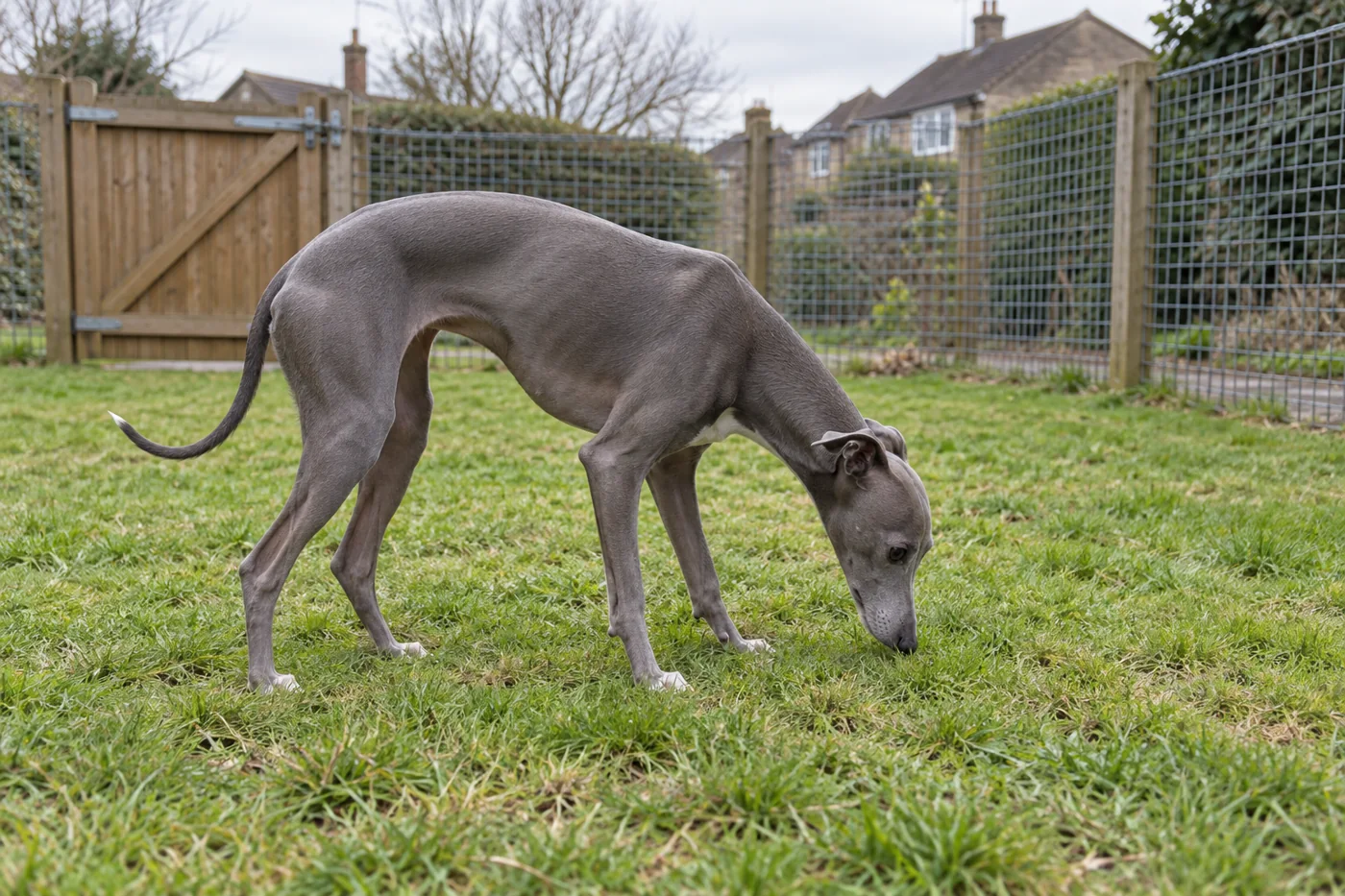
Place matters more than confidence
Even a well-trained dog may notice movement first. Choose a fully fenced area away from traffic for off-lead running. Walk the perimeter: check gaps, gate and surface. Do not rely on “she never runs away”.
Let the dog set the pace
Freedom does not require nonstop sprinting. The dog may sniff, wander and run briefly. Watch energy and weather. Without a secure enclosure, a suitable longer lead in an appropriate place beats an unsafe experiment.
Inspect before play
Walk the fence line before unclipping, or keep the dog on a short lead. Check that the gate shuts, look for gaps beneath it, glass, holes and slippery ground. Consider the other dogs present: a strong fence does not guarantee a calm encounter. If the area is unsuitable, an on-lead walk is still a complete walk.
Inspect before unclipping
Check more than fence height. Look underneath, behind bushes and beside service gates. A gap invisible from the path may still be accessible to a small dog. Find out whether the gate closes reliably and whether cyclists also use the area.
Walk the perimeter on the lead first. Assess the surface, other dogs and places to move apart calmly. If you must constantly intervene in unfamiliar play, choose another time.
Practise recall without punishing the return: do not scold a dog who has finally come back for taking too long. A good response still does not replace secure fencing. Outside a reliably enclosed area, use suitable walking equipment and never test obedience beside traffic. Choosing against free running in an unsuitable place is an ordinary part of caring for a dog, not a missed training milestone.
Useful? Save it for your next walk.