
Prepare the travel space
Choose an appropriately sized secure travel setup according to its maker’s instructions; do not let the dog roam in the car. Introduce the carrier or restraint at home first. Keep an initial practice drive short and calm.
Plan the journey
For a longer journey, plan water, breaks and a safe place to step out on lead. Do not leave the dog alone in a hot or cold vehicle. Travel rules vary by place and operator, so check current requirements before setting off.
A pre-drive check
Check that the carrier or suitable restraint is secure, ventilation is clear, cabin temperature is comfortable and nothing heavy can fall near the dog. A familiar blanket may help if it does not cover airflow. Plan safe stops before departure. For travel sickness or marked distress, ask a veterinarian rather than choosing remedies from a random forum.
Prepare before the dog gets in
Choose a vehicle restraint suitable for the dog, car and installation position. Check the manufacturer’s instructions and independent testing where available. An ordinary walking harness and an improvised seat-belt tether do not become crash protection simply because they connect to a buckle.
Introduce the carrier or restraint gradually in a stationary vehicle, then progress to short calm journeys. The driver should not be adjusting a pet’s clothing while watching the road.
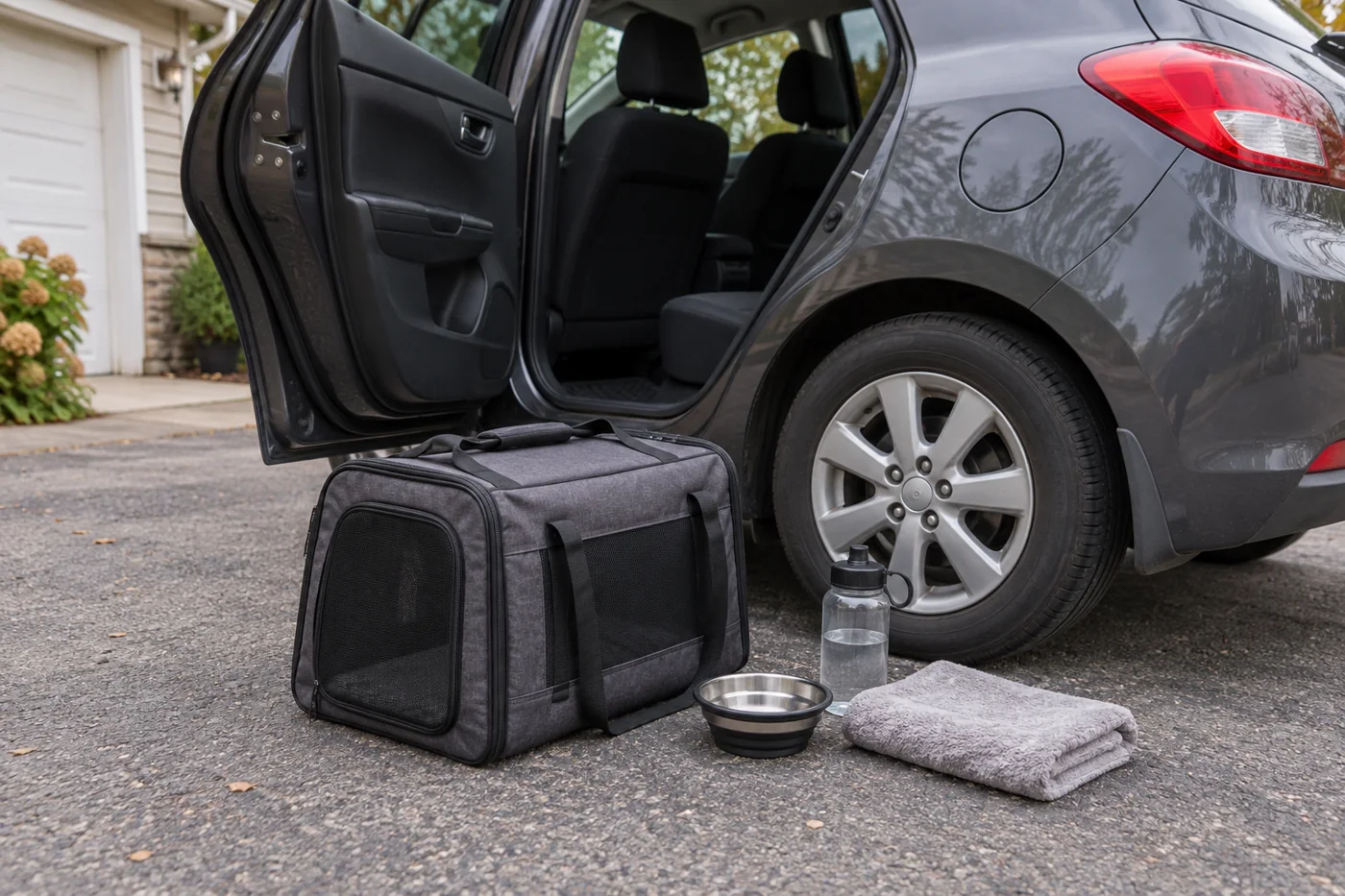
At stops, control the doors and secure walking equipment before letting the dog out. Keep water and essentials accessible rather than beneath all the luggage. Discuss motion sickness or pronounced fear with a vet. The article image illustrates travel; it does not certify any pictured carrier. The actual product instructions and its installation are what need checking.
Sources
References for checking facts and reading further.
Useful? Save it for your next walk.