
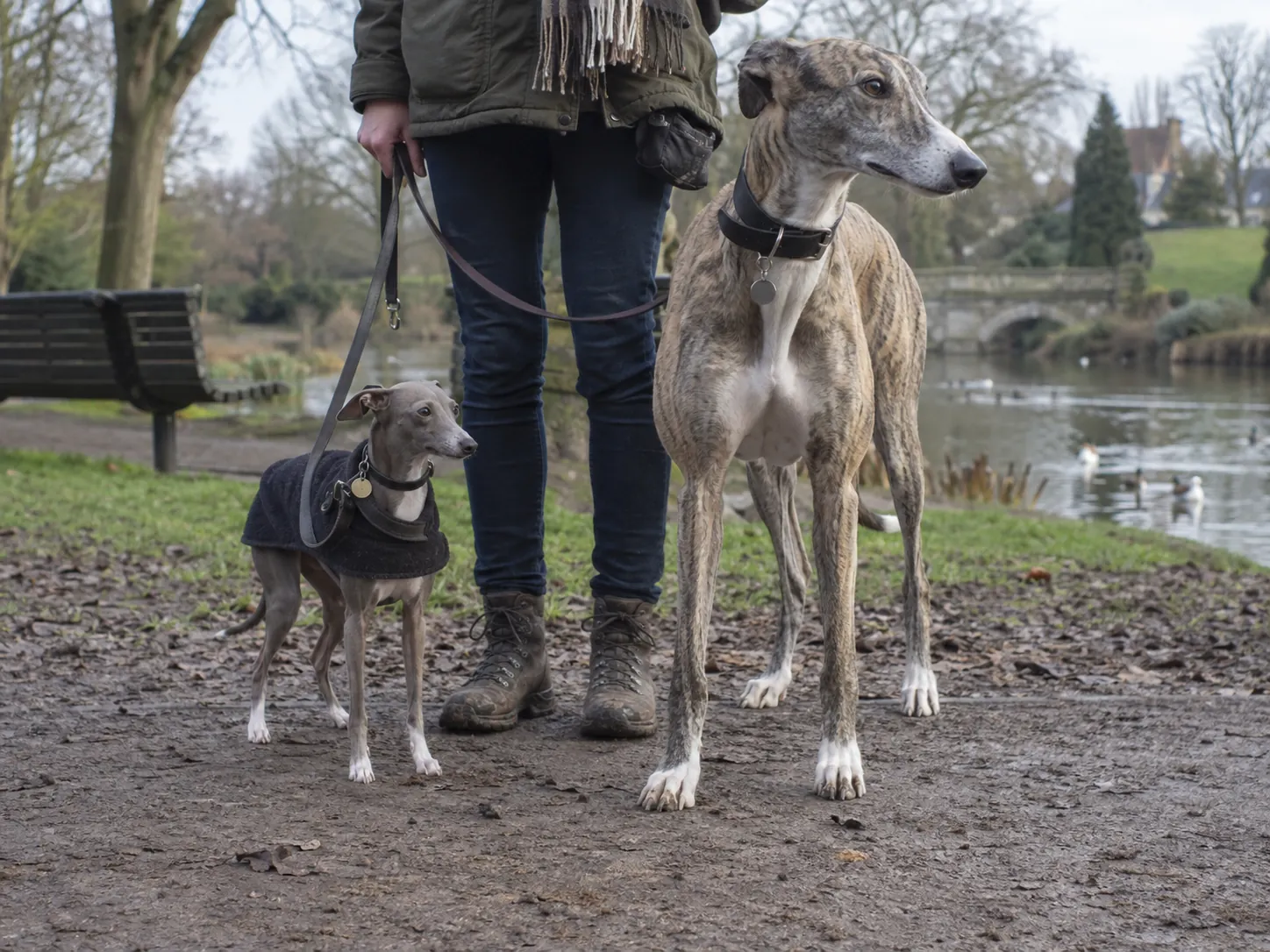
A related silhouette
Long legs, a deep chest and a narrow waist make sighthounds recognisable. Without a scale reference, an Italian Greyhound can resemble a young larger dog. The breeds are not sizes of one model, however. Each has its own standard, breeding history and typical range of build.
What changes in daily life
Size changes travel arrangements, space and equipment, but it cannot predict an individual dog’s personality. A small sighthound still needs movement, safe walks and training; a large one still needs rest. If choosing a dog, meet adults of both breeds and ask owners about an ordinary day.
And clothing?
An Italian Greyhound needs a cut made for its own proportions: fine neck, pronounced chest and long limbs. Simply shrinking a garment made for a larger sighthound may not work. Start with back, chest and neck measurements, then check the fit while the dog moves.
Compare an ordinary Tuesday
Picture a working Tuesday rather than a beautiful seaside walk: the lift is busy, it is raining, and there is an evening vet appointment. Where will the dog wait? Could you carry them safely if necessary? Will an appropriate carrier fit your car? These questions are more useful than debating which sighthound is easier.
When meeting owners, ask to see their equipment and hear what changed at home. Find out how their particular dog handles time alone, transport and other animals. Follow “ours is calm” with a question about what calm actually looks like in those situations.
If a large dog already lives with you, plan introductions separately. Similar outlines do not automatically make two dogs suitable play partners. Pace, physical strength, the ability to stop and opportunities to move apart all matter. Choose the daily arrangement you can support, not simply the silhouette you prefer.
Useful? Save it for your next walk.