Why this question keeps coming up
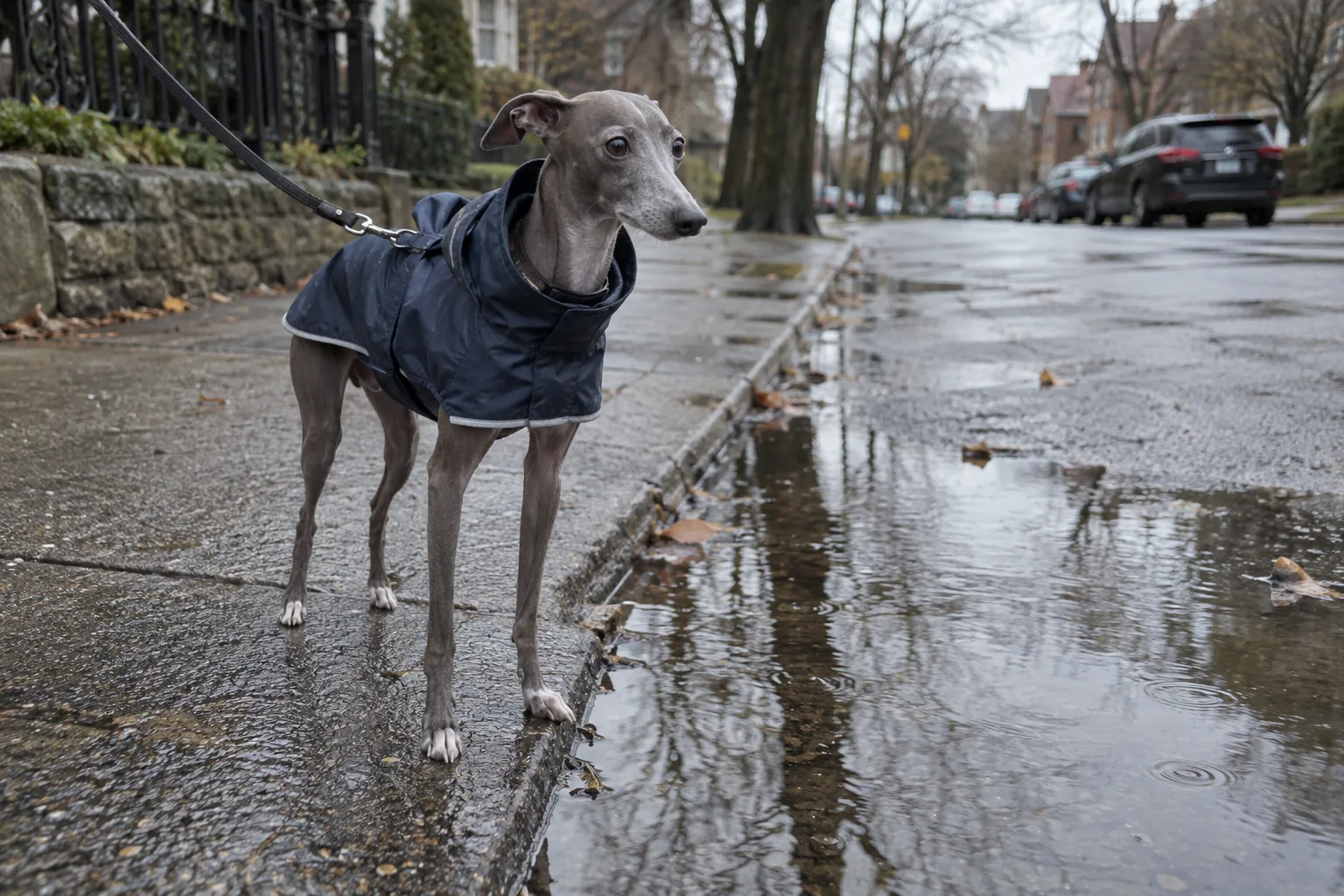
Italian Greyhounds have short coats and little body fat. The breed club notes that prolonged exposure to extreme cold does not suit them. There is no single comfort temperature for every dog, though. One walks happily in dry cool air; another wants home quickly in a damp wind. Age, health, pace and whether the dog is wet all matter.
Watch behaviour, not just the forecast
If the dog slows, presses close, seeks shelter or clearly wants to turn home, stop and reassess. Shivering can accompany cold, but it also occurs with stress and other conditions; by itself it is not a diagnosis. If the dog seems lethargic, responds poorly or keeps shaking after returning to warmth, contact a veterinarian.
Clothing should solve a real problem
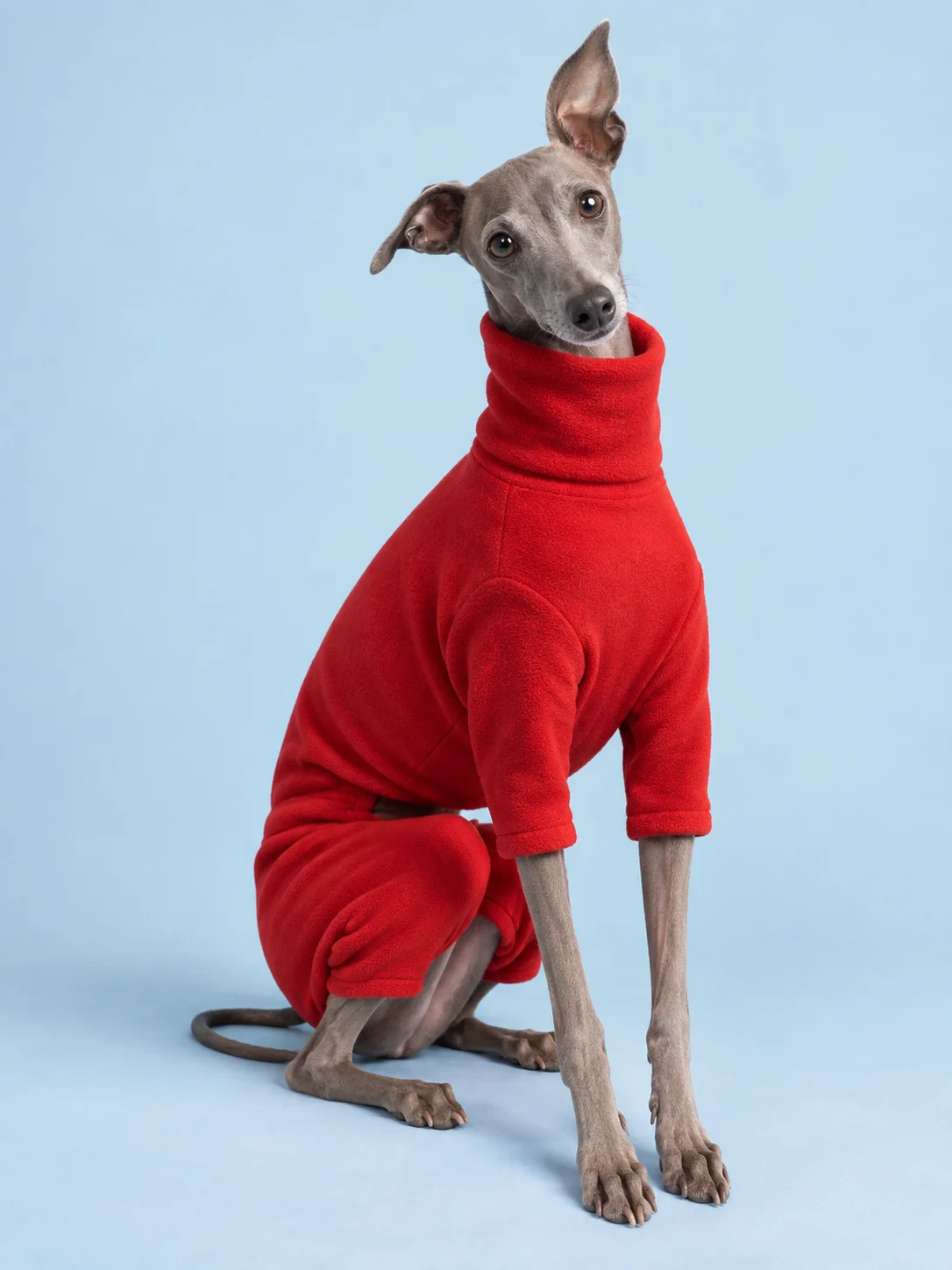
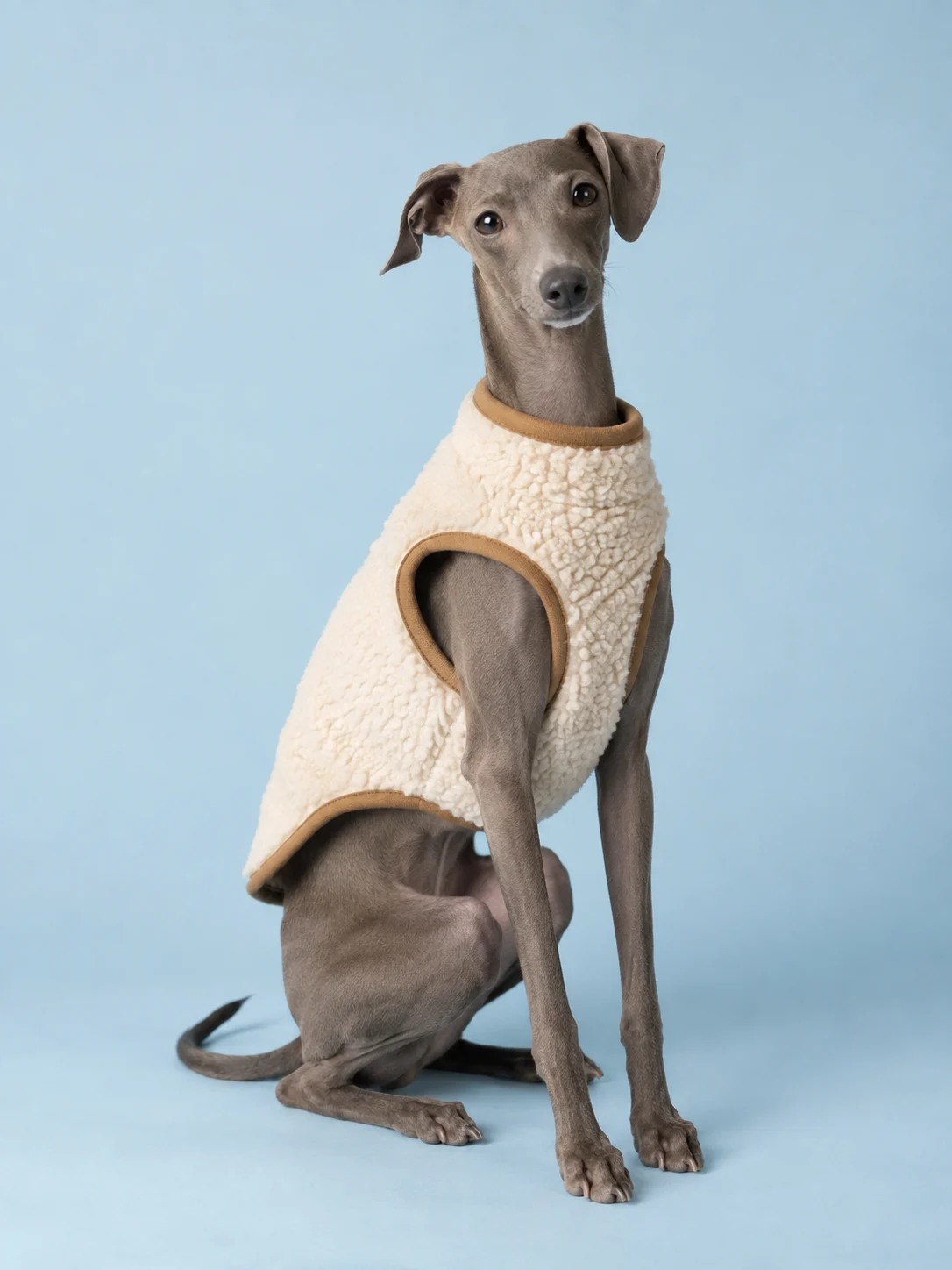
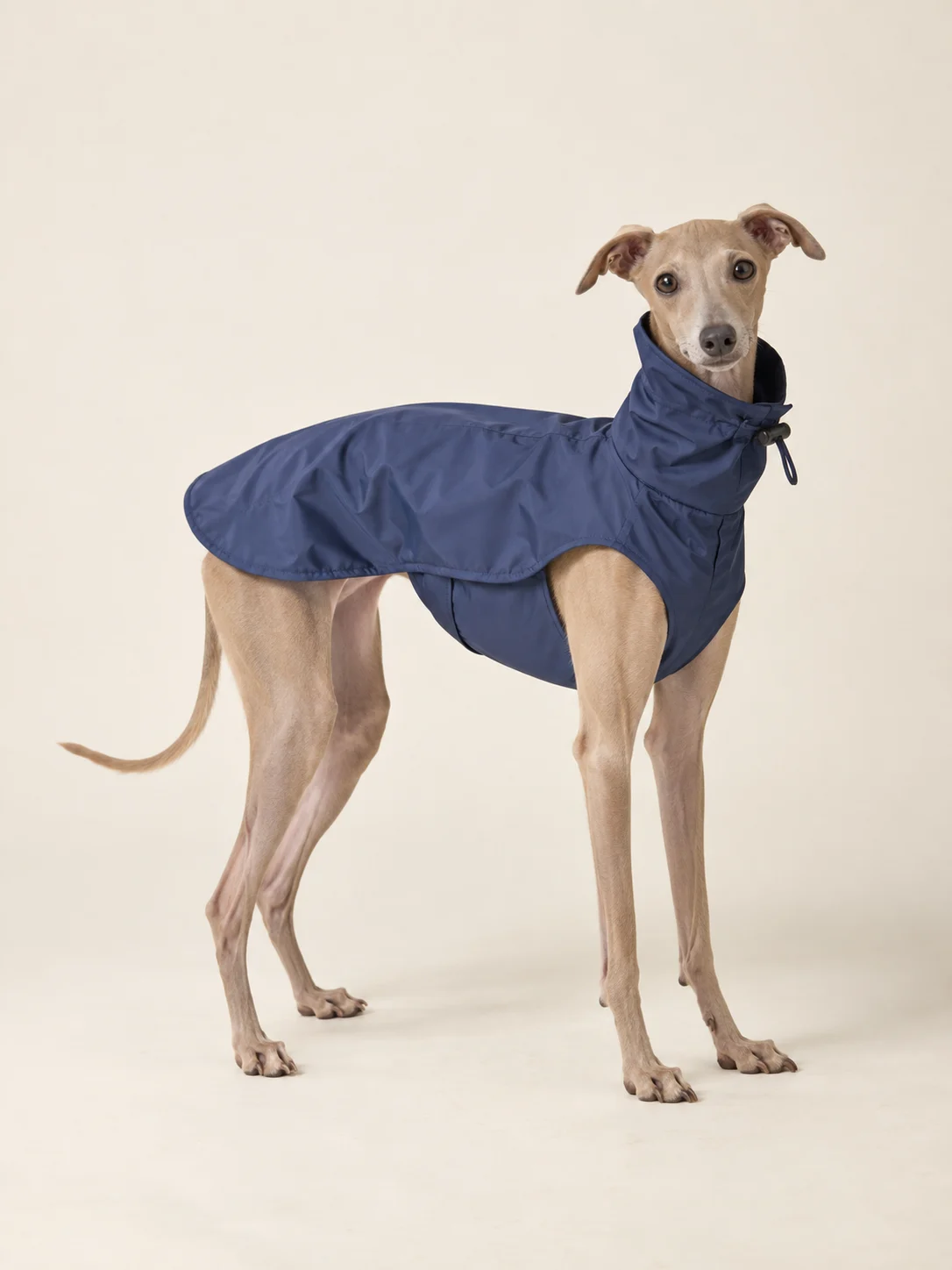
Dry cool air and damp wind call for different solutions. Fleece can be a comfortable warm layer, but wet fleece does not replace rain protection. A shell helps with rain but may not add enough warmth alone. Consider fabric, cut and ease of movement. Remove a garment once it is wet and uncomfortable rather than leaving it on the dog.
There is no magic temperature chart
A chart saying “sweater at one temperature, suit at another” looks convenient but ignores wind, humidity, sunshine and the dog. Start with a short outing, observe and adjust the layer. In very cold weather, shorten time outdoors and discuss individual limits with a vet, especially for a puppy, senior or unwell dog.
Sources
Breed facts were checked against these references. Editorial tips do not replace veterinary advice.
Useful? Save it for your next walk.