
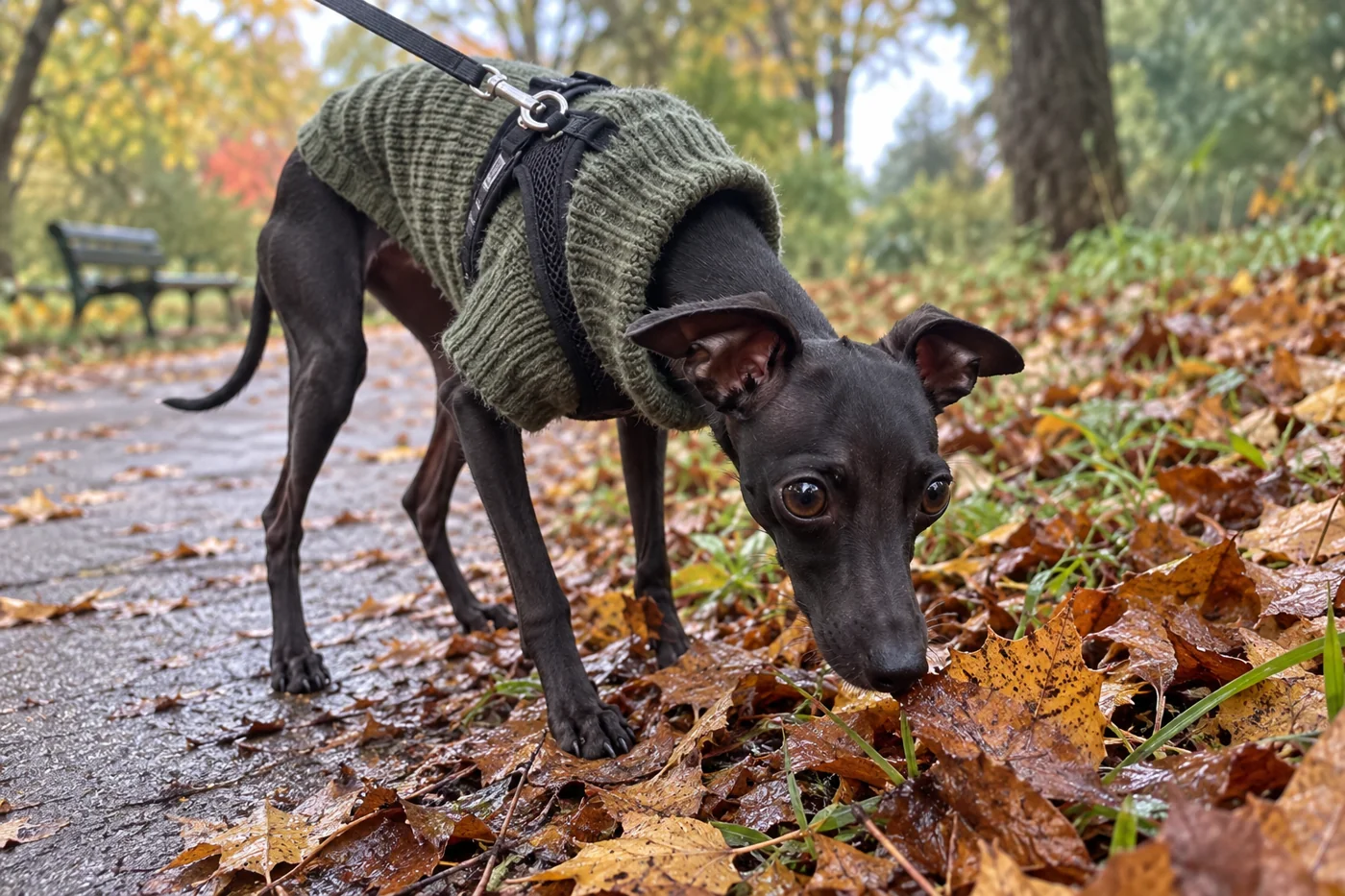
The park from dog height
A new path offers smells and events absent yesterday. Begin where there is room to pass people and dogs. Not every encounter needs to become a greeting. If your dog tenses, add distance and choose a quieter trail.
Make a small ritual
Bring water as needed, a lead and waste bags. A familiar route is useful, but changing direction can add interest. Duration depends on age, wellbeing and conditions; a pretty route map in an app is not required.
Refresh a familiar path
Enter a familiar park from another gate or walk the same path in reverse. The dog meets a new sequence of smells without your having to find a distant destination. Leave time for a few interesting stops. If the route becomes noisy or crowded, choose another section: a good walk depends on ease and opportunities to explore, not a kilometre target.
Let the dog choose part of the route
Within safe limits, let the dog choose a tree to investigate or a path to follow. Two neighbouring lawns may look alike to you while offering different smells to a dog. Constantly hurrying turns a walk into transport between destinations.
Meeting an unfamiliar dog is optional. Leave room to pass and ask the other owner before approaching. Where runners or children on scooters use the path, shorten the available lead length in advance.
Find a quiet loop that returns to the exit without a crowd. It is useful on a noisy day, after rain or when your dog tires sooner than usual. A good park offers ways to adapt the plan, not just an attractive arch for a photograph. Remember where the quiet exits and water options are before you need them.
Useful? Save it for your next walk.