
Why read a standard?
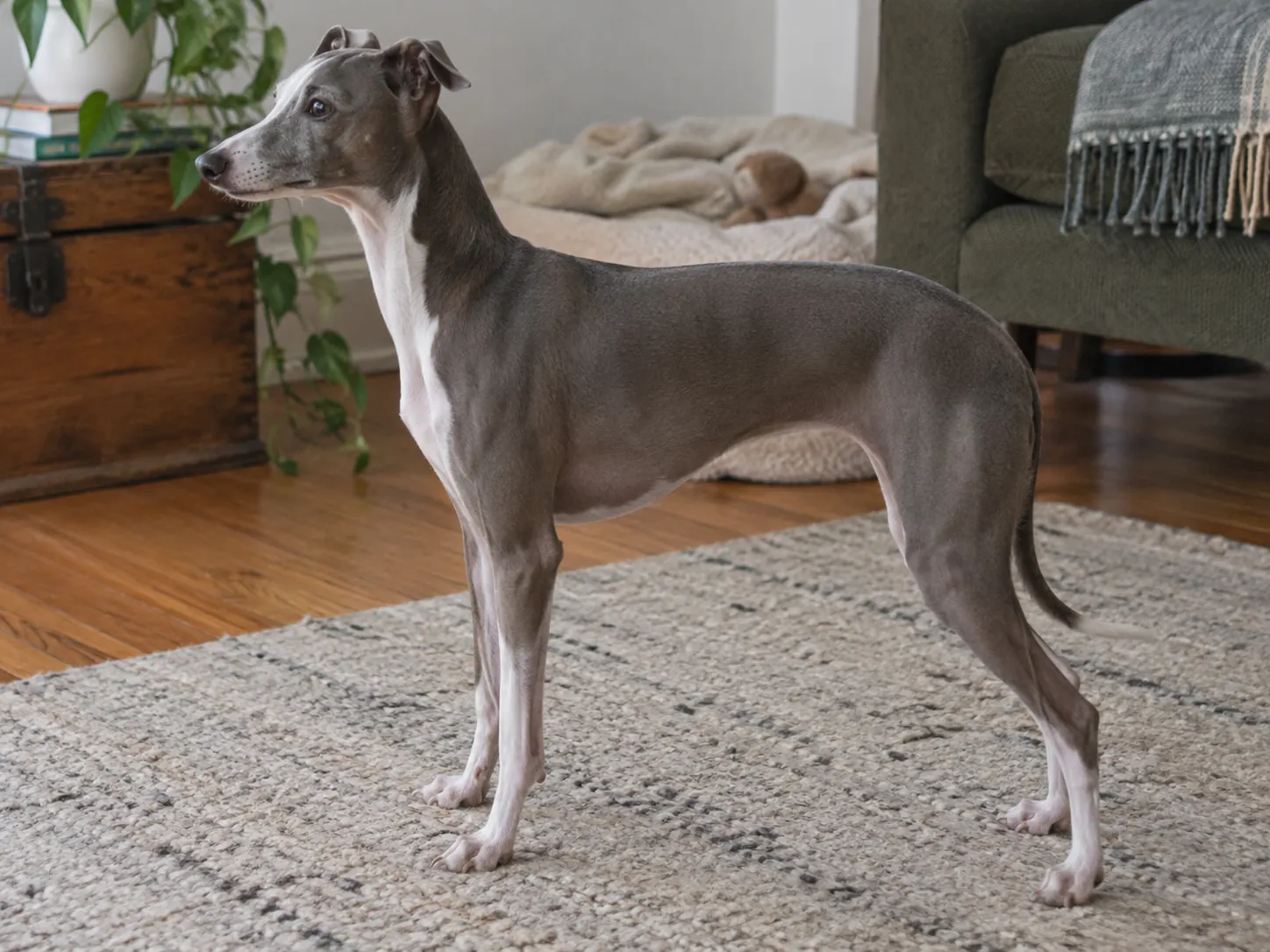
The FCI standard describes breed type, proportions and movement. It explains why the Italian Greyhound looks as it does, rather than like a randomly reduced large sighthound. It is a useful introduction to the breed, but not a training manual or a prediction of every puppy’s personality.
The outline matters more than one number
The document gives a height at the withers of 32–38 centimetres and a maximum weight of 5 kilograms. These are breed-standard figures, not a clothing size chart or a health diagnosis. A suit needs measurements of the individual dog: back, chest and neck, followed by a movement check.
Movement and character
The standard describes springy movement and an affectionate temperament. In daily life, avoid judging a dog by one posed frame. Notice an ordinary walk, interaction with people and rest after activity. Concerns about health or gait belong with a veterinarian, not with a comparison against a photograph.
What it cannot promise
A breed description helps you prepare, but it cannot guarantee an exact activity level or the same response to every person. Dogs differ in age, experience and habits. Read the standard alongside thoughtful owner accounts and meet real dogs before making decisions.
Three different questions about one dog
Does the dog match the breed standard, are they healthy, and would life together suit you? These are separate questions. Breed documents and expert assessment address the first; a veterinary examination addresses the second; discussion of your routine and meeting the dog help with the third. A lovely standing photograph cannot answer all three.
For an owner, proportions are especially useful. A deep chest can explain why a general-purpose harness shifts. A narrow waist helps explain why an oversized garment twists. Tightening straps excessively or choosing restrictive clothing does not solve those shapes.
Do not turn a list of show faults into complaints about your companion. A standard describes breed type. Comfortable movement, appropriate care and an owner who notices changes are more relevant to everyday life. Use the document to understand what you see, then make practical decisions about the individual in front of you.
Useful? Save it for your next walk.