
Check the specific service
Pet rules differ by operator, carriage and country. Check requirements for your exact travel date before paying: carrier, ticket and document rules may all differ. An old chat message is not a reliable source.
Practise at home
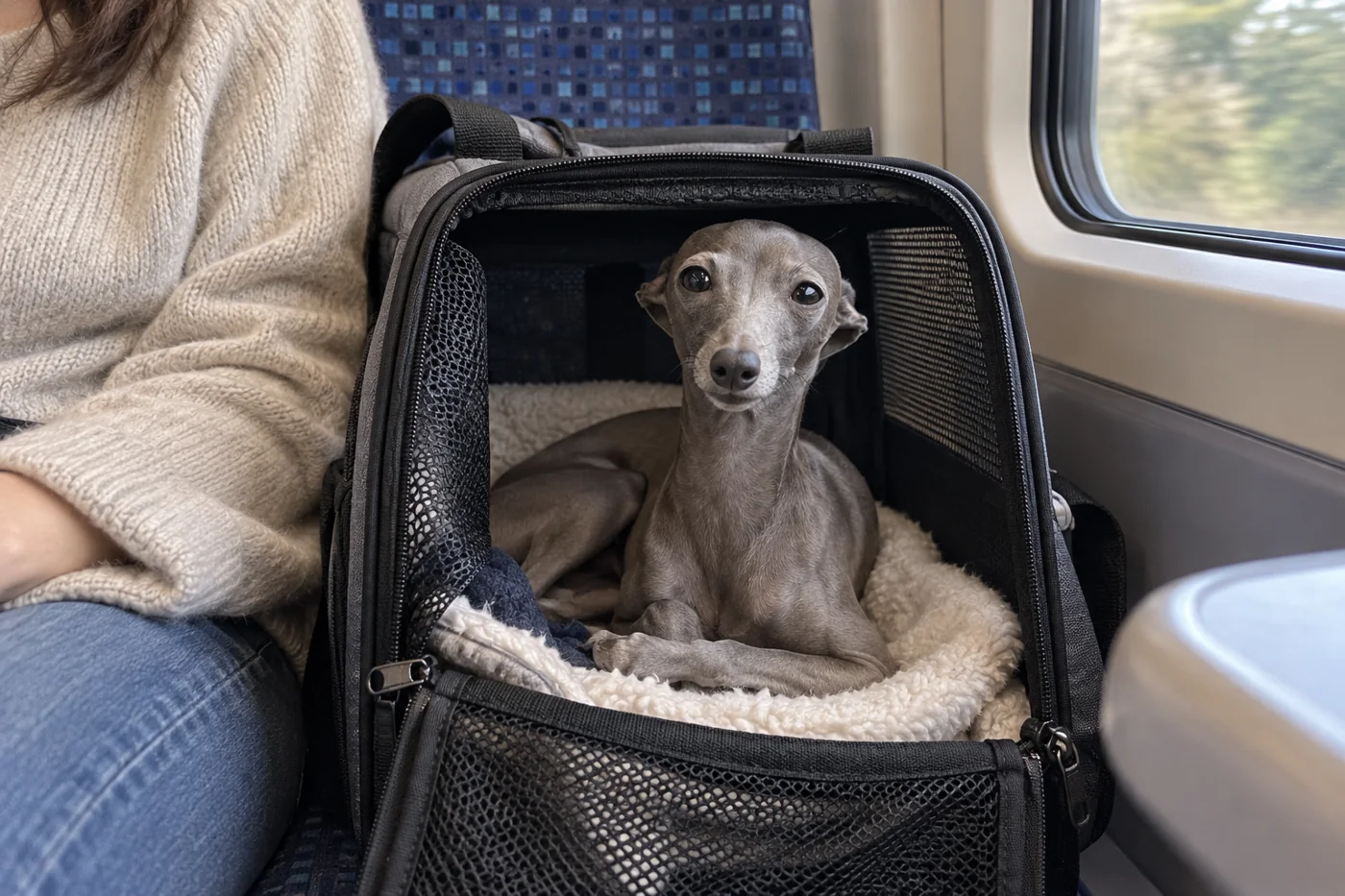
Do not introduce the carrier for the first time on departure morning. Let the dog become comfortable with it at home. Bring water, lead, waste bags and familiar bedding. Leave extra time at the station; rushing can be harder on a dog than the journey itself.
A practice journey
Before a long service, try a short journey or sit with the dog in its carrier in an unfamiliar but safe place. Notice the response to noise and waiting. Bring bedding that fits without crowding and can be changed if it gets wet. Check documents and travel rules on the operator’s official site immediately before booking.
Check the actual ticket conditions
Before buying, open the operator’s rules for the exact train, carriage and service class. Check animal admission, carrier requirements, documentation and booking arrangements. Conditions from another route or last year’s trip may not apply. Save the booking confirmation and relevant rules.
Let the dog become familiar with the carrier at home. Allow extra station time so you are not running with a bag and lead. Wait away from the main pedestrian flow while keeping control of your pet.
Pack familiar bedding, water, a bowl and cleaning supplies. Do not assume a scheduled stop guarantees a safe opportunity to leave the train; confirm timing and local conditions. If the journey exceeds the dog’s current preparation, consider another travel arrangement or suitable care. Planning the exact trip is more useful than relying on a general claim that small dogs are allowed.
Sources
References for checking facts and reading further.
Useful? Save it for your next walk.