
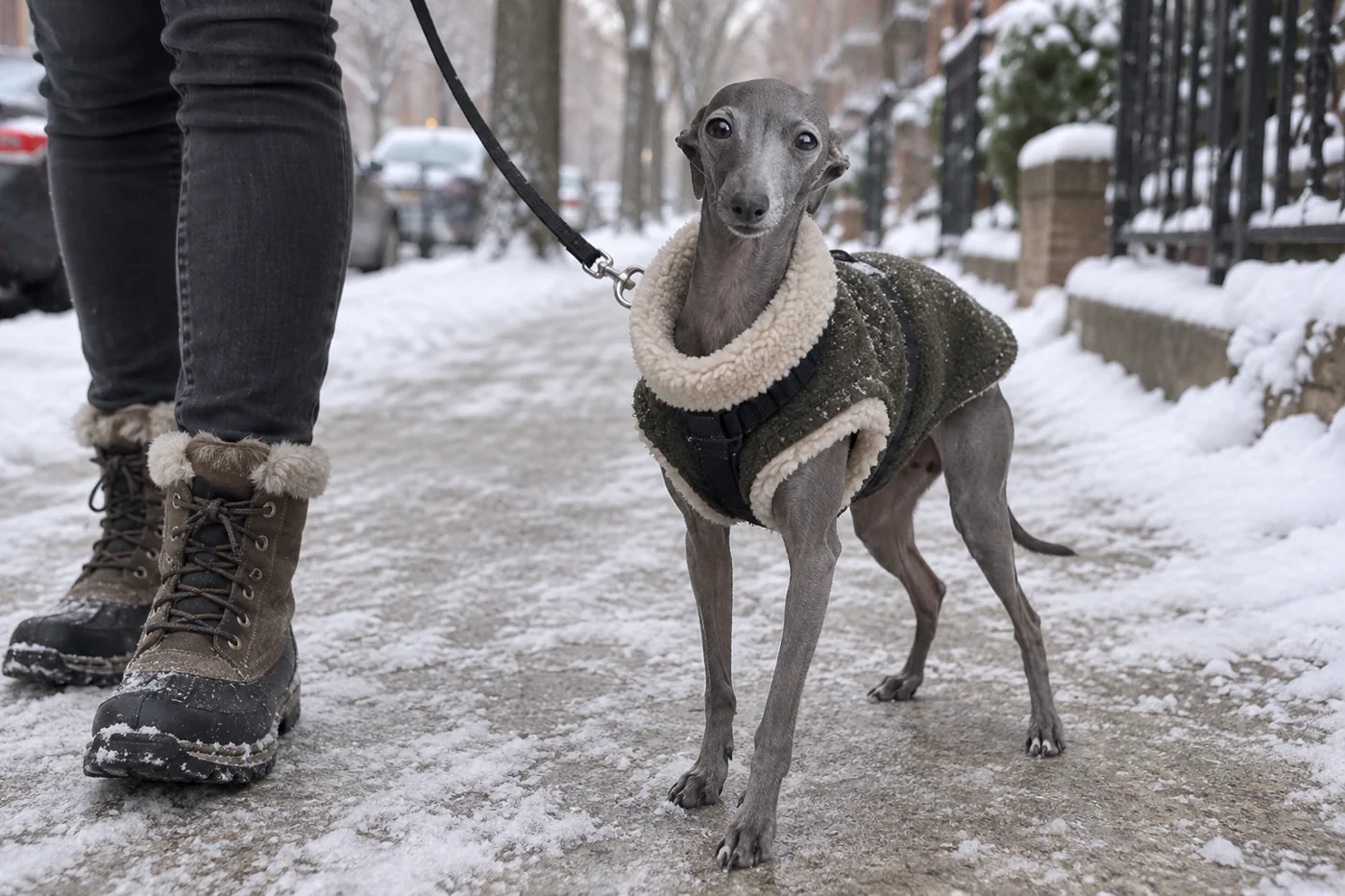
Build the outfit for the situation
The breed club notes that Italian Greyhounds are sensitive to severe cold. Wind, snow, dampness and pace all matter. Choose clothing that covers what is needed without restricting stride. Recheck chest, armholes and neck when adding a second layer.
Make the route workable
A shorter outing followed by warmth at home can be better than a long exposed route. Watch your individual dog. If movement changes suddenly or the dog seems unwell, do not try to solve it with only a warmer garment; contact a veterinarian.
The doorway check
Dress the full outfit and let the dog walk indoors. A harness over winter layers should not shift the collar, and sleeves should allow leg movement. Choose a route with an easy return if the wind proves stronger than expected. Remove damp clothing afterward and let the dog rest somewhere dry. This is easier than guessing one universally correct temperature.
Read the whole day
One thermometer reading does not describe a winter walk. Wind, dampness, wet snow, shade and time outside all change the experience. A short-coated Italian Greyhound may enjoy a dry still day yet ask to go home quickly at the same temperature in wind. Watch the individual dog: is it moving freely, exploring and comfortable, or looking for shelter? Plan a short route home before conditions become uncomfortable.
Choose layers for the route
A short trip near home may call for one suitable layer; a longer walk may need an outer piece against wind and damp. Try the combination indoors. The second garment must not compress the chest, lift the sleeves or stiffen the stride. If fabric gets wet, a dry spare at home matters more than a stylish stack of layers. Avoid one universal temperature rule: age, health, movement and familiarity with weather differ between dogs.
Look at the ground
Winter discomfort is not only about air temperature. Pavements may hold ice, sharp snow edges and de-icing products. Choose a route where the dog can take a normal stride without repeated slipping. Afterwards, check the paws, gently remove residue with appropriately tempered water and dry them. Marked pain, damaged skin or an unusual gait needs veterinary advice. Clothing cannot make a dangerous walking surface safe.
Make the return easy
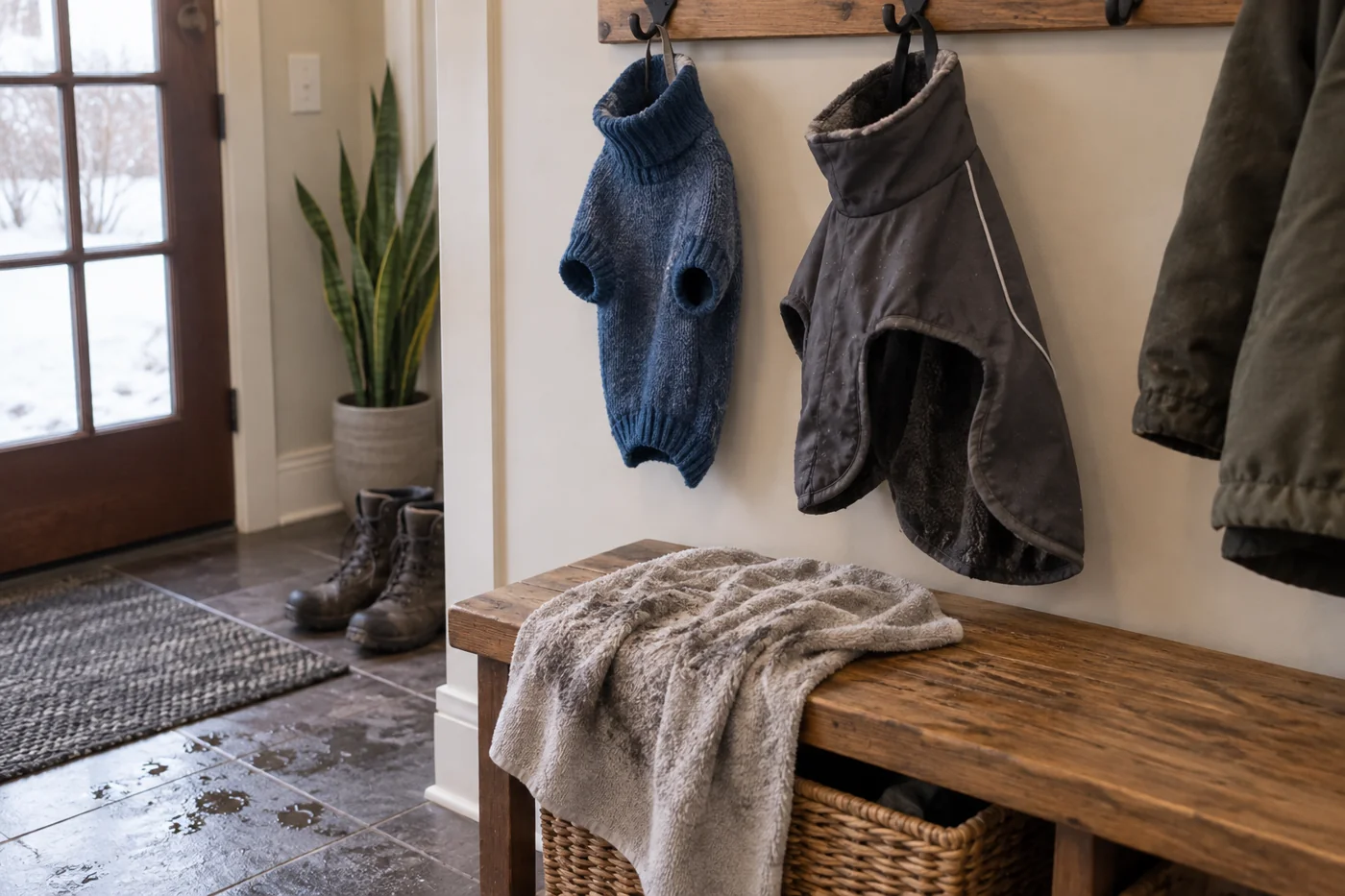
Keep a towel and dry place ready near the entrance. Remove wet outerwear, check that a base layer has not bunched up and let the dog settle indoors. Dry clothing fully, especially cuffs and collar. Remember how quickly your dog became tired or cold on this particular day; that observation beats a stranger’s minute chart. The next outing can be shorter, take another route or happen at a different time.
Make the return plan before leaving
Before leaving, identify how to end the outing quickly if your dog becomes uncomfortable. A long straight route without an easy return gives fewer options than several short loops near home.
Include lift journeys and transport waits in the plan. Clothing has to work for the whole outing, including stationary pauses. If a trip requires a long wait outside, reconsider the arrangement rather than expecting another layer to solve everything.
On return, check areas exposed to road-treatment residues and remove contamination instead of leaving it on the coat. Dry paws and garments. If discomfort continues indoors, the dog limps or behaviour changes, contact a vet. Do not explain everything as an Italian Greyhound’s dislike of winter. Your own dog’s response matters more than a temperature chart shared online.
Three ordinary winter situations
Dry and calm, with the dog keen to walk: use a familiar tested outfit and observe movement. Another layer is not automatically necessary because of the calendar date.
Wet and windy: consider protection from moisture and wind, a shorter route and an easy return. Damp clothing changes comfort even when the thermometer does not show the coldest day.
Icy paths: changing route and reducing slipping risk matter more than the appearance of the suit. Choose ground manageable for both person and dog.
None of these examples establishes a universal temperature or duration. Age, health, wind, moisture and activity require individual judgement.
Why one label number tells you little
A temperature promise without testing conditions is difficult to apply to a real walk. A moving dog and one waiting for a bus face different circumstances. Fit and dry fabric affect comfort as well.
Ask about composition, insulation, wind protection and care. Establish whether the design allows an inner layer, then use a short fitting and outdoor observation.
Do not test the garment’s limits on the dog. Discomfort means ending or changing the outing. Discuss winter arrangements with a vet in advance for puppies, older dogs and animals with health conditions.
Prepare the next outing now
On return, put the lead in its usual place, clean equipment and spread clothing to dry. Hang the towel instead of leaving it in a wet heap by the door. Check whether a dry replacement will be ready for the evening.
Record one useful detail: wind was difficult on the waterfront, the route near home was calmer, or cuffs took a long time to dry. After several days you will have a personal map of workable routes and garments.
These observations improve buying decisions. Another similar fleece does not solve persistent wetting. More insulation does not fix shoulder restriction. A practical winter wardrobe starts with a clear need and ends with a dry outfit ready by the door.
Useful? Save it for your next walk.