Italian Greyhound puppy month by month: the short answer
The sources we checked contain no month-by-month growth and weight table for Italian Greyhounds specifically, so we give no figures. What there are, are verified guideposts on routine, feeding, vaccination and safety. For an adult Italian Greyhound the FCI standard gives 32–38 cm and up to 5 kg, and what weight is normal for your puppy is for your vet to say.
What changes as the puppy grows:
- the number of meals drops;
- the time a puppy can hold on before toileting grows;
- the vaccination series ends, followed by a booster;
- the first three months are the primary socialisation window;
- the fine bones stay vulnerable through adolescence.
8 to 12 weeks
Feeding. Small puppies need 4–6 meals a day for the first three months. Small puppies tend to low blood sugar, so do not skip meals.
Sleep. Up to 16–18 hours a day: provide a quiet place.
Toileting. At least every 2–4 hours and after sleep, meals, drinking and play; more often for younger puppies (our article on house-training).
Vaccinations. By RKF material, basic vaccinations are done by 8–12 weeks. By veterinary guidelines, puppies get several doses 2–4 weeks apart. The vet sets the schedule (our article on vaccinations and parasites).
Socialisation. The primary time is the first three months of life. Puppy classes can start from 7–8 weeks provided at least one vaccination was given 7 days earlier and a first deworming was done.
Safety. A ramp instead of jumps, non-slip floors, supervision.
3 months
The “months plus one” rule. A puppy can hold on for about four hours: that is a maximum, so take it out more often.
Feeding. From about four months puppies usually manage on three meals.
Socialisation. The first three months are the most important: introduce people, sounds and places. But do not overload.
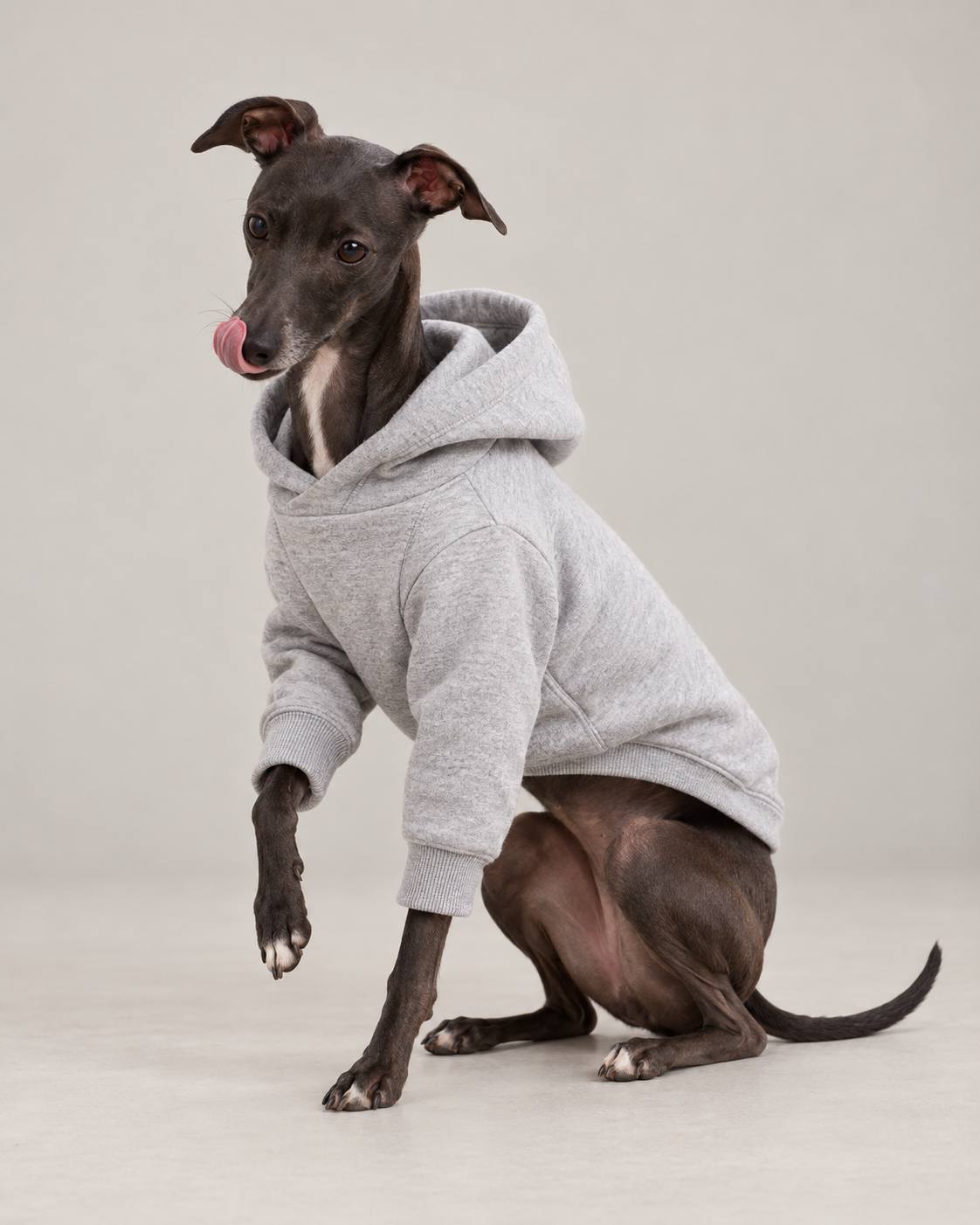
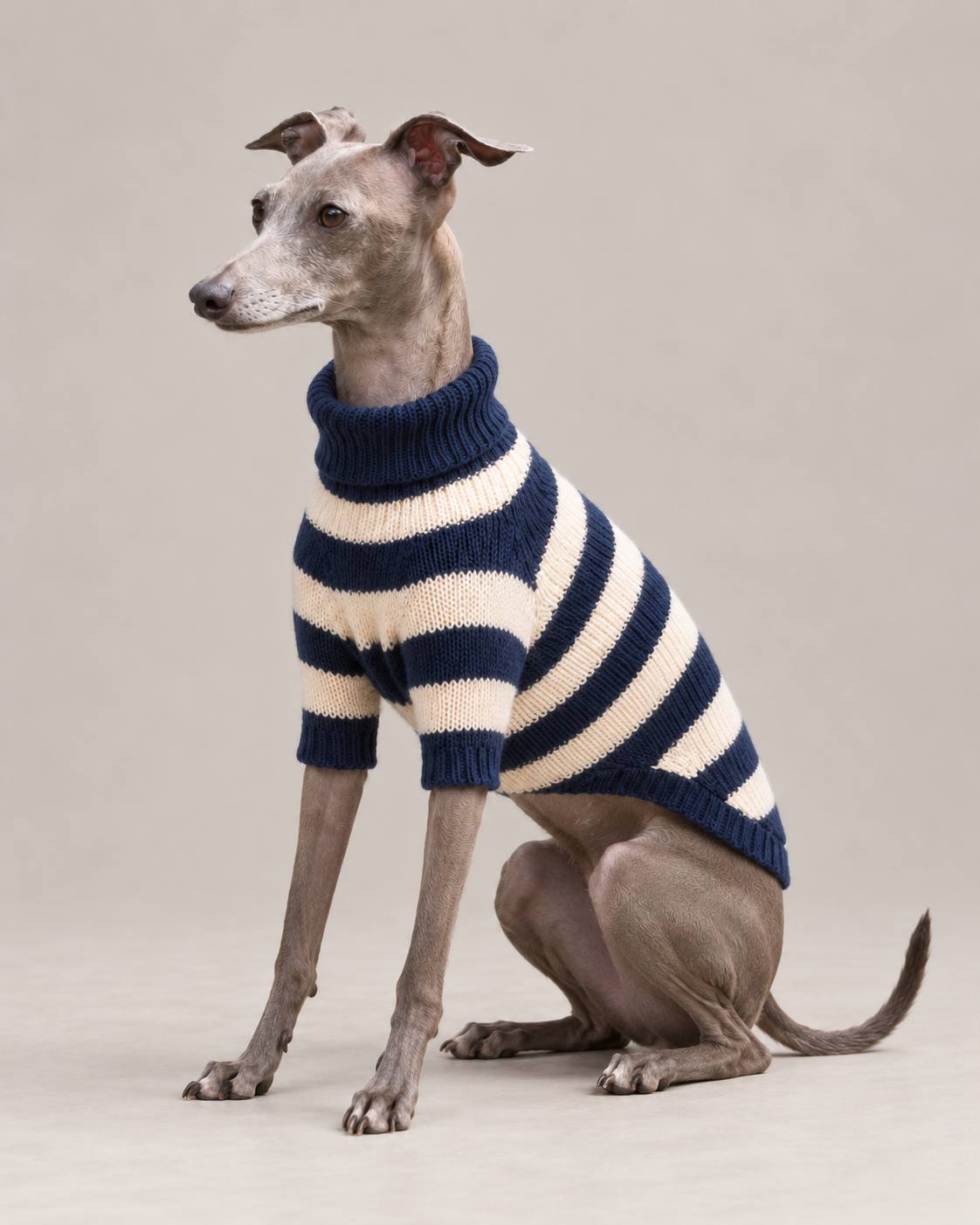
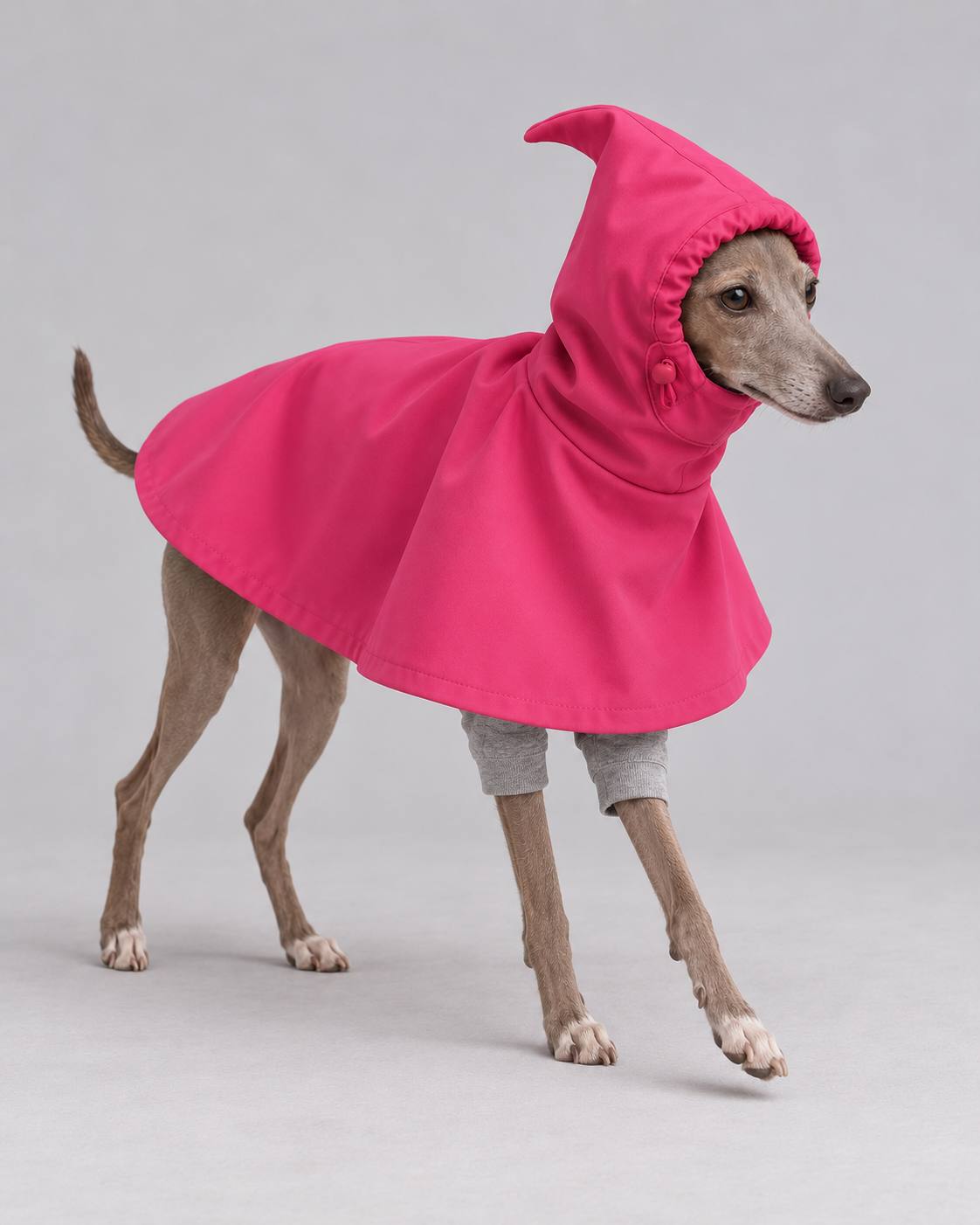
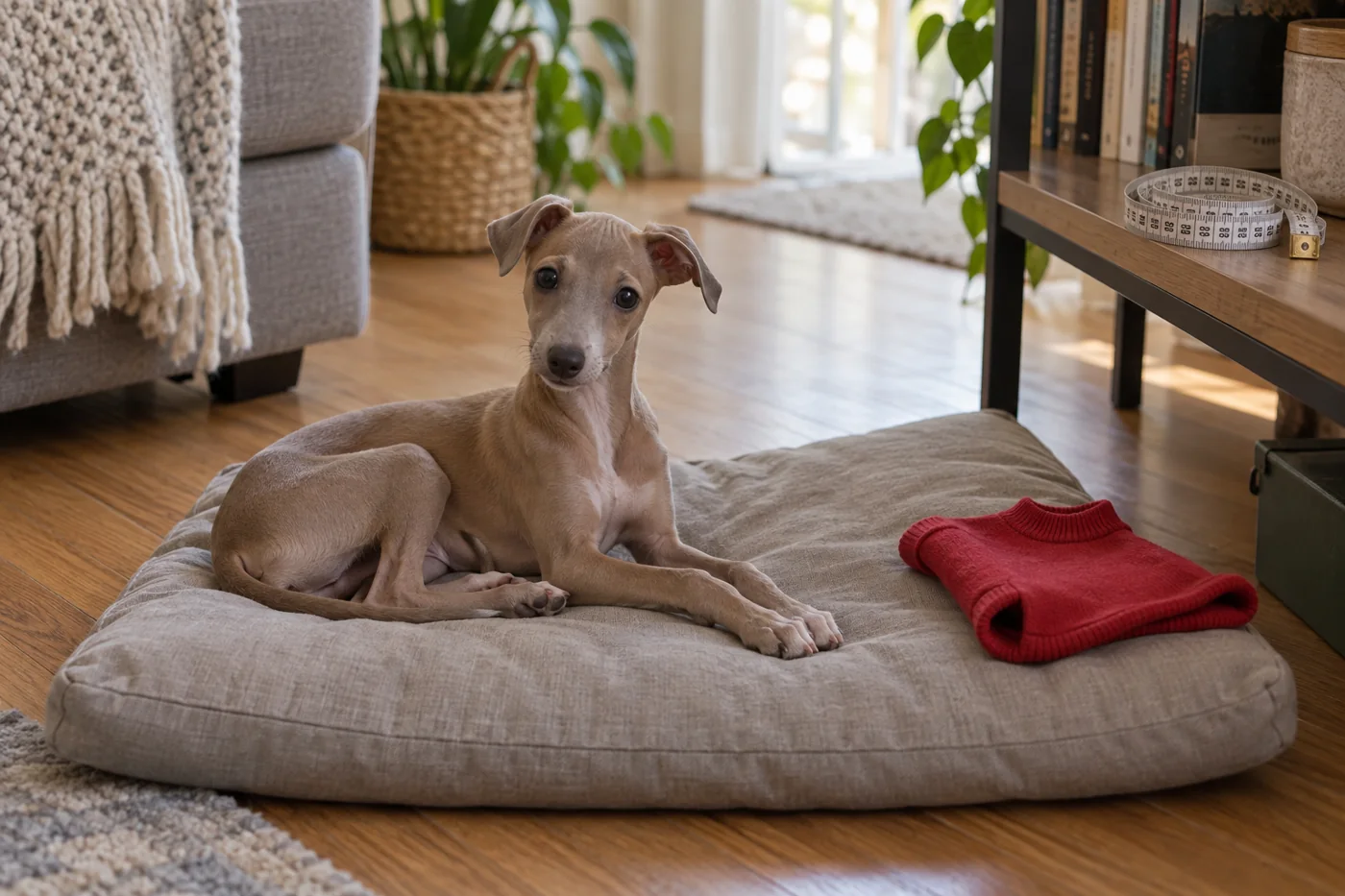
Clothing. An Italian Greyhound feels the cold and a puppy grows fast: choose garments by current measurements (our article on clothing for puppies).
4–6 months
Feeding. Usually three times a day.
Vaccinations. The last dose of core vaccines is given at 16 weeks or later, with a booster at 26 weeks or later.
Toileting. If you start early, a puppy can mostly be trusted by six months.
Training. Simple commands, harness, lead: short sessions with rewards. More in our article on training.
Safety. Puppies and adolescents stay vulnerable because of fine bone: no jumps from height.
6–12 months
Feeding. Puppies quickly move to two meals a day. Adjust the amount by shape: ribs palpable, waist visible (our article on feeding).
Growth. The FCI standard describes an adult at 32–38 cm and up to 5 kg. If your adolescent falls outside that, discuss it with your vet rather than chase size (our article on the mini Italian Greyhound).
Walks. Keep avoiding long intense running and jumping: do not overload puppies.
Health. After 12 months a knee examination is recommended for breeding dogs (our health article).
After a year
The Italian Greyhound moves into adult life, but young dogs still need watching: they have an “adventurous spirit”. Brush the teeth ideally daily and show them to a vet yearly (our article on teeth).
Table: guideposts by age
| Age | Meals a day | Toileting | Main thing |
|---|---|---|---|
| 8–12 weeks | 4–6 | every 2–4 hours and after activity | vaccinations, socialisation, safety |
| 3 months | 4–6, then fewer | about 4 hours at most | meeting the world |
| 4–6 months | about 3 | by 6 months usually reliable | last dose and booster (per vet) |
| 6–12 months | 2 | mostly independent | weight by shape, care with legs |
These are guideposts, not a rulebook. Your vet gives an individual plan.
How to track growth
- Weigh the puppy monthly and write it down.
- Assess the shape: ribs palpable, waist visible.
- Check height at the withers: stand the puppy by a wall and measure from the floor to the withers.
- Compare with its own trend, not someone else’s table.
- If it suddenly gains or loses weight, show it to a vet.
What if the puppy “eats little” or “is too small”
Do not try to “fatten” an Italian Greyhound: extra weight is harmful. If the puppy is dull, weak or refuses food, contact a vet: small puppies can have low blood sugar.
Frequently asked questions
- How many meals a day for an Italian Greyhound puppy? Small puppies 4–6 for the first three months, then about three, and two by about a year.
- When is the last vaccination? At 16 weeks or later, a booster at 26 weeks or later. The vet sets the schedule.
- When will it stop going indoors? With an early start, about six months.
- How much should a puppy weigh at 3 months? The sources we checked have no table for Italian Greyhounds: ask the breeder and vet.
- When can it jump? Puppies and adolescents are better off not jumping from height: fine bones.
What to remember
- The routine changes with age: fewer meals, more patience.
- Vaccinations by the vet’s schedule: the last dose at 16 weeks or later.
- The first three months are the primary socialisation window.
- Fine bones are vulnerable through adolescence: a ramp instead of jumps.
Sources
References for checking facts and reading further.
- AKC: how often should dogs eat
- AKC: puppy potty training timeline
- AKC: setting schedules and developing a routine for your new puppy
- AVSAB: position statement on puppy socialization
- WSAVA: guidelines for the vaccination of dogs and cats (2024)
- RKF (Russian Kennel Federation): how to buy a dog correctly (documents, kennel checks)
- IGCA: About the Italian Greyhound (breed club, USA)
- IGCA health testing recommendations, 16 Feb 2026
- FCI Standard No. 200 “Piccolo Levriero Italiano” (2015)
Useful? Save it for your next walk.