
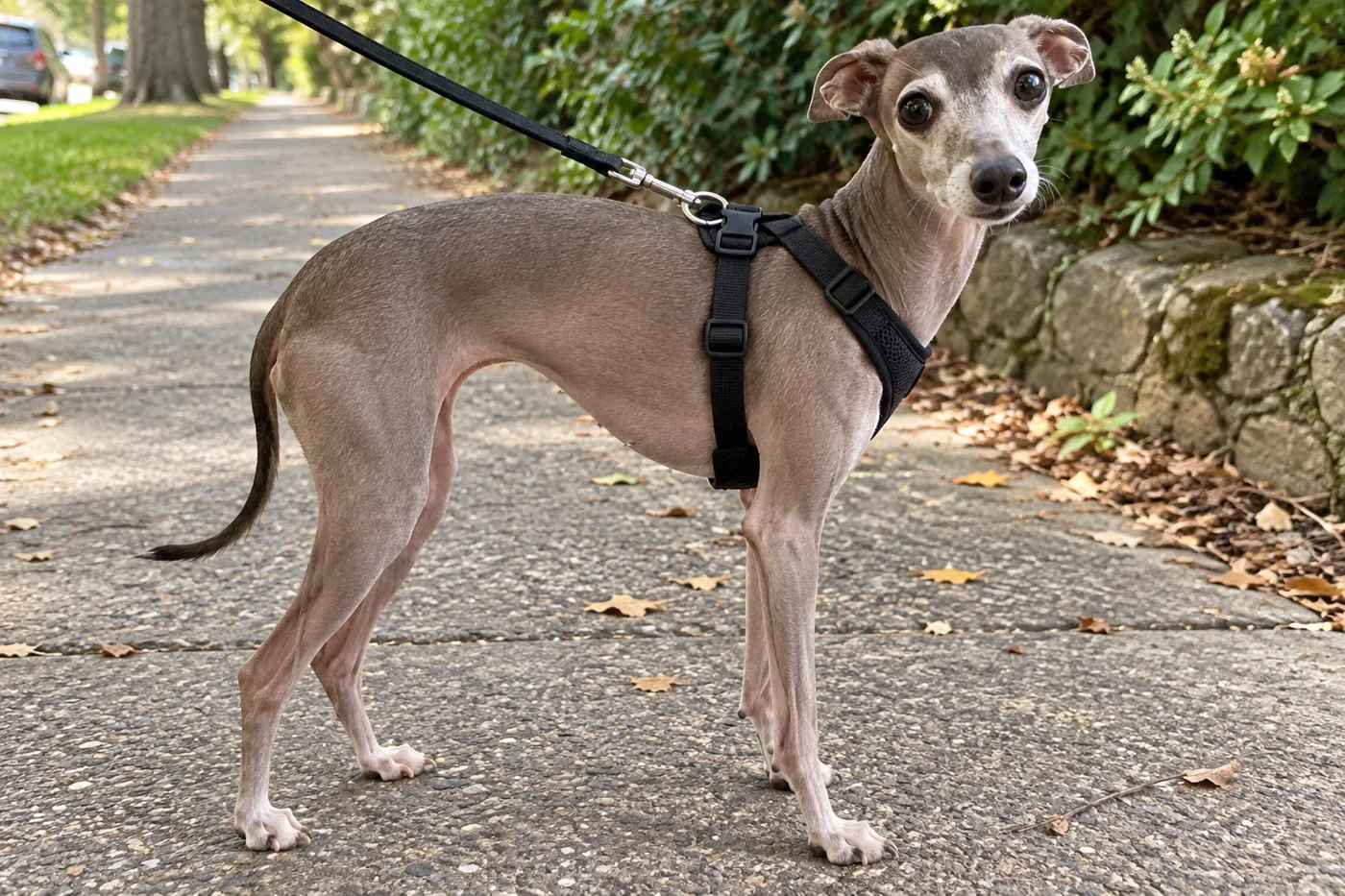
Chest fit first
A harness should not press under the front legs, slide sideways or restrict stride. Fit it while the dog stands calmly, then let them walk and turn. Check whether backing up could let the dog slip free, a particularly important question for a sighthound.
Test it with clothing
If the dog wears a suit, try the harness over the usual layer. Closures should remain accessible and fabric should not bunch tightly. Repeat the check after a garment change or a change in the dog’s size.
Check at home and outdoors
After fitting at home, avoid making the first outing a long one. Walk a few minutes on a quiet street and see whether straps move over clothing. Check under the front legs after removing the harness. If it constantly turns sideways, do not simply tighten every strap; the shape may not suit the dog’s deep chest.
Start with the dog, not the size label
An Italian Greyhound has a fine neck, a pronounced chest and a narrow waist. Two harnesses labelled S can therefore fit very differently. Measure the chest and lower neck with the dog standing, then read the maker’s own diagram. If measurements fall between rows, compare the adjustment range and shape of each piece. A product photo on another breed cannot show where the straps will sit on your dog.
Check five points
Once fastened, look at the neck line, chest panel, area behind the forelegs, position of the back ring and tension along both sides. Nothing should dig in during a normal breath or press into the soft area under the front legs. Some room is needed, but the dog should not be able to slip out while gently backing up. Test the fit calmly in a safe place, not for the first time beside traffic.
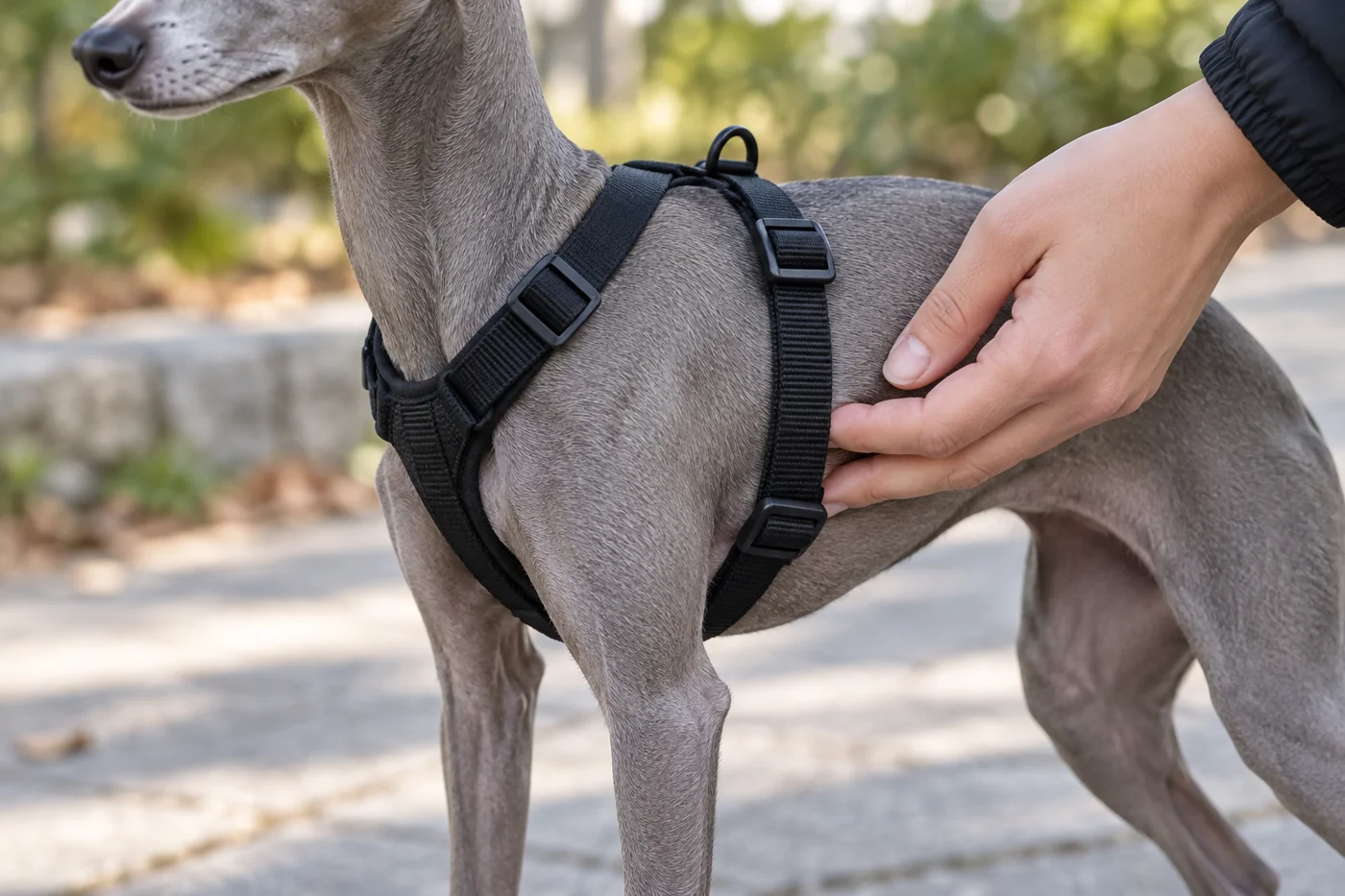
Walk and turn
Let the dog walk normally for a few minutes, turn, stop and lower its head to sniff. The front leg should reach freely and the chest piece should stay centred. Look from both the side and above. If a strap shifts after two turns, simply tightening it may not solve a shape mismatch. Note where rubbing occurs; that detail will help you choose a different design instead of buying the same geometry again.
Allow for clothing
If the dog wears a winter suit, try the harness over the actual outfit. Thick fleece and a thin shirt add different amounts of bulk, while a high collar may sit directly under a strap. Make sure the clasp still works and the harness does not push the neckline towards the ears. Readjust for warmer months. Remove walking gear indoors when it is no longer needed and check the skin after longer outings.
Check again after the first outing
After removing the harness, examine the strap contact areas for redness, soreness or signs of repeated movement. Compare its position before and after the outing. If a strap continually ends up in the armpit, tightening every adjustment is not the answer; the shape may be unsuitable.
Photograph the fit from the side and front while the dog stands naturally. For advice, include measurements and a short walking video. An overhead photograph rarely shows the lower strap clearly.
Recheck after washing and whenever clothing layers change. Adjustments may move and the combined fit can change. No harness makes leaving a dog tied up unattended safe. A useful fitting check follows the entire routine, from putting equipment on to looking at the skin and coat after removal.
What a fitting check cannot guarantee
At home you can inspect strap position, movement and fastening convenience. A photograph cannot guarantee that a dog will never back out. Fear, reverse movement, clothing fabric and the particular harness geometry can change the situation.
Do not test security by jerking hard or deliberately frightening the dog. For an anxious individual, discuss the arrangement with an experienced professional and the equipment maker. Additional connections need a clear purpose and should not create hazardous loops.
Take the first outing in a new design somewhere quiet, managing distance from doors and traffic. Ask another adult to help if observing the fit while handling the lead is difficult.
Adjusting between seasons
A harness over fleece and the same harness on the bare body are different fittings. Do not leave winter strap settings unchanged after removing a thick layer. Check adjustment symmetry and chest positioning before going out.
Photographs of two successful setups can serve as references, but never replace checking. Dogs change, straps shift and clothing may change after washing.
Follow cleaning instructions when equipment gets dirty. Grit in a buckle and damaged webbing concern the item’s condition rather than size. Suitable equipment has to be correctly chosen and fit for use today.
A short doorway reminder
Straps lie flat. Buckles are closed. The lead uses the intended attachment point. Nothing compresses the body or interferes with the front legs. Open the door after this check rather than during it.
If several family members walk the dog, demonstrate the sequence on the actual model. Similar-looking harnesses can have different closures and attachment points. Keep the instructions with the product name.
For a sitter, explain what to inspect over clothing and provide current contact details. Good equipment helps when everyone using it understands the same practical routine. A brief demonstration is more reliable than assuming that every harness works alike.
Useful? Save it for your next walk.