Measure the dog first
Record the back length from neck base to tail base, chest circumference at its widest and neck circumference at its base. Compare these with the chart for the actual garment. Weight may be a secondary clue, but it cannot describe an Italian Greyhound’s deep chest and narrow waist. If one measure points to S and another to L, do not guess the middle letter; ask about fit or consider another cut.
Check the standing fit
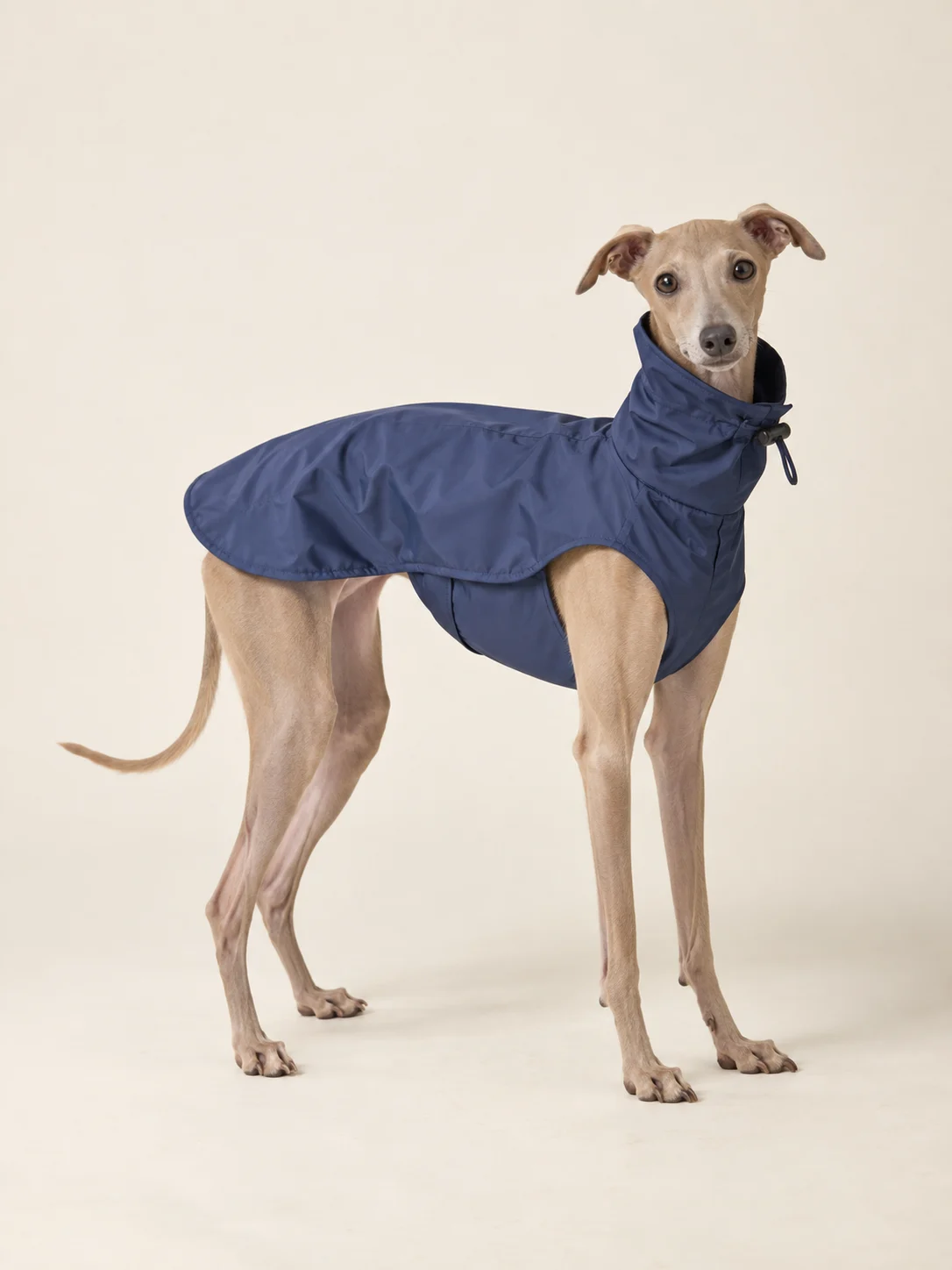
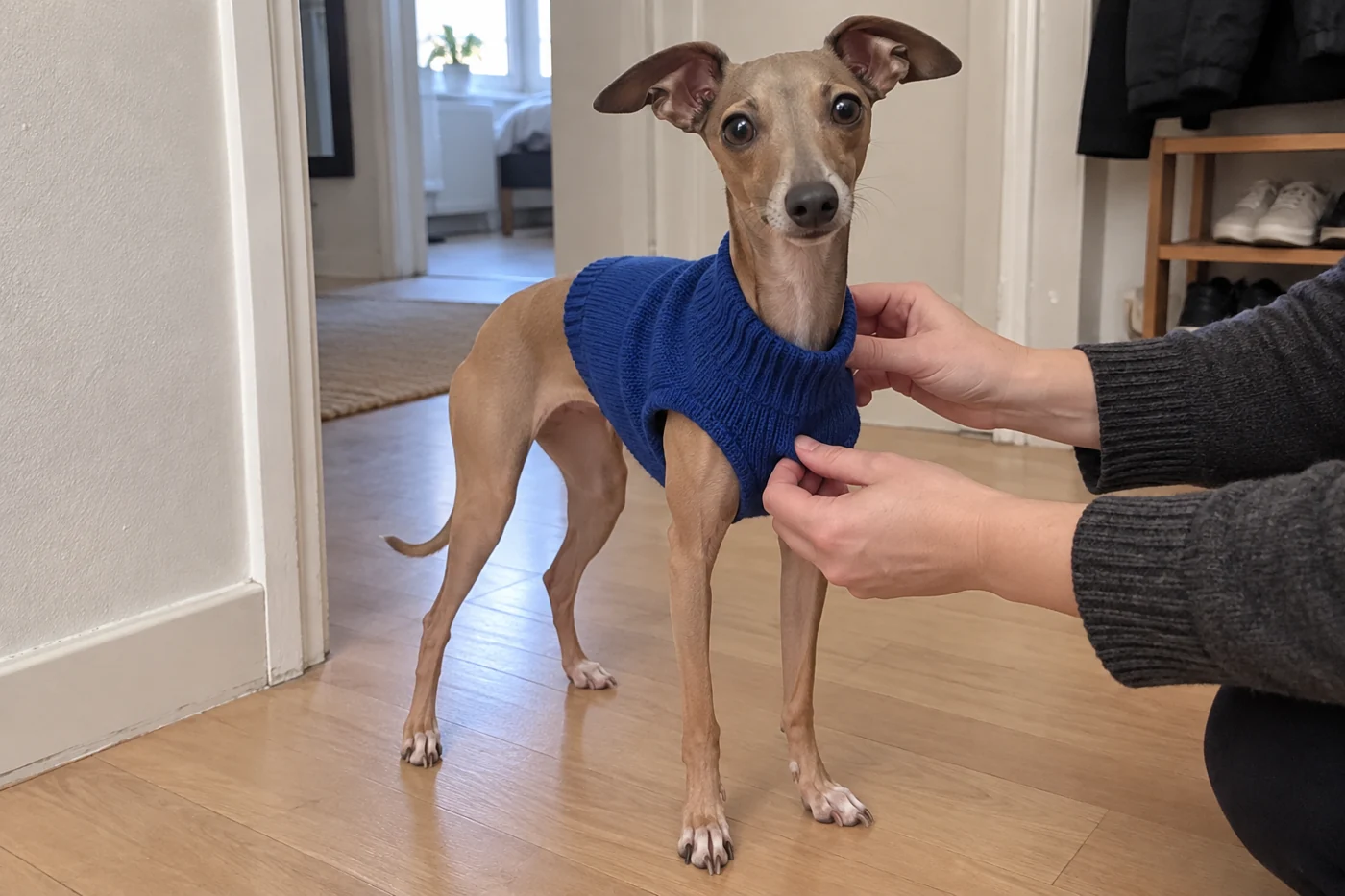
Dress a relaxed dog and let the fabric settle. The neckline should not press when the head lowers. There should be no obvious tension between the front leg and a seam. The back should have the coverage intended by the design, without the hem sliding over the tail or rolling up. Check the belly opening for this particular dog and make sure toileting remains comfortable.
Watch the dog move
Let the dog walk a few steps, turn, sit and stretch. A comfortable garment does not shorten the usual stride or slide after the first turn. If a sleeve bunches at the elbow or catches a paw, reconsider the size or cut. Look from the side and front, and take a short video; movement reveals problems a seated photograph hides.
When it does not fit
Do not assume clear tension will “wear in” unless the fabric and design are made to do so. Remove the garment and compare fresh measurements with the chart. Note the exact problem area: chest, neck, front legs or belly. That helps choose another option. Measure puppies again before new purchases; last month’s successful size can become outdated quickly.
Useful? Save it for your next walk.