
Keep room to react
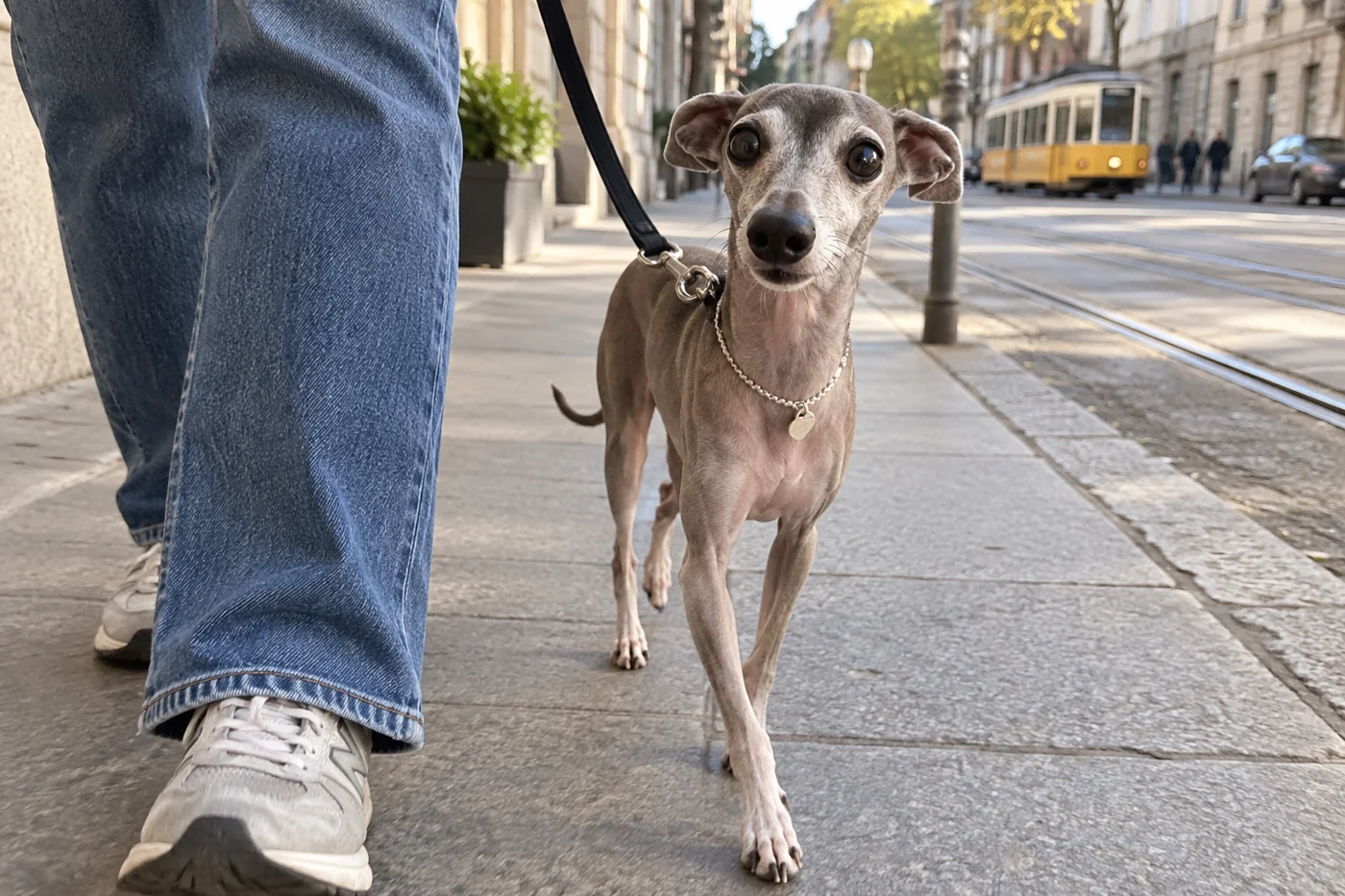
Choose the less crowded side of a pavement. Notice driveways, steps and doors that may open. Shorten the lead to a manageable length at crossings. A calm ordinary route often feels better than a famous street that is constantly crowded.
The surface matters
Wet tiles, metal grates and loose snow feel different under paws. If the dog changes its stride, slow down and find better footing. Before carrying the dog across a whole district, try changing the side of the street or pace.
Rehearse a tricky crossing
Before a new route, spot where the pavement narrows, car doors may open or bicycles pass. Decide which side the dog will walk on and where you can pause. That is easier than a last-second change on a taut lead. On wet tiles and metal grates, allow the dog a more comfortable line within a safe route.
Consider the crossing from dog height
At the kerb, do not leave a long loop of lead extending ahead. Wait for a suitable moment, make sure the dog is beside you and cross together. On a narrow section, stopping to let a scooter pass is easier than improvising at the last second.
Notice hazards underfoot: glass, discarded food and openings in grates are easier to spot when you look along the route rather than only at your phone. If one location frightens the dog, find an alternative and work on familiarity separately at a quieter time.
Check your own clothing as well. A loose bag strap or long scarf can tangle with the lead. City walking is simpler when your hands can be freed easily. An attractive street with repeated tight passages may be less suitable than the quiet road next to it.
Useful? Save it for your next walk.