
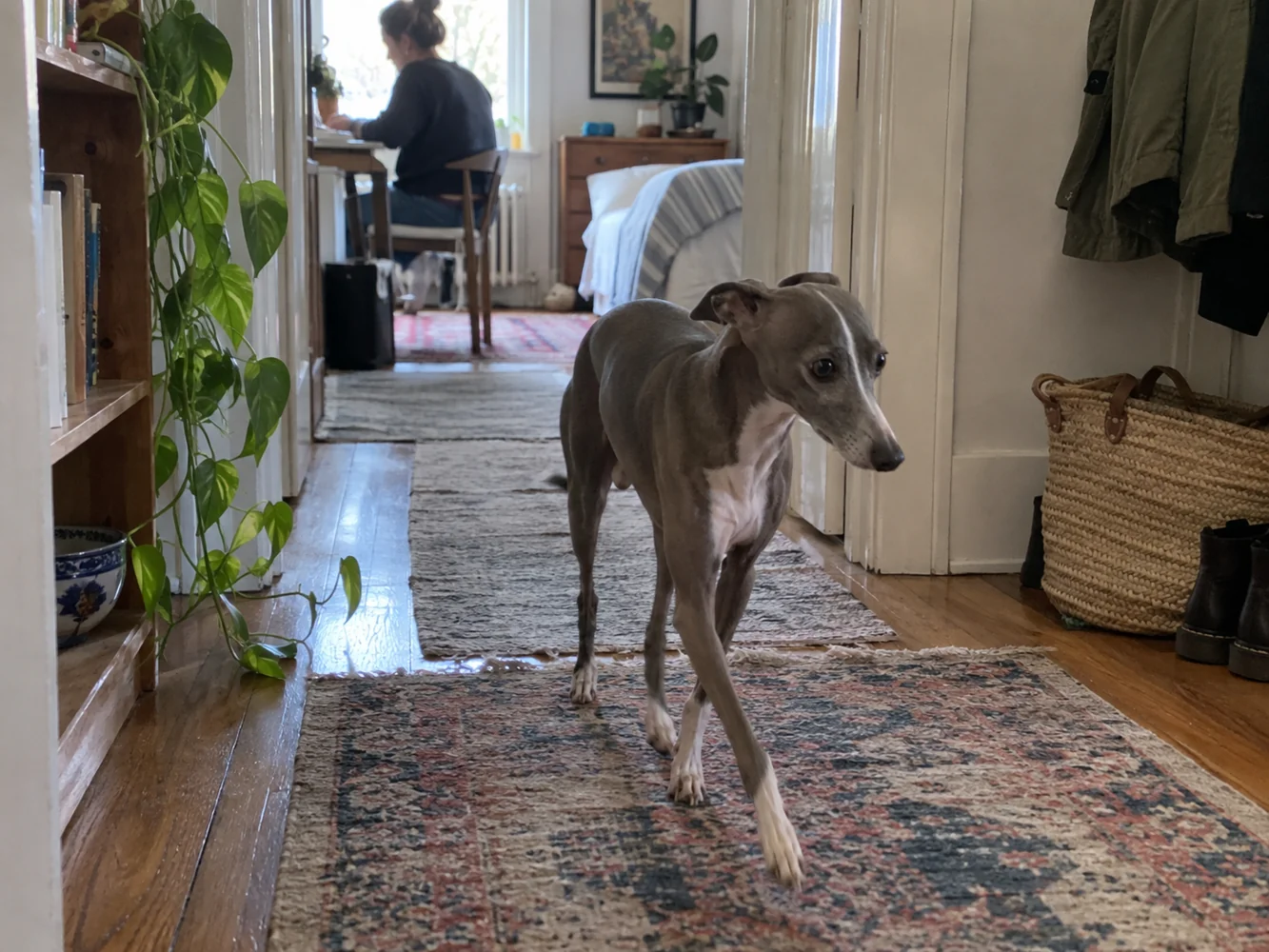
Walk the dog’s route
Trace the paths your dog uses most: door to bed, bed to water, water to window. On smooth flooring, look for hesitant turns or slipping. A small non-slip rug in the right place can help more than a large one where the dog rarely goes.
A rug must stay in place
Check the underside; a rug that slides with the dog solves nothing. Flatten curled edges and move cables away. A sudden change in movement or reluctance to use a leg calls for a veterinarian, not only a new rug.
Make a grip map
Watch your dog in three moments: walking calmly, turning toward the water bowl and greeting you at the door. Corners often reveal a slippery floor more clearly than straight walking. Mark those points and place rugs to create a connected path rather than isolated islands. Use a suitable non-slip backing. A rug should still stay put after washing, so check it regularly.
Walk the dog’s route
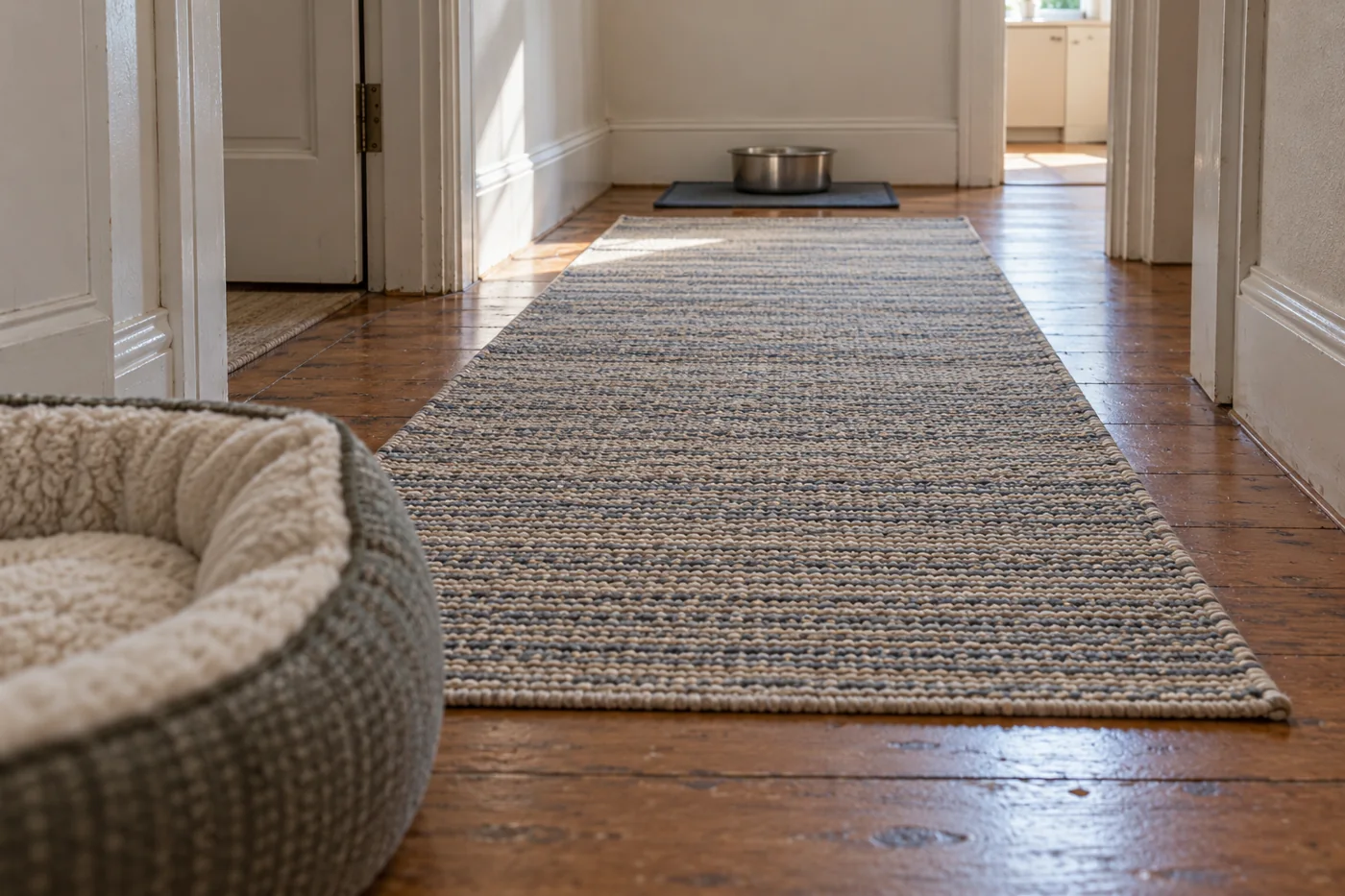
Follow the route from bed to water bowl, then to the door and sofa. One small rug in the middle of a room does little if the sharpest turns remain on a slick surface. Stable runners connecting frequently visited places are often more useful.
Check the rug backing and edges. If it slides underfoot or curls up, the problem has simply moved with it. Choose an underlay compatible with your floor and follow its cleaning instructions.
After mopping, wait until the floor is dry before starting a game. Record a short video of ordinary walking without luring the dog to move fast. Can you see slipping when they start or turn? If movement remains hesitant on a stable surface, flooring may not be the whole explanation and professional advice is appropriate.
Useful? Save it for your next walk.