
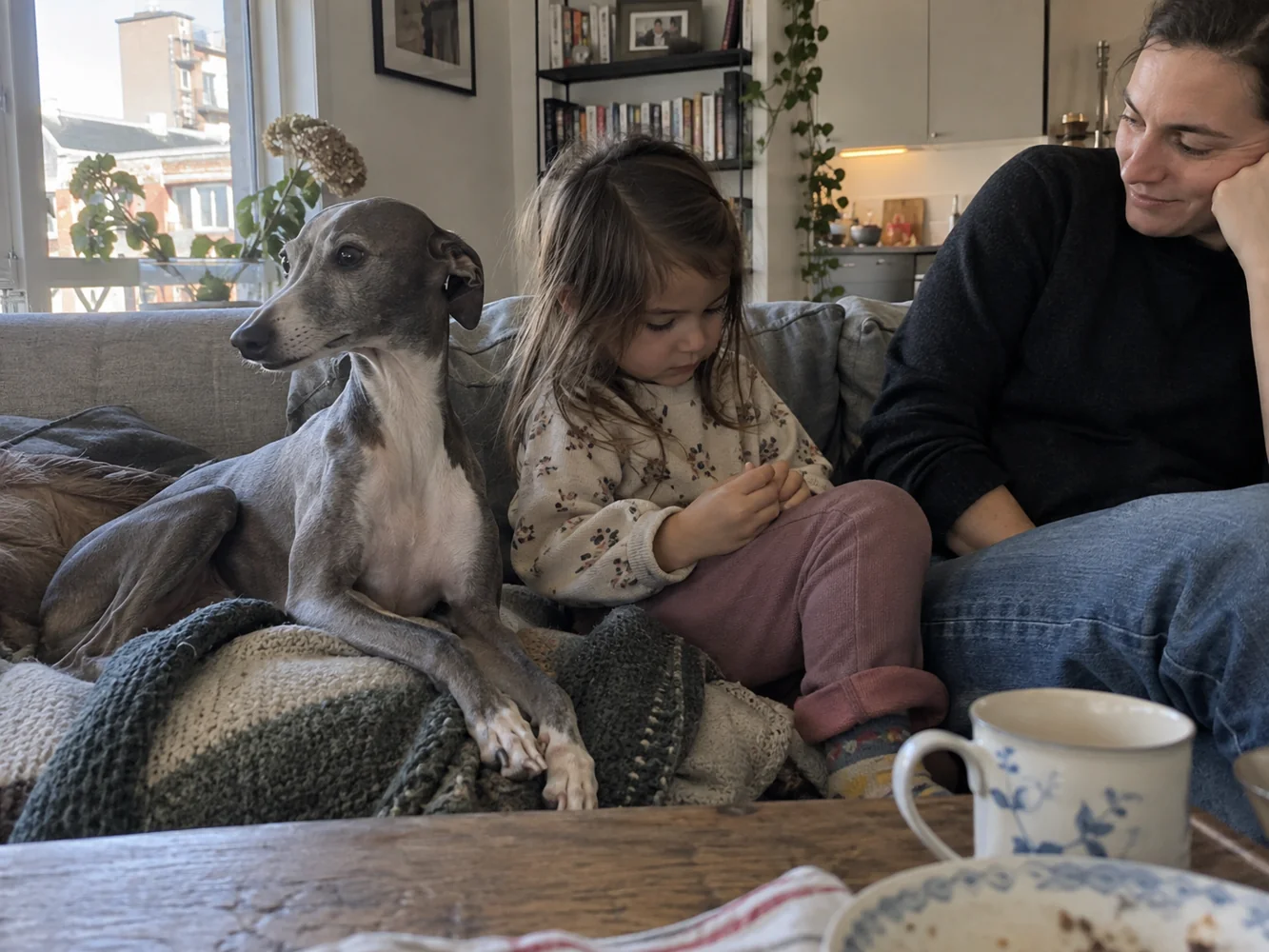
Teach the invitation
A child can learn to approach calmly, never lift or wake the dog and ask an adult first. The dog needs a place where it will not be disturbed. Children and dogs need responsible adult supervision, even when they know one another well.
Shared time without pressure
A child can help prepare a blanket, fill a water bowl or join a walk. Hugs and posed photographs are unnecessary. If the dog walks away, adults help everyone respect that choice.
Make a quiet zone real
Name the dog’s quiet place clearly for the child: “When she is on this bed, we leave her alone.” Repeat the rule calmly and follow it yourself. Help the child notice when the dog turns away, walks off or wants sleep. Instead of a tight hug, offer a shared task at a distance: bring water, choose a walking route or lay out a blanket. Safety remains the adult’s responsibility.
A rule children can remember
Sleeping, eating or resting in their own place means leave the dog alone. Explain this through specific examples rather than only saying “be gentle.” Show a child how to invite the dog and wait for a choice instead of approaching with a hug.
A calm shared activity can be simple: under adult supervision, the child puts an approved treat on a mat and steps away. The dog chooses whether to approach. There is no need to compete over who can keep the pet on their lap longest.
The adult manages the setting and ends contact before the dog feels a need to defend their space. If close supervision is not possible, separate them. Familiar children and dogs can respond differently when tired, overwhelmed or unwell. Clear boundaries support friendship better than requiring constant interaction.
Useful? Save it for your next walk.