
Start with the route through your home
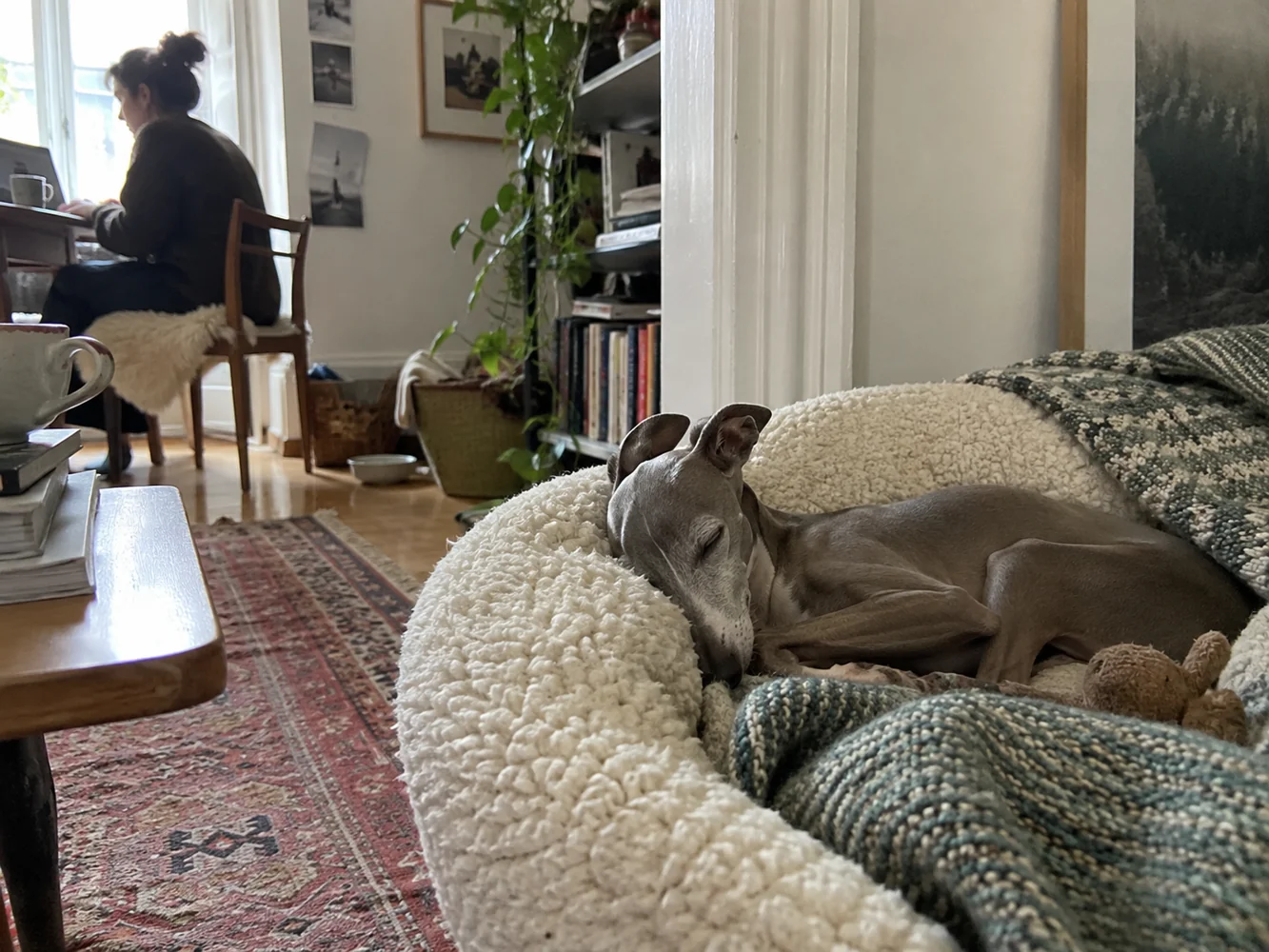
A bed in the middle of a hallway is inconvenient for everyone. Choose a quiet position away from through traffic, draughts and a hot heater. A distant isolated room may not suit every Italian Greyhound, though; many like to know where their people are.
Review after a week
Watch where the dog chooses to rest. If it repeatedly chooses another corner, ask why: is it quieter, softer, closer to you? Move the bed or offer a second restful spot. Avoid insisting on the picture-perfect location.
An evening check
Look at the chosen spot during an ordinary evening: someone cooks, a television turns on, the front door opens. A bed that seemed quiet at noon may be on a busy route at night. Put a familiar blanket there and watch for a few days. If the dog chooses the sofa, there is no need for a battle; a second bed nearby may work. The point is not a perfect corner on a floor plan, but a place where the dog can rest.
Check the spot at different times
A corner that is quiet in the morning may become the route between kitchen and sofa in the evening. Watch where people walk, where an open window creates a draught and whether the bed sits in direct radiator heat. A useful sleeping place lets the dog rest without monitoring every family movement.
Start by putting a familiar blanket there. If the dog leaves, do not repeatedly send them back. Check the approach, space to stretch and nearby appliances that may make unexpected noise.
A second quiet option in the room where you spend time can help. The choice then need not be between an empty hallway and a busy passage. Judge a rearrangement by whether the dog rests more comfortably, not by how neatly the bed lines up with the wall.
Useful? Save it for your next walk.