
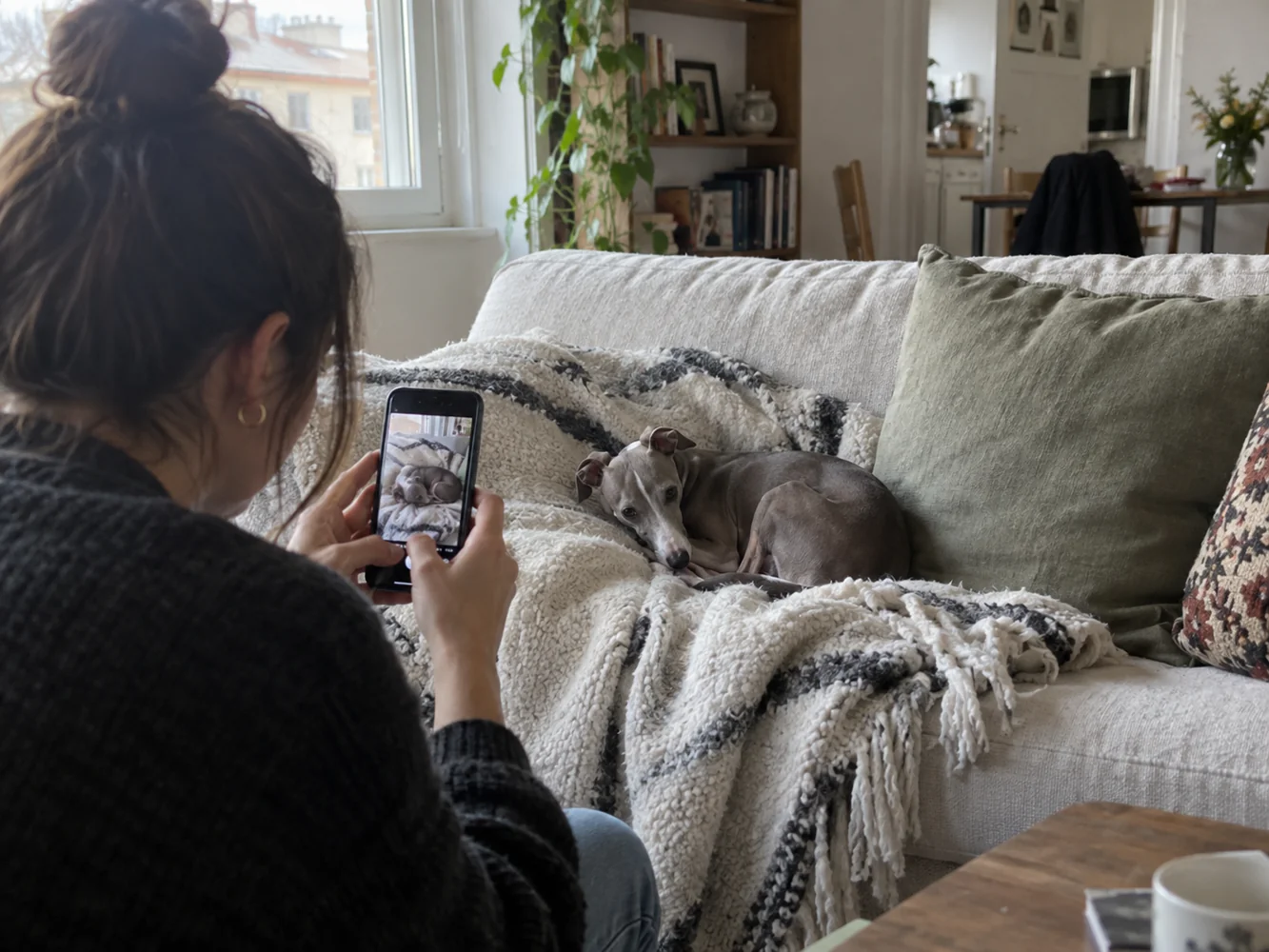
Move yourself, not the dog
Choose a moment when the dog rests near a window. Lower the phone to eye level and remove the most distracting objects from the frame. Do not move a sleeping dog for symmetry; move yourself instead.
Let the picture stay alive
A funny ear, a fold in the blanket and a little everyday mess tell a story. Heavy editing can alter coat and fabric colours. A few honest frames in daylight are often better than a flawless advertising image.
One portrait without a home studio
Clean the phone lens and find a place beside a window. Switch off a lamp if its yellow light mixes with daylight and changes the coat colour. Check the background: moving a bright packet now is easier than hiding it with a filter later.
Hold the camera at head height, step back a little and use the normal lens. A wide-angle view from very close enlarges the nose and distorts legs. Tap near the eye on the screen to choose the focus point.
Take a few frames, then pause. Do not restrain the dog by the neck or put them on the edge of high furniture for better light. If they choose to lie on a rug, you already have a suitable setting.
When selecting pictures, look for a sharp eye, natural posture and paws that were not accidentally cut off. A little background untidiness often gives a home photograph more life than a perfectly empty room.
Useful? Save it for your next walk.