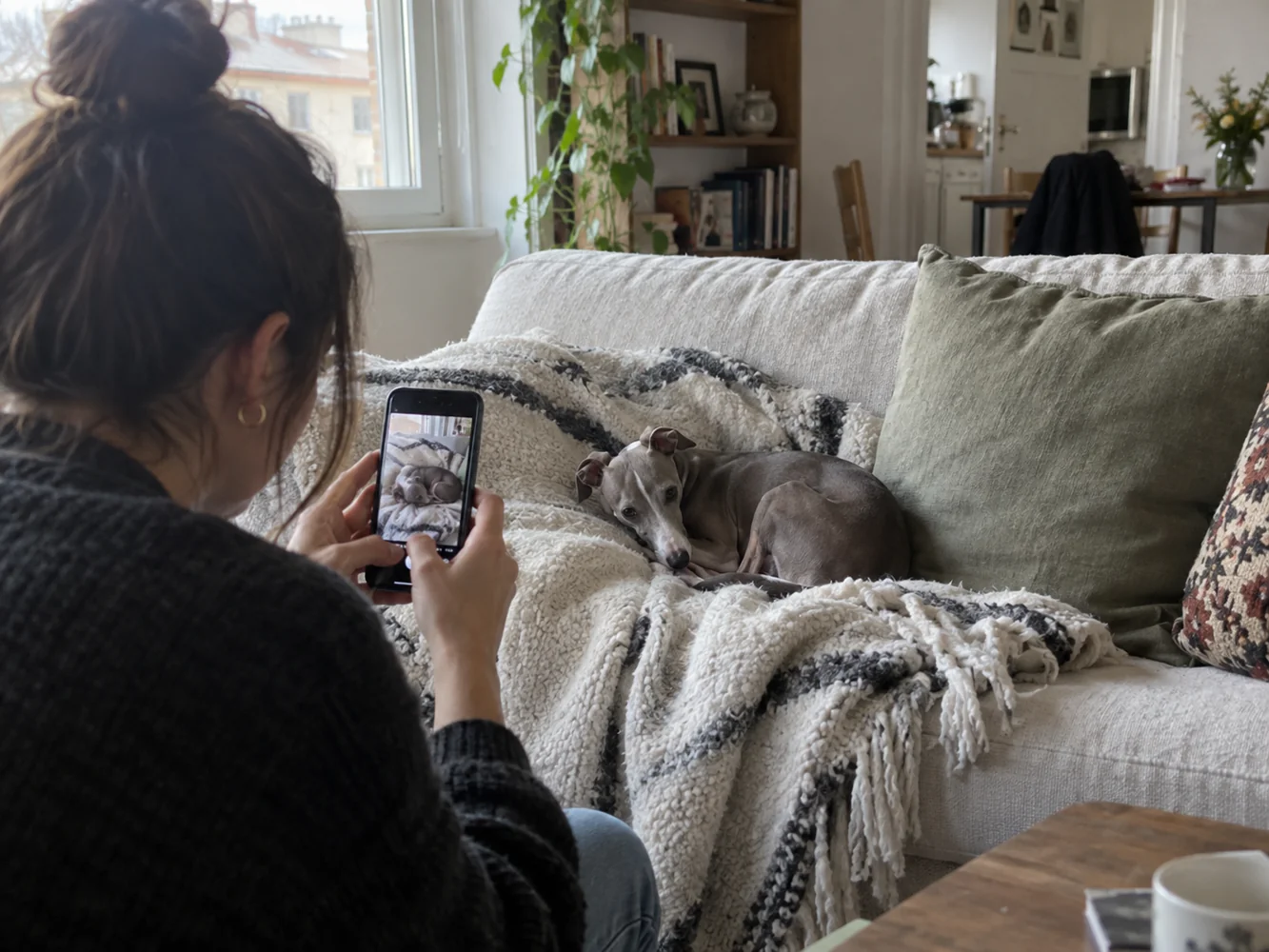
How to take a good Italian Greyhound photo: the short answer
A good Italian Greyhound photo is attention on the dog, calm light and a few minutes of patience. The breed has a slender outline, expressive eyes and “propeller” ears, and all of that comes out well in soft light and at eye level.
The essentials:
- Light: daylight, by a window or in shade. Avoid harsh shadows and flash.
- Angle: at the dog’s eye level, not from above.
- Background: plain, so the dog stands out.
- Short sessions of 5–10 minutes with a treat.
- Warmth: an Italian Greyhound feels the cold, so do not photograph it long in the cold.
Where to shoot indoors
By a window at home there is usually enough light.
- Put a bed or blanket next to the window. Daylight softly shows off the dog’s form.
- If the sun is too bright, draw a sheer curtain.
- Clear the frame of clutter: cables, boxes, bowls.
- Pick a plain background: a blanket, a sofa, a wall.
An Italian Greyhound loves warm places, so it will gladly lie on a blanket by the window. A dog curled into a “shrimp” is one of the most recognisable poses. More about it in our article on why an Italian Greyhound is a shrimp.
How to shoot
- Get down to the dog’s eye level: that gives an expressive look and good proportions.
- Shoot in bursts, not single frames: it moves fast.
- Attract attention with a sound or a treat above the lens.
- Do not pose the dog by force: catch natural poses.
- Do not use flash: it frightens.
- Stop before the dog tires.
What usually comes out beautifully:
- “flying” ears when the dog is alert (the FCI standard calls them “flying” or “propeller” ears);
- curling into a ball;
- eyes in warm light;
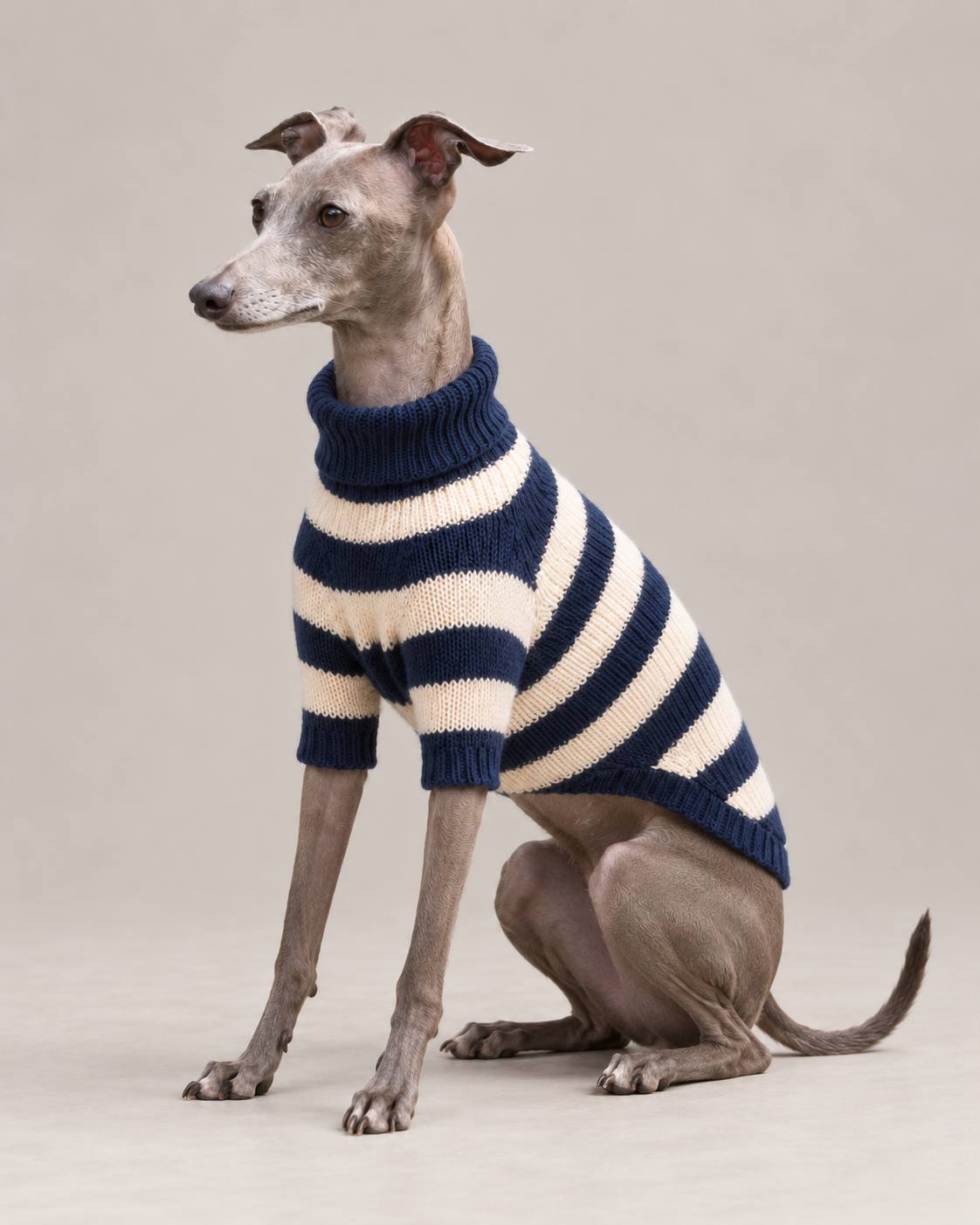
- a profile: the slim neck and the line of the back.
On a walk
Outdoors an Italian Greyhound is fast and easily distracted by movement: it will chase any movement. So:
- shoot on a lead or in an enclosed area;
- bring a helper to hold the lead and get the dog’s attention;
- pick morning or evening: the light is softer;
- use burst mode for movement;
- do not ask the dog to “pose” by a road.
If you want a running shot, take it in an enclosed area. More about safe running in our article on off-lead exercise.
Clothing in the frame
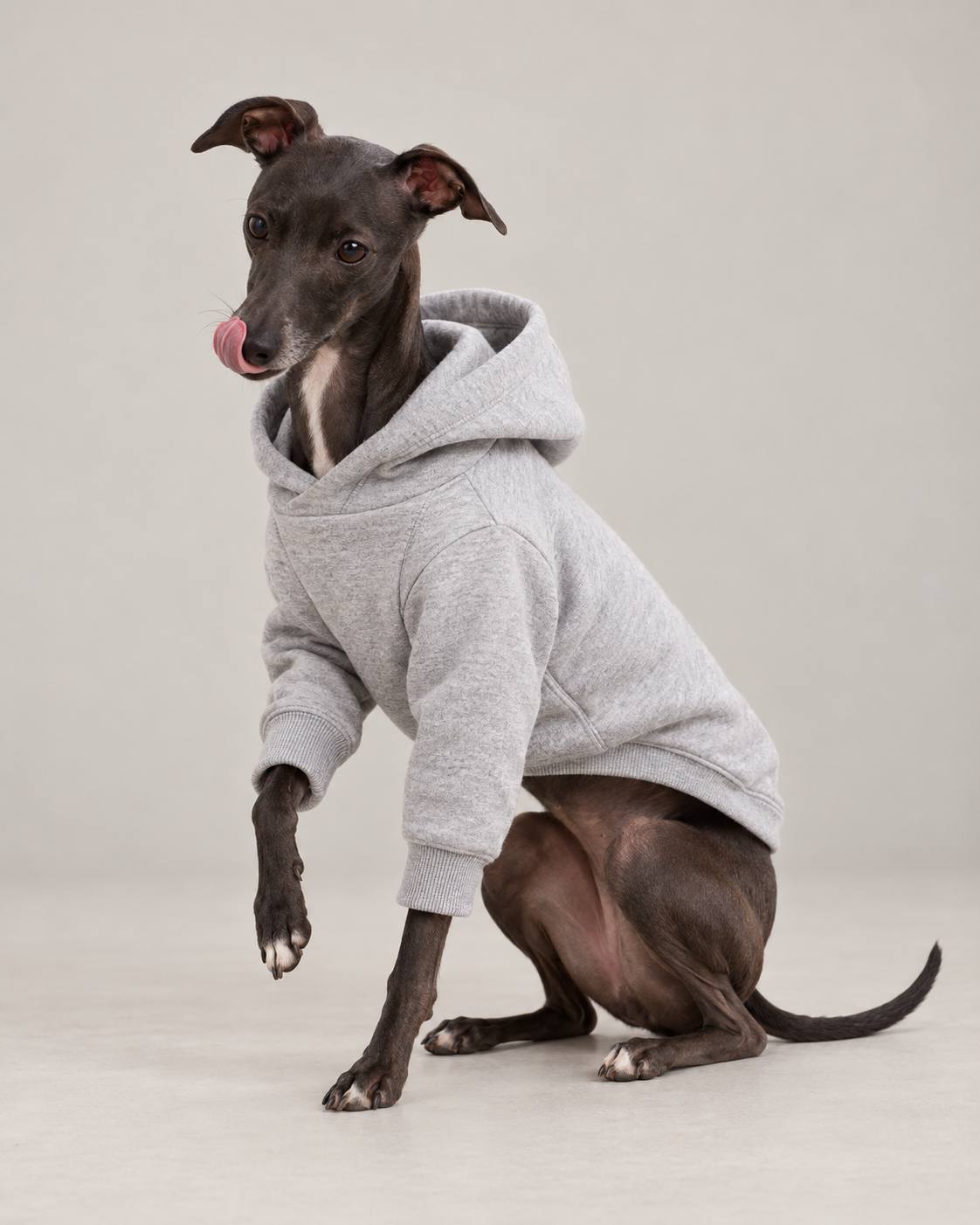
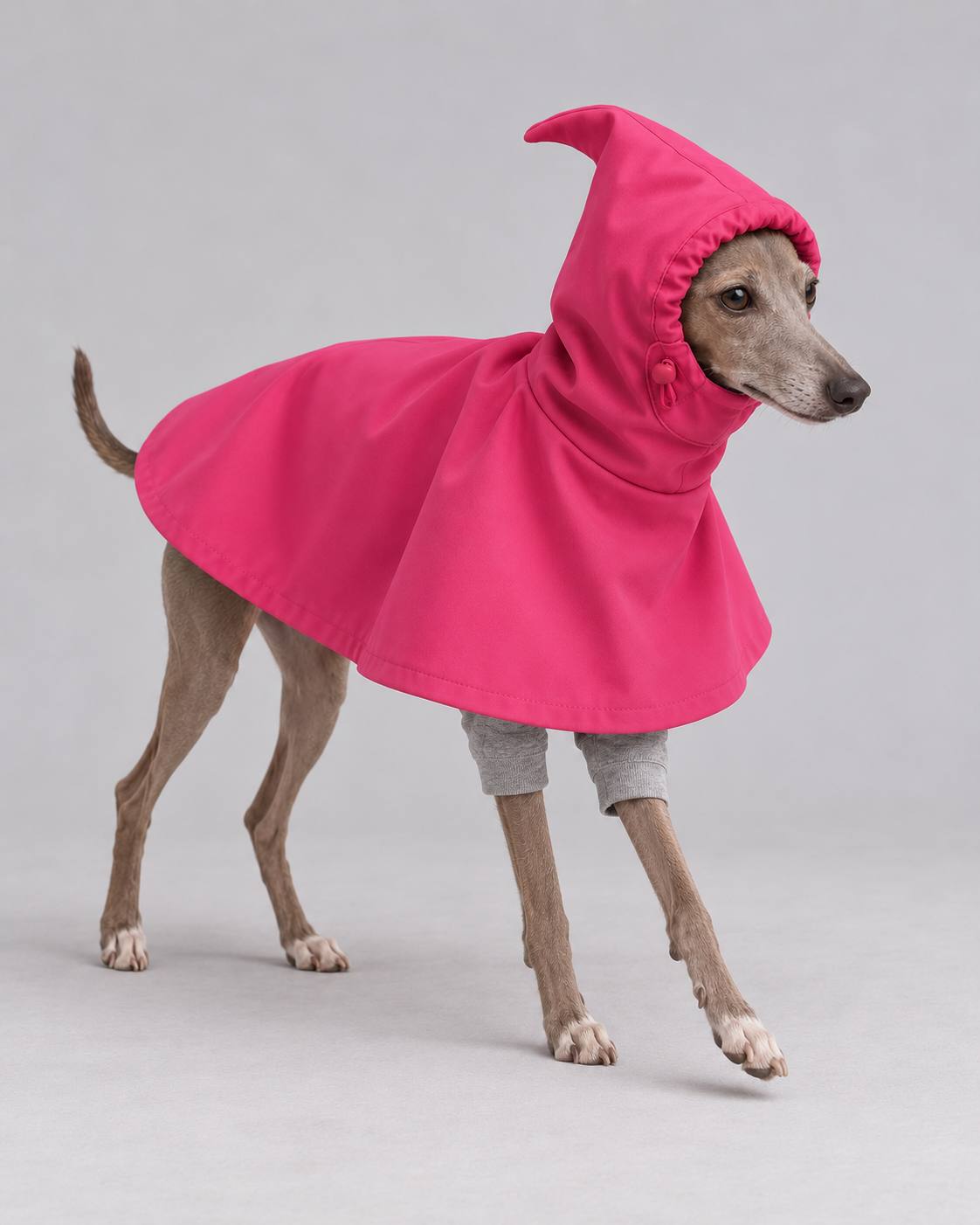
An Italian Greyhound in clothing looks very sweet, but the clothing must be comfortable. What to consider:
- check the fit first: the garment must not press, snag or slip (our article on fit);
- colour: in daylight the shade shows more accurately than under a lamp (our article on colours);
- combination: a plain garment on a calm background, or a bright accent (a snood, a poncho);
- cold: in clothing the dog tolerates a shoot outdoors longer, but do not drag it out.
You can see items from our catalogue in the block beneath the article. We do not promise “beauty in photos”: the main thing is that the dog is comfortable.
Coat colour and light
Under the FCI standard the colours are black, grey or isabella (pale fawn). In photos it shifts: grey fur by a window looks silvery, under a warm lamp brownish. If you are showing a dog for an advert, shoot in daylight and do not apply strong filters. More in our article on colours.
Working with a puppy
- Shoot on the floor and at eye level.
- Short sessions: a puppy tires fast.
- Plenty of sleep: puppies sleep up to 16–18 hours a day; do not wake it for a shot.
- Do not put a puppy up high: a jump is dangerous for slender legs.
What not to do
- Shoot when the dog is cold, in pain or afraid.
- Use flash up close.
- Put it on a height (windowsill, table) for a shot.
- Let it off lead by a road.
- Force a pose.
Frequently asked questions
- How do I photograph an Italian Greyhound at home? By a window, at eye level, in daylight, with a treat.
- How do I catch the “shrimp”? Wait for the dog to lie on a warm blanket: it curls up on its own.
- Do I need flash? No: it frightens the dog, and natural light is better.
- How do I shoot on a walk? In bursts, in an enclosed area or on a lead, with a helper.
- How do I show the coat colour? In daylight, without filters.
What to remember
- Soft daylight and eye level are the basis of a good shot.
- Short sessions and a treat instead of force.
- Clothing in the frame must be comfortable.
- Safety beats a photo: a lead by the road, and never put the dog up high.
Sources
References for checking facts and reading further.
Useful? Save it for your next walk.