
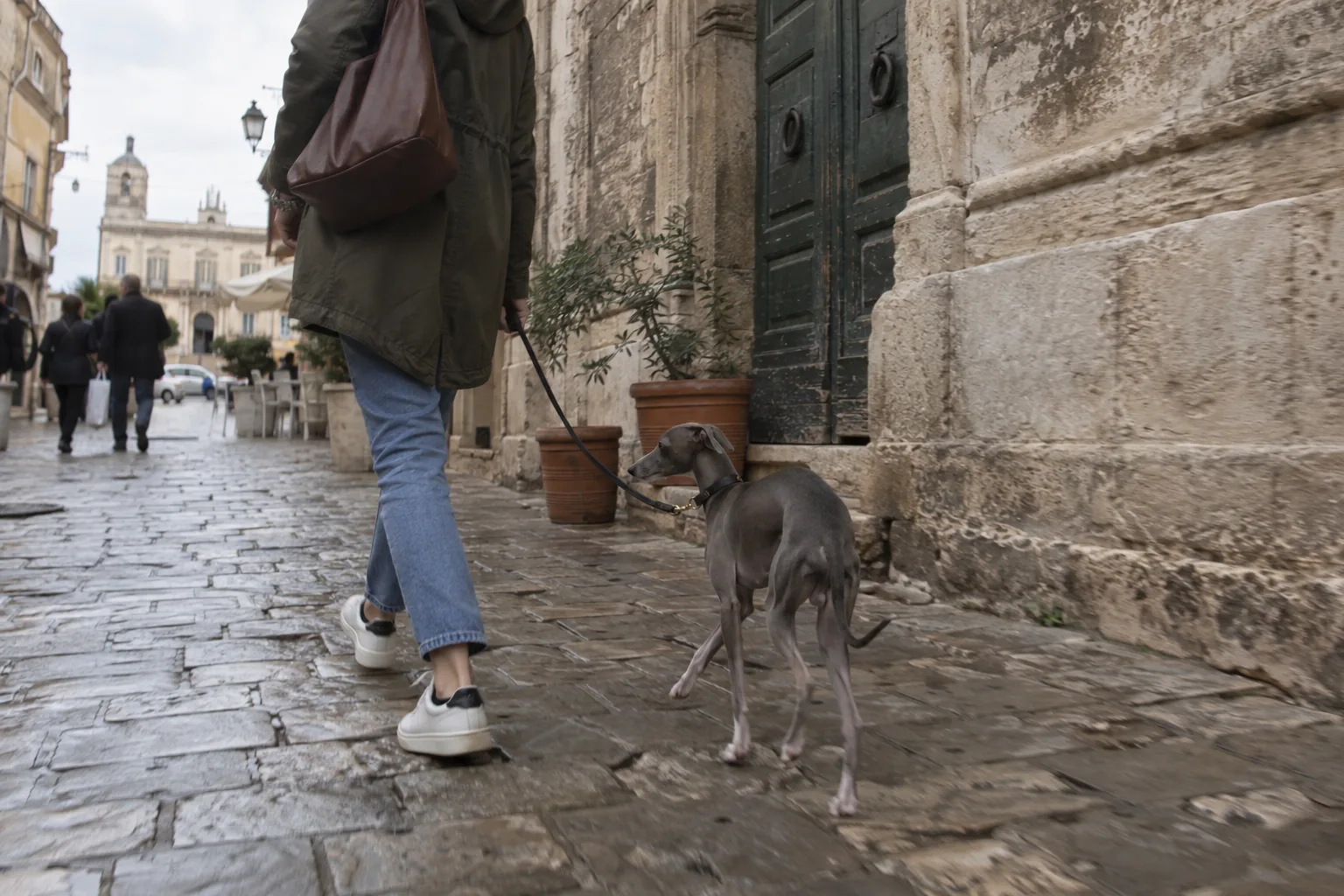
An ancient dog, a difficult question
Small sighthounds appear in accounts of the ancient Mediterranean. The FCI standard gives a historical route through Egypt and Greece to Italy. Breed historians are more cautious: centuries separate an ancient image of a similar dog from a documented pedigree of today’s Italian Greyhound. “Every pharaoh owned an iggy” makes a neat headline but claims too much. The more interesting question is why this slim outline kept appearing in human stories.
Italy gave the story its name
By the Renaissance, the small sighthound was visible in Italy, including at noble courts. It acquired a cultural role that outlived the period: a dog an artist wanted to place beside a person in a portrait. Courtly life did not turn it into an ornament. A sighthound still sees movement and can run quickly. That tension between elegance and athleticism is part of its appeal.
Hunter or companion?
Both roles appear in historical accounts. A small sighthound could pursue small game and be a close companion at home. There is no complete record establishing which role came first. That gap is a reason to resist repeating a good story as certain fact. The modern Italian Greyhound still fits both pictures: a soft sofa and an open, safe field with room to run.
Before photographs, there were portraits
Paintings show how artists and patrons saw dogs in their own time. Each work also has conventions of its own; it is not a photographic breed standard. A narrow muzzle, light frame and elegant legs may resemble today’s Italian Greyhound, but identifying a particular dog in a painting requires research into the work and expert commentary. We plan to explore such works one at a time, with the museum and source named.
The twentieth century and today
The world wars affected many European breeds, including the Italian Greyhound. Breed enthusiasts rebuilt populations and paid attention to a sounder, functional dog. Today the story continues beyond clubs and shows. It is written in small daily scenes: someone opens the door after work and a long-legged dog comes racing over, ready to reclaim the best place under the blanket.
Sources
Breed facts were checked against these references. Editorial tips do not replace veterinary advice.
Useful? Save it for your next walk.