Italian Greyhounds and other animals: the short answer
An Italian Greyhound gets on well with dogs, especially similar ones: the breed does well in a pair or group. But there are two caveats: it does not suit a home with large active dogs, and small fast animals may trigger its hunting instinct (it will chase anything that moves).
The essentials:
- A second dog similar in size and temperament is often a good option.
- Large, boisterous dogs are a danger to an Italian Greyhound’s slender legs.
- Cats and small animals: introduce gradually, under control, with a way to retreat.
- Rodents, birds and rabbits are the riskiest neighbours for a sighthound.
- Each animal needs its own place, bowl and the chance to get away.
With other dogs
Italian Greyhounds do well in a pair or group and suffer when left alone. So a second dog may help if you are out a lot. But it is a separate decision: think about temperament, size and your ability to keep two dogs. More in our article on being home alone.
What matters:
- Size. Italian Greyhounds in general do not suit large active dogs. Play with a big dog can end in an injured slender leg (our article on leg fractures).
- Temperament. Calm dogs suit better: an Italian Greyhound is sensitive.
- Play. Watch play: keep it gentle, on a non-slip floor.
- A pair of Italian Greyhounds. Often good: they are alike in size and temperament.
How to introduce dogs
- Introduce on neutral ground, on leads, in a calm setting.
- Start at a distance and let the dogs look at each other.
- Let them sniff, then lead them away and give a treat.
- Short meetings, gradually longer.
- At home put away toys and food that could cause quarrels.
- Watch body language: tense, frozen postures and growling are a reason to separate them.
- Give each dog its own place and bowl.
- Do not leave them together unsupervised until you are sure all is calm.
More on training and behaviour in our article on training.
With a cat
The sources we checked contain no data on how Italian Greyhounds usually get on with cats. What is known: an Italian Greyhound will chase any small moving animal. So an introduction to a cat must be careful:
- in separate rooms: first let them get used to each other’s scent;
- through a door or gate: an introduction without direct contact;
- under control: the Italian Greyhound on a lead or harness, the cat with a way to retreat (a high place);
- reward the dog’s calm behaviour;
- do not leave them together unsupervised.
If the dog keeps chasing or the cat is stressed, it is better to separate the animals and work with a specialist.
With small pets
Rodents, birds, rabbits, ferrets: for a sighthound these are prey. An Italian Greyhound has not lost its hunting instinct and will chase anything that moves. So:
- cages and enclosures must be closed and out of reach;
- do not leave small pets unsupervised near the dog;
- do not count on “it is kind”: instinct is stronger.
With children
If the home has both children and animals, the rules of contact apply to all. More in our article on children.
How to tell all is well
Good signs:
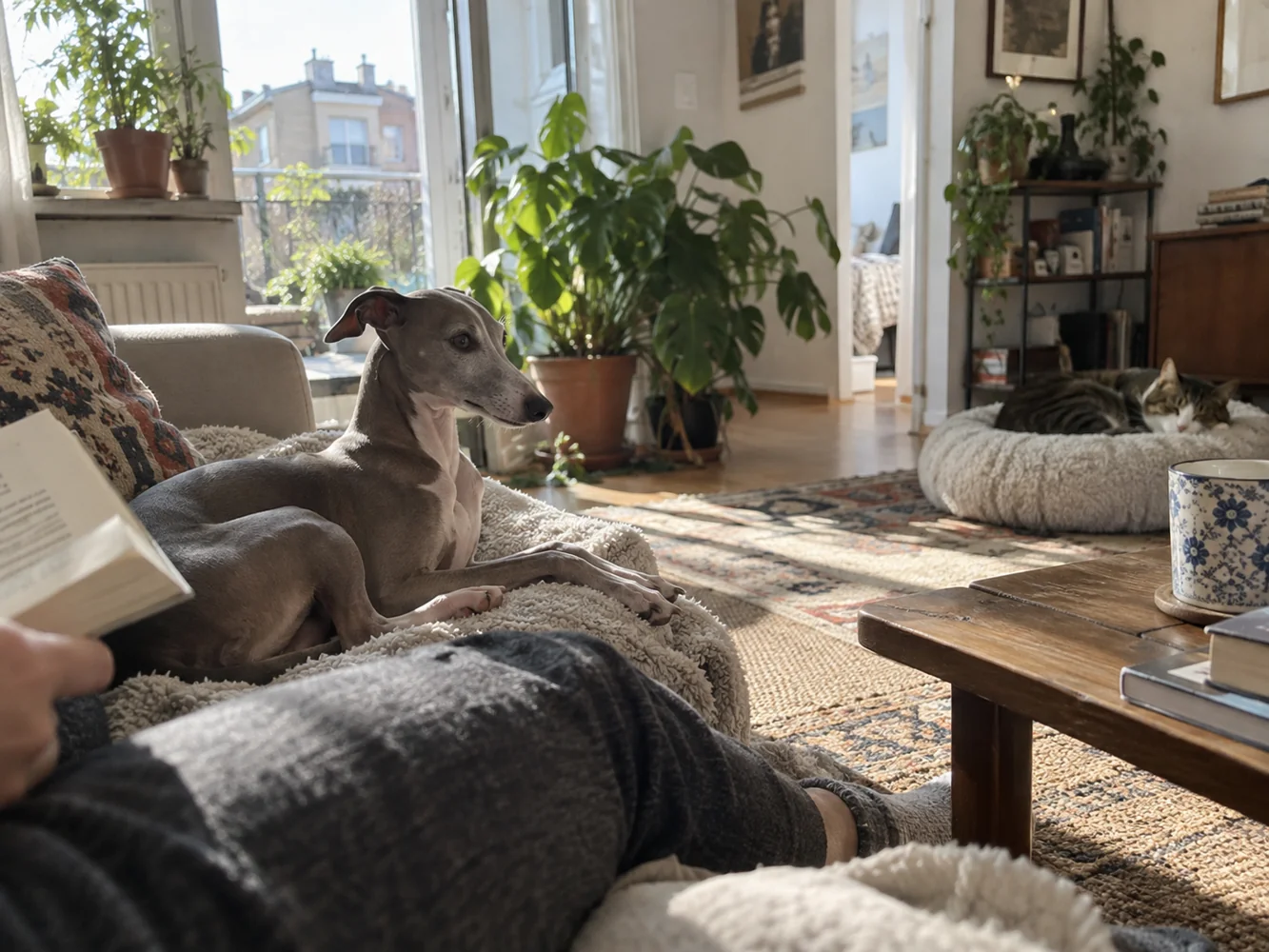
- the animals rest near each other;
- play is gentle, with pauses;
- each can leave and is not pursued;
- they eat calmly without quarrels.
Worrying signs:
- constant chasing, one animal hides or is cornered;
- growling, showing teeth, snapping;
- one animal has stopped eating or shivers;
- fights over food and toys.
If you see worrying signs, separate the animals and contact a trainer or a veterinary behaviourist.
If you are getting a second Italian Greyhound
Two Italian Greyhounds get on well, but:
- there are more costs (food, vet, clothing);
- both feel the cold and need warm places;
- both are attached to you.
It is an excellent option if you are ready. More in our article on pros and cons.
Frequently asked questions
- Does an Italian Greyhound get on with other dogs? Often well, especially similar ones. Large active dogs do not suit it.
- Can I keep it with a cat? No data: introduce gradually and carefully.
- Does a second dog suit it? It may help against loneliness, but think the decision over.
- Are small pets in danger? Yes, a sighthound may see them as prey.
- Can I leave them together unsupervised? Not until you are sure all is calm.
What to remember
- An Italian Greyhound does well in a pair with a similar dog.
- Large active dogs are a danger to slender legs.
- Keep small pets out of reach: hunting instinct.
- Introduce gradually and never leave them unsupervised.
Sources
References for checking facts and reading further.
Useful? Save it for your next walk.