
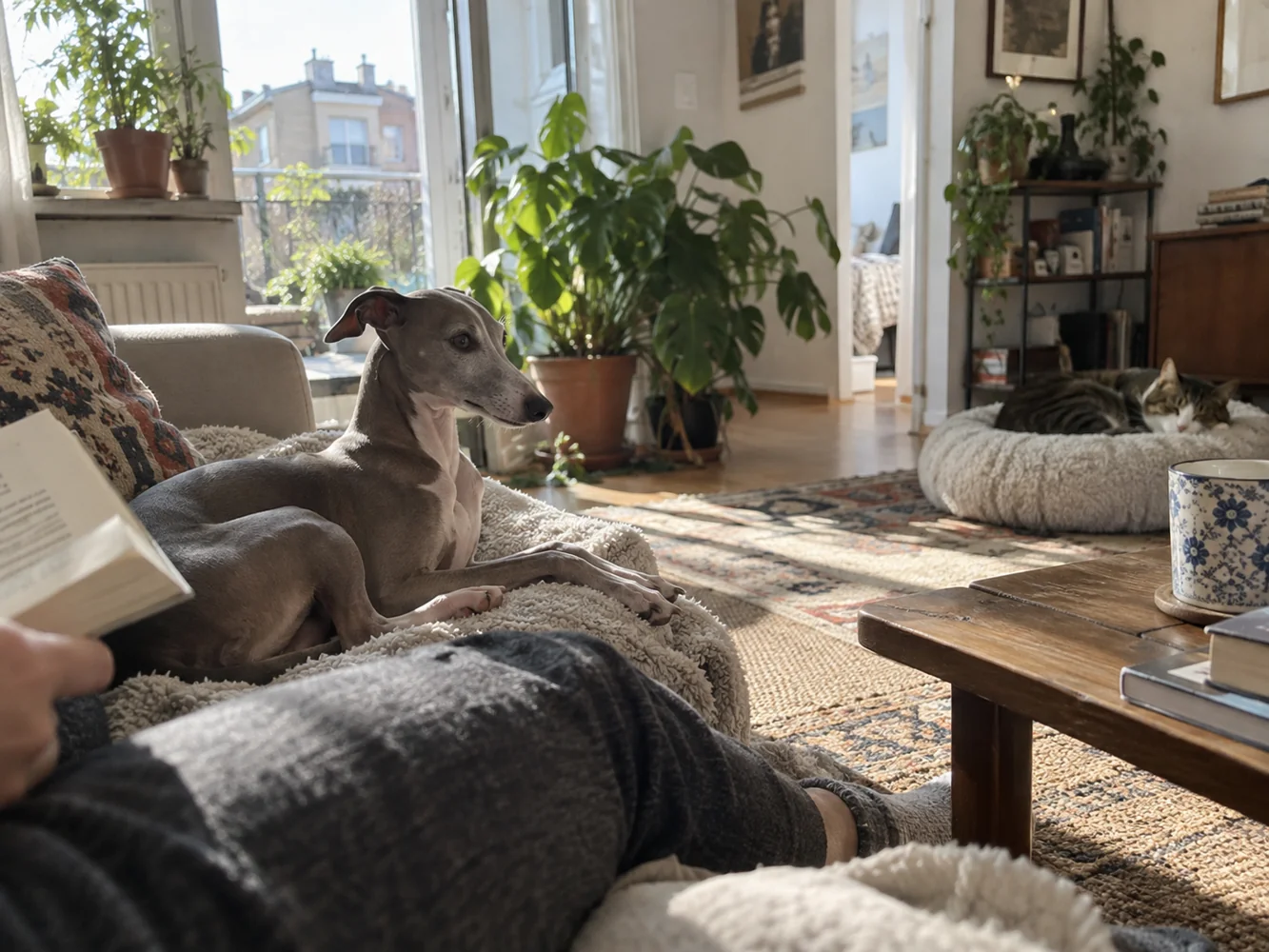
Make first meetings manageable
Avoid a forced nose-to-nose introduction at a closed door. Provide separate quiet areas, watch their reactions and reduce distance gradually. The cat needs an escape route upward or into another room; the dog needs room to step away without a chase.
One peaceful photo is not a guarantee
Even if the animals once slept together, keep managing food, beds and access routes. If tension or chasing develops, seek a qualified behaviour professional who works without intimidation. Living together is built through time and observation, not an obligation to become friends.
Keep resources separate
Food bowls, beds and doorways should not become points of competition. Feed in separate areas and keep elevated routes available to the cat. Watch not only the greeting but whether each animal can leave calmly. If one freezes, constantly watches the other or blocks a route, increase distance and seek help from a qualified professional.
Keep essential resources separate
A cat needs escape routes and places the dog cannot reach. One high shelf is not enough if the route to water or the litter tray passes directly beside the dog. Sketch the home and check each essential location.
Begin with separate areas and short managed introductions. Do not hold the cat in front of the dog’s nose: if either tries to leave, safe separation becomes difficult for everyone. Do not encourage chasing, even as a joke.
Notice specific behaviour during introductions. Can the animals look away, eat or leave calmly? Persistent staring and pursuit mean the arrangement needs changing, rather than simply waiting for things to resolve themselves. Seek qualified behavioural help if tension continues. Friendship is optional; safe, relaxed coexistence is already a useful outcome. Keep separate resources available even after the first encounters seem promising.
Useful? Save it for your next walk.