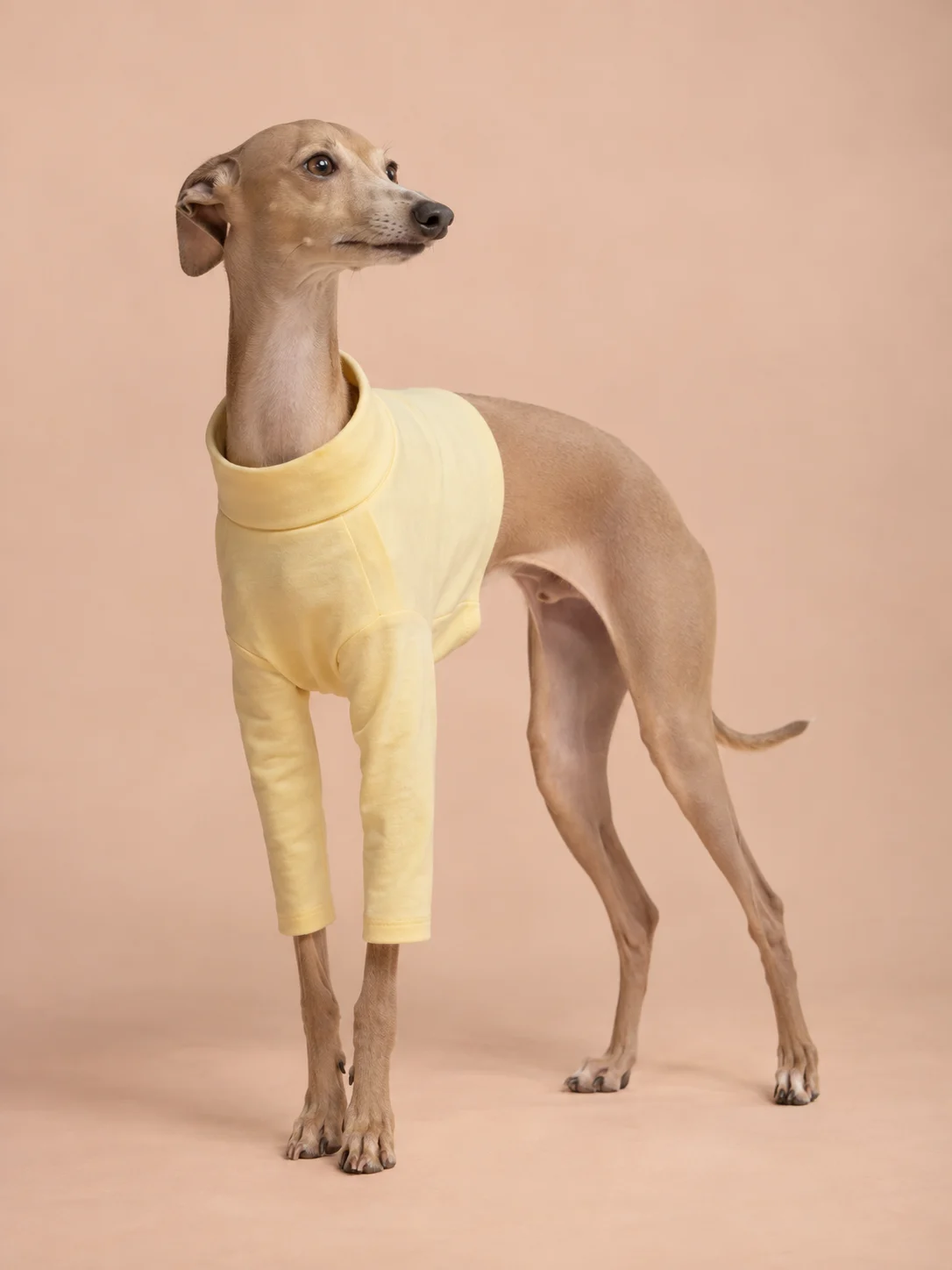
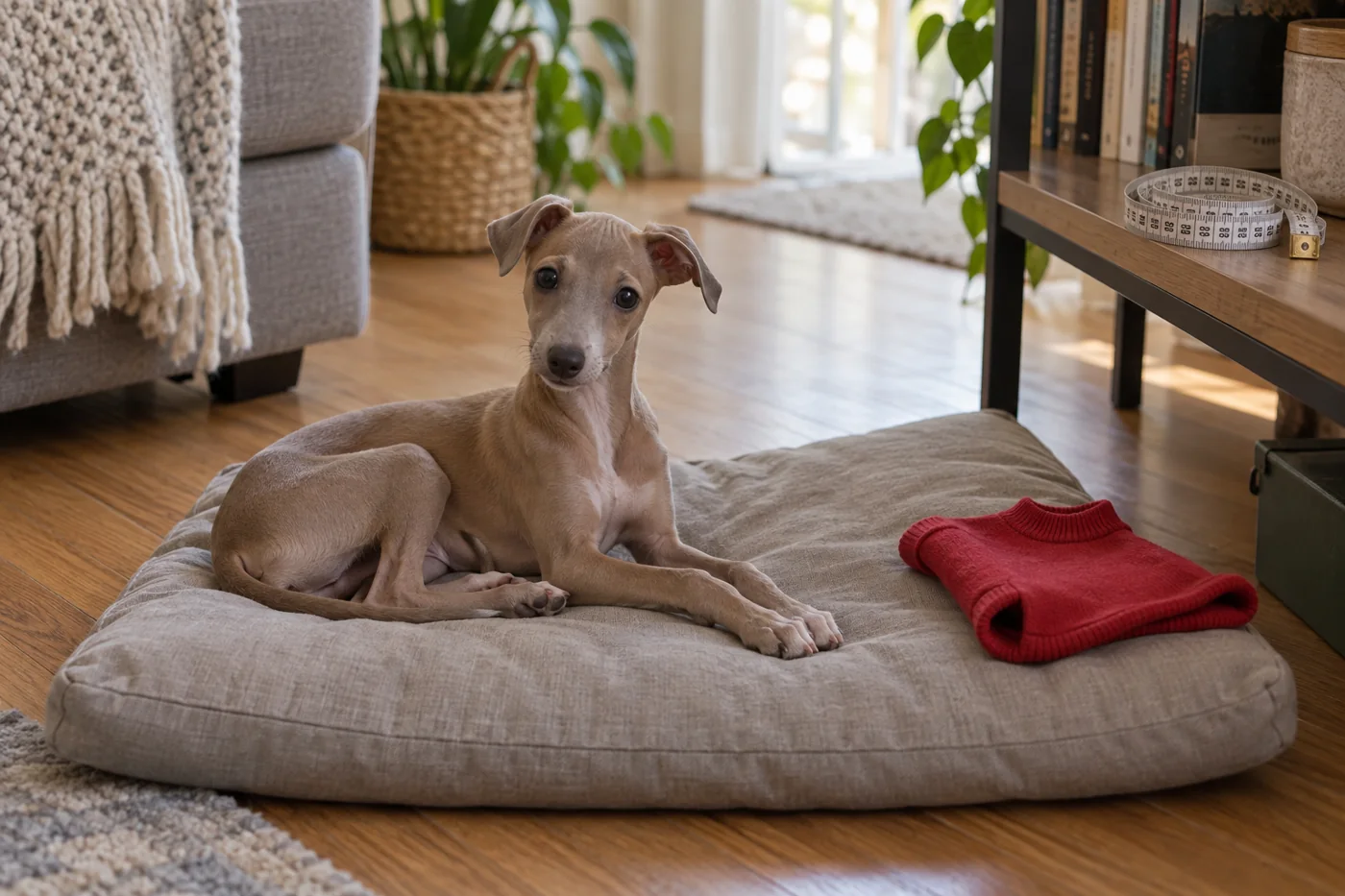
Do not buy the whole wardrobe yet
Take current back, chest and neck measurements. Choose a soft simple shape without complicated decoration. A growing puppy may outgrow clothing quickly, so a large set in one size is rarely practical. The first goal is learning fit and building a calm clothing routine.
Keep fitting brief
Let the puppy smell the fabric, dress calmly and encourage a few steps on non-slip flooring. Watch shoulders and sleeves. If the puppy resists, check the cut and return to short introductions; do not hold it in place for a photograph.
Buy for the puppy in front of you
Puppies change quickly, but an oversized garment is not comfortable merely because they will grow into it. Loose fabric can twist and long sleeves can disturb a stride. Measure back length, chest and neck shortly before ordering. Compare with the specific model’s chart and check the exchange terms in case the cut does not work. Another puppy’s age in a review is not a size guide.
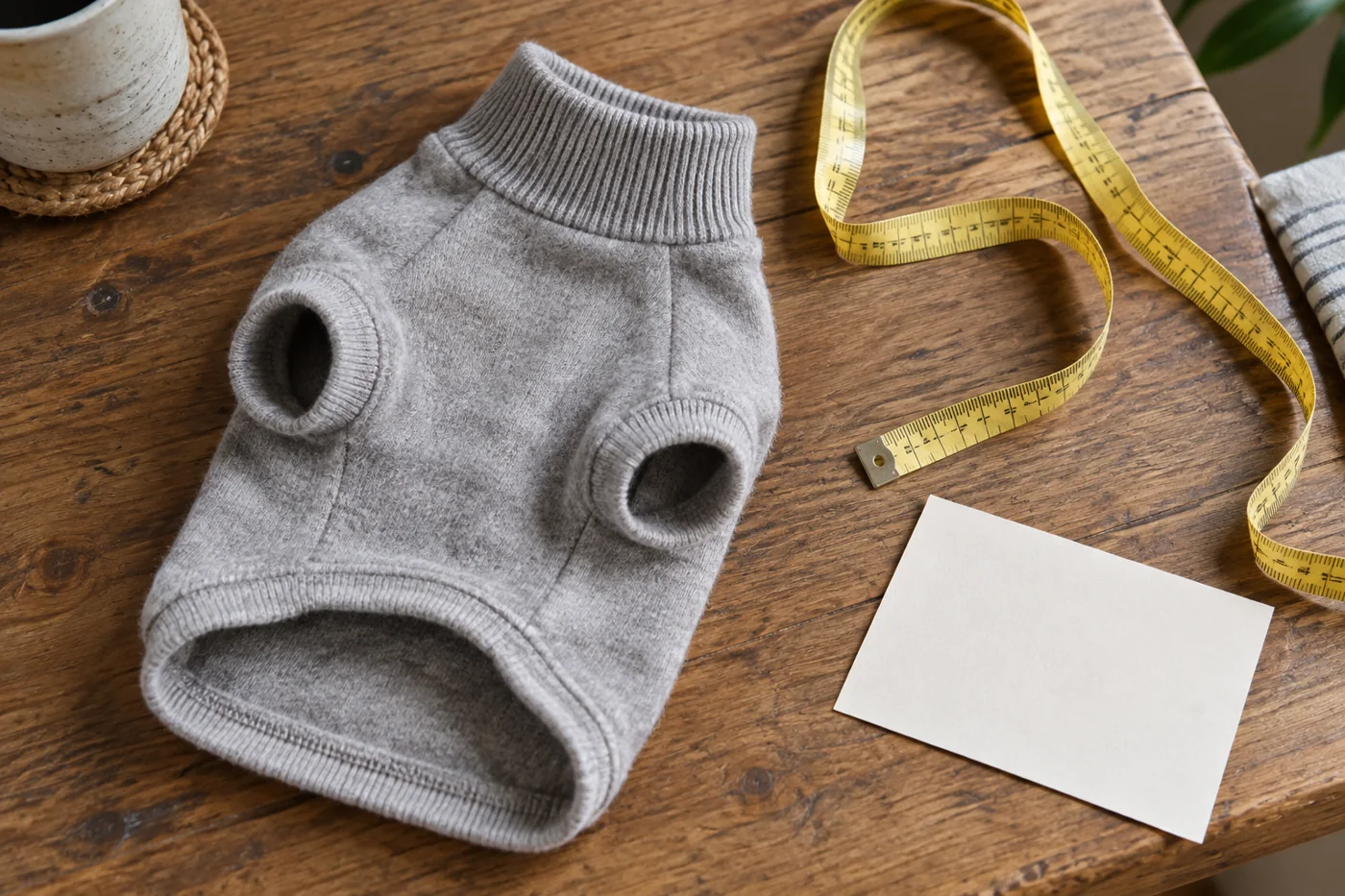
Introduce the garment gently
Place a soft piece nearby and let the puppy investigate it. Briefly practise the movement needed for dressing, then calmly reward cooperation. Begin with a simple model rather than many fasteners. The first day does not need a long walk in clothing; a few short quiet attempts at home are enough. If the puppy freezes, backs away or persistently tries to remove it, stop and check the fit. There is no need to force the process.
Watch movement, not just a photo
The puppy should walk freely, turn its head, sit and lower its nose to the floor. Check armhole and belly edges, which can change fit quickly as a young dog grows. A side photograph helps compare the fit from week to week, while a few steps on video reveal more. A playful puppy may briefly ignore discomfort, so look again after activity.
Plan the next measurement
Keep the measurements and date. Measure again before the next purchase, even if little time has passed. This helps distinguish a real size change from a cut that never matched the chest. Early garments may be worn briefly; prioritise fabric, washing and easy fit over elaborate decoration. A clean outgrown piece can be passed to another owner if it has kept its shape.
What to keep after a successful fitting
Record measurements, date and model name. Take one natural side-view photograph and a short walking video. Later these help reveal fit changes: a shorter-looking sleeve, a tighter chest or a shifted lower edge.
Check the garment before each outing, and measure again before buying or when the fit changes. Do not wait until the puppy is clearly struggling with the suit.
If it has become too small, do not try stretching it wet on the dog or leaving closures open where parts can catch. Remove it from the regular wardrobe. A sound outgrown garment can be passed to another owner with accurate dimensions and notes about its cut. A first wardrobe can be small and frequently reviewed. Useful records make that process easier without turning growth into a reason for excessive buying.
Useful? Save it for your next walk.