A letter is not a body shape
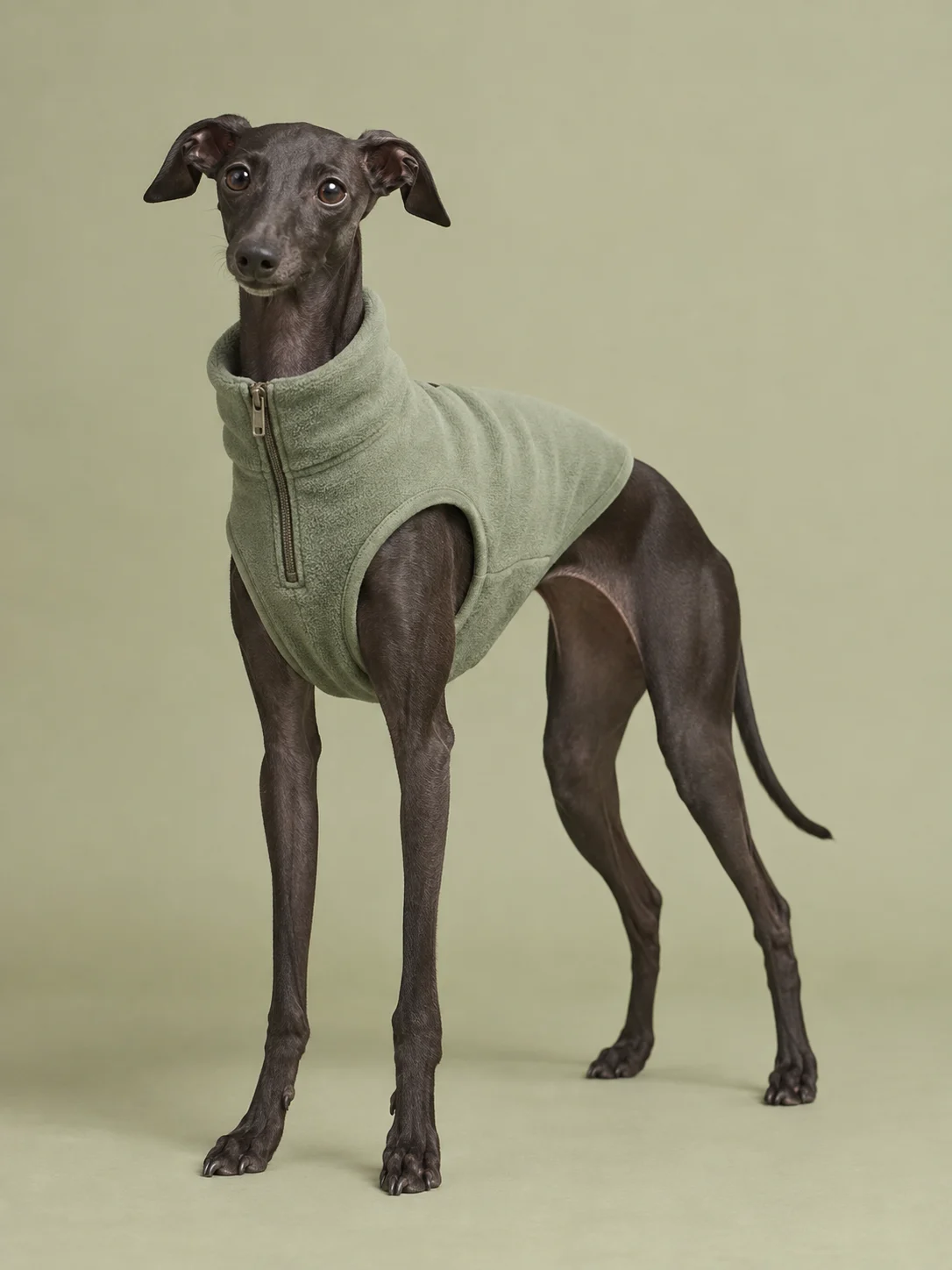
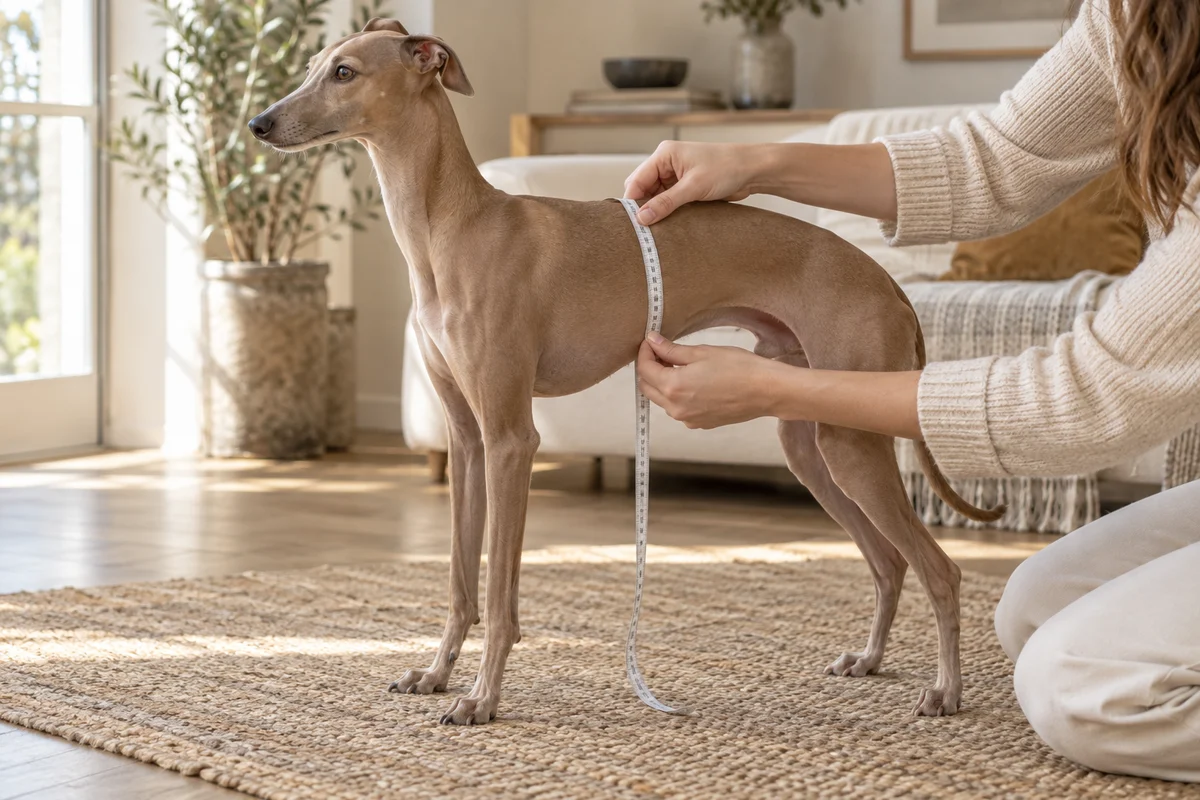
Two Italian greyhounds with the same back length can have different chests and necks. An S across different cuts does not necessarily fit the same way. Check the specific garment chart first. Identify which measurement sits on a boundary and which falls outside the range. A boundary value may be assessed against the cut; a substantial mismatch calls for another solution.
Check room to move
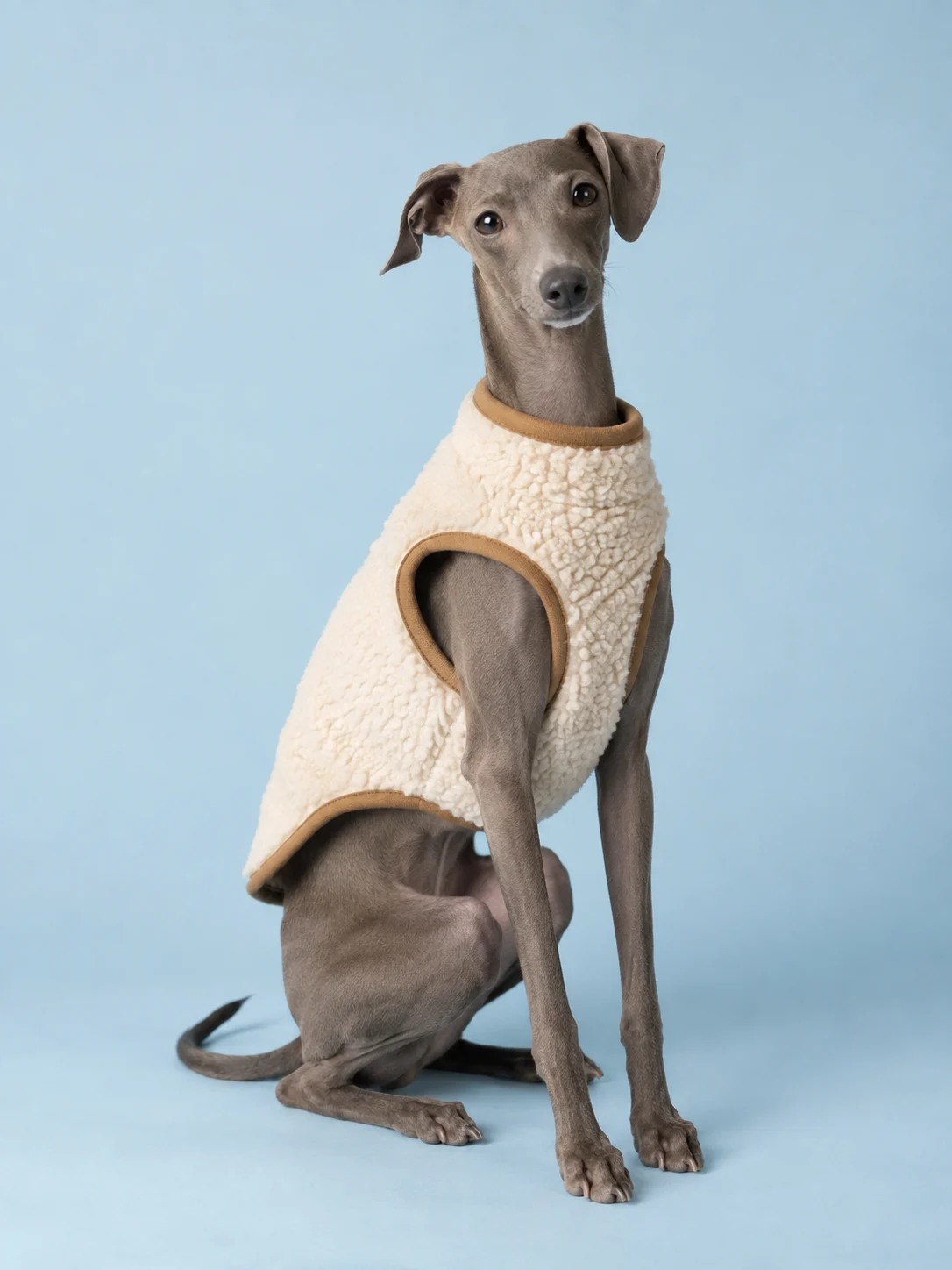
The chest should not be compressed, and the armholes should not pull the front legs backwards. Too large can also be awkward: the neckline may slip and sleeves may bunch or fall beneath the paws. A relaxed fit is different from an incorrect fit. Watch whether the garment shifts after several ordinary steps.
Consider fabric and layers
Stretch knit and woven shell fabric need different approaches. Stretch helps, but it should not be the only reason a garment closes. If a sweater will go beneath a coat, try the complete combination. Avoid adding an arbitrary allowance; use the actual measurements and construction as your guide.
Sometimes a different cut is better
If measurements span several chart rows, consider a vest instead of a full suit or a cut without long sleeves. Our demonstration calculator does not guess when the measurements do not align. It asks for a fit check. That is more useful than a confident recommendation that ignores the dog’s proportions.
Useful? Save it for your next walk.