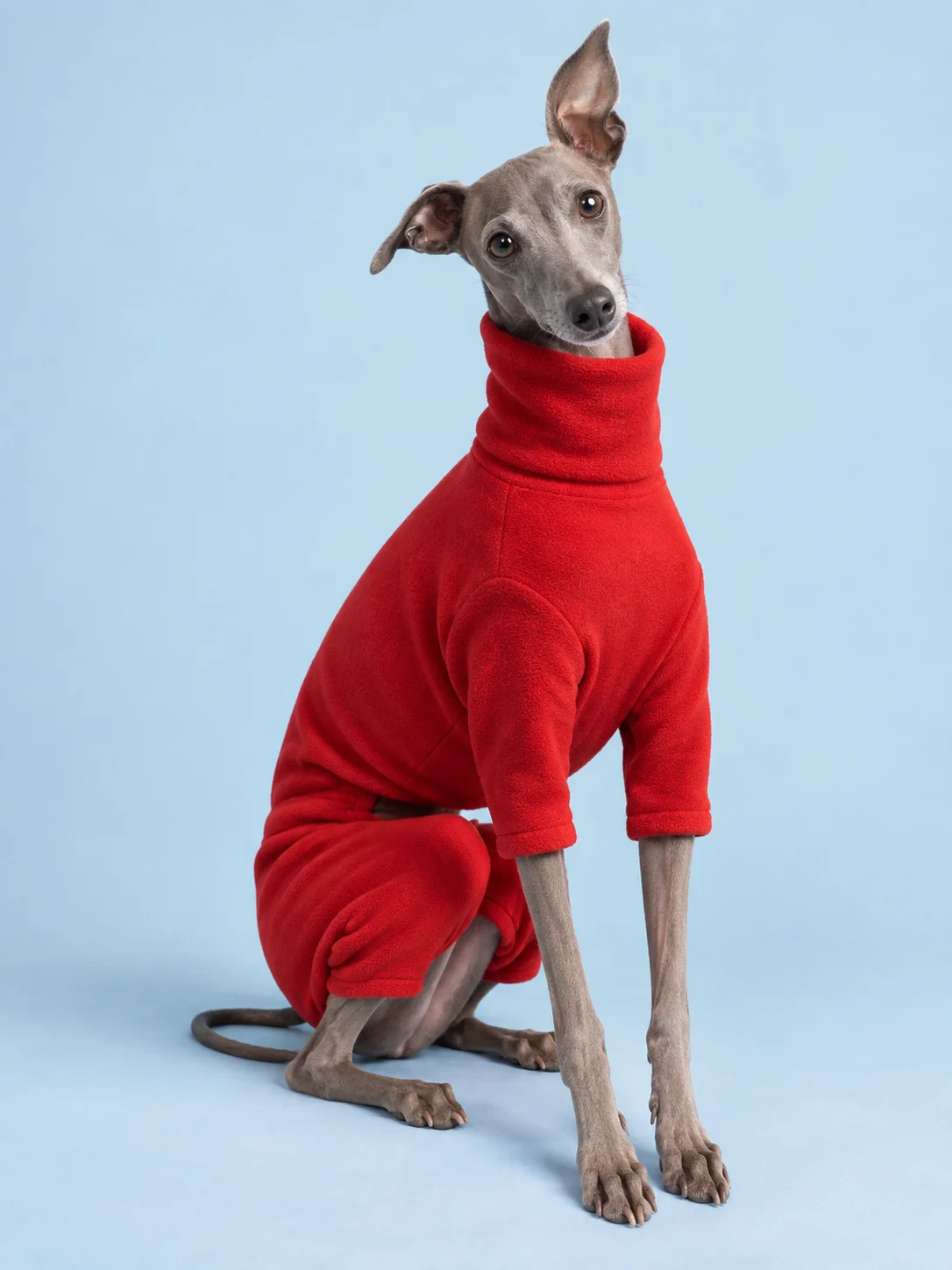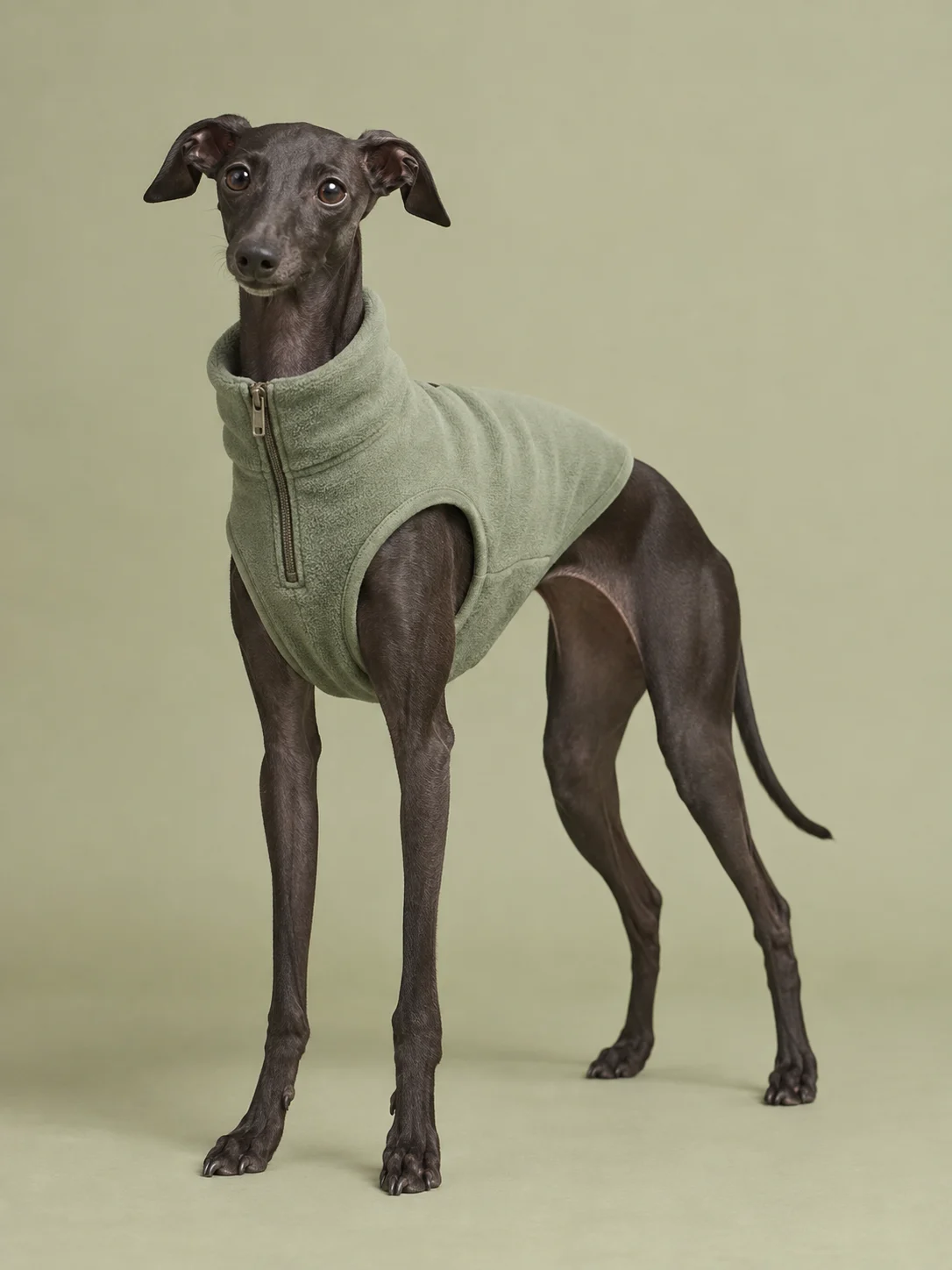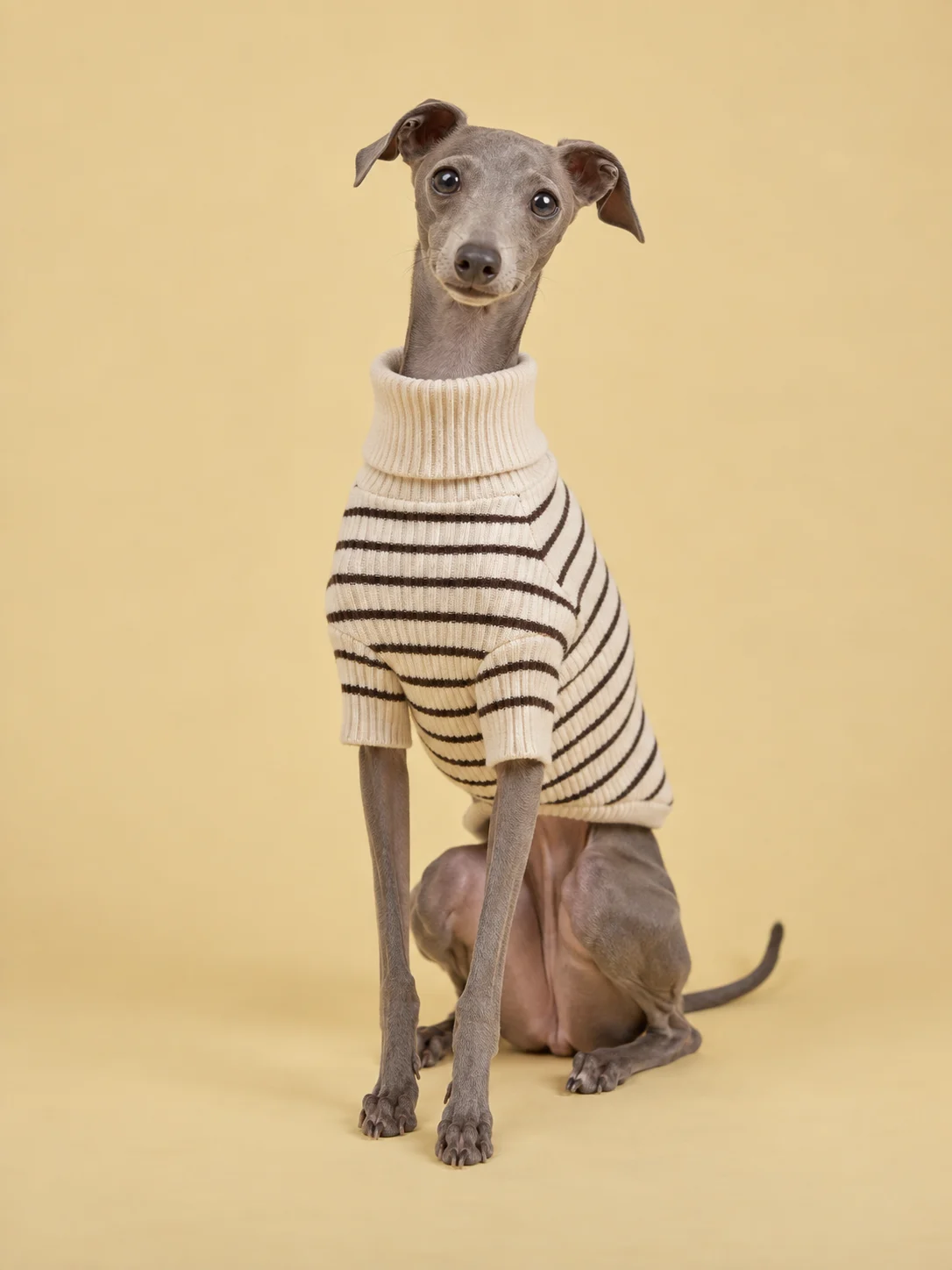
Watch the fabric and movement
A sweater can look lovely while your Italian Greyhound stands and become awkward when they sit. Let them take a few ordinary steps indoors, lower their head and turn. Jumps and fast running are unnecessary.
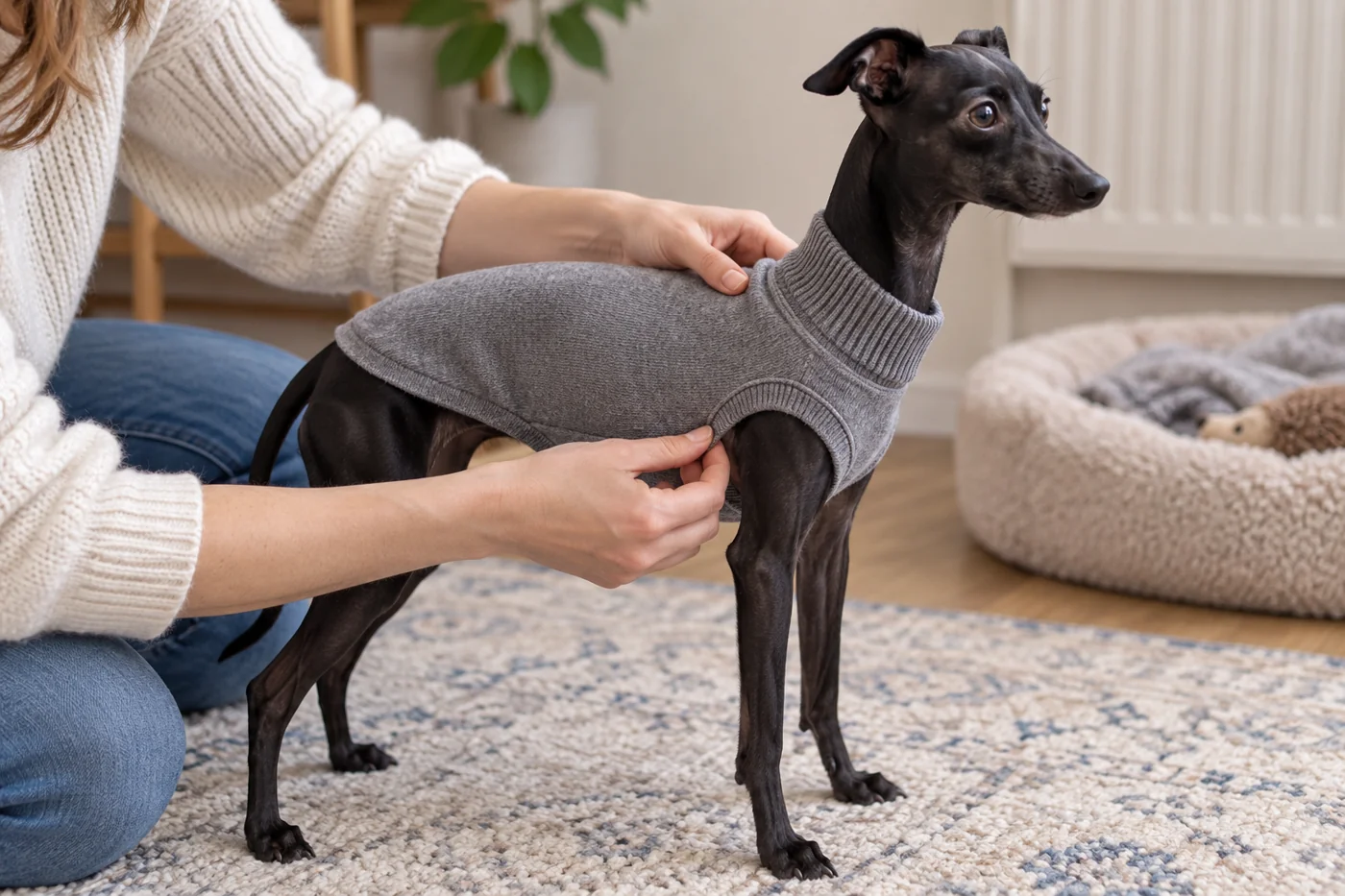
Pulled lines across the chest, a fastening that closes only with effort or a shoulder seam moving backwards can suggest insufficient room or an unsuitable cut. Look at whether the armholes pull the front legs. The neckline should allow the nose to lower towards the floor. A cuff can be tight even when the body of the garment is roomy. The lower edge should not pull when sitting or cover the toileting opening.
One photograph of a facial expression tells you little. Comparing movement without clothing and with it is more useful: you can see the difference the garment makes.
Why a larger size may not help
Imagine a sweater with a tight chest. The neighbouring size provides room there, but its neckline slides and the sleeves are too long. Sizing up solved only part of the problem; a design with different proportions may be worth trying.
Pulling can also follow incorrect dressing: a twisted sleeve, a misplaced neckline or a fastening closed differently from the intended method. Straighten the garment according to its instructions first. If it pulls in the same place again during ordinary movement, the fit needs attention.
Stretching the fabric firmly by hand does not make a tight design suitable. It merely hides the problem briefly.
If a favourite piece suddenly feels tight
Your dog may have grown, another layer may be underneath, or washing may have changed the garment’s shape. Think about what happened before this fitting. Compare current measurements with the chart and try it without the additional layer if that is how it used to be worn.
Show the seller a short, specific example: “the neckline pulls when the head lowers” or “the cuff makes putting on the sleeve difficult.” A side photograph and current measurements help with the discussion of size or construction.
Remove clothing that clearly interferes. An unusual gait or distress that continues without it needs separate attention; ask your veterinarian about wellbeing concerns.
Useful? Save it for your next walk.