
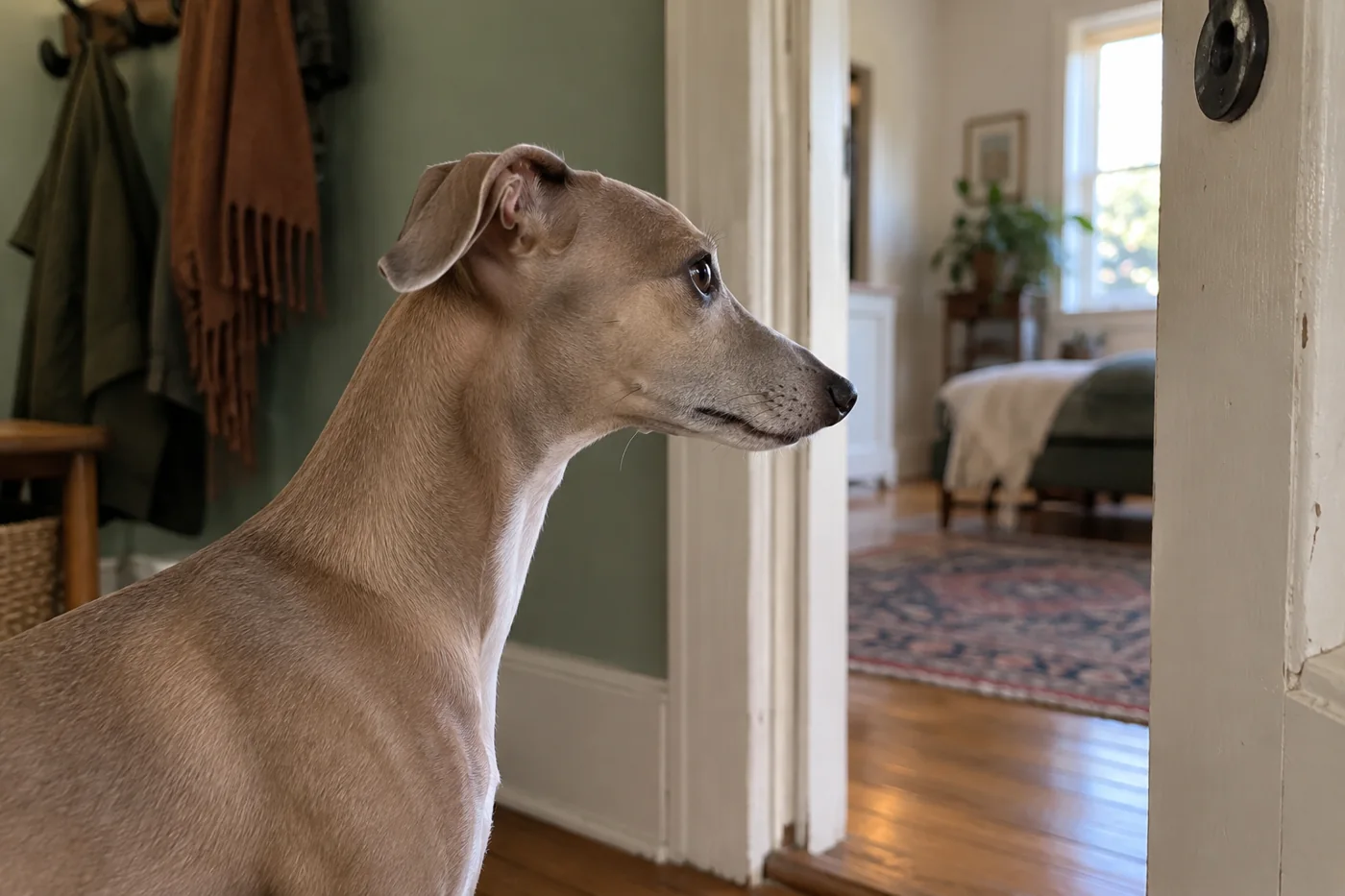
The breed has a characteristic ear
The FCI standard describes small, fine ears, set high and usually folded back. When a dog notices something, their position can change. Two photos of the same Italian Greyhound may therefore look surprisingly different.
Do not read ears in isolation
One lifted tip alone does not prove happiness or fear. Look at the whole body: posture, movement, distance from a stimulus and ability to move away. If the dog seems tense, offer calm space rather than trying to capture a funny expression.
For a good photograph
Photograph an ordinary walk or rest. Ears will change naturally when something catches the dog’s attention. Do not clap or startle for symmetry. The most memorable portraits often feature one unruly ear.
Read the whole dog
Ears change position as a dog listens, rests or turns their head. One photograph with “antenna ears” cannot tell you whether they are happy or worried. Look at the body, distance from people and willingness to approach or leave. A few quiet seconds of video provide more context than a funny portrait.
For a photograph, there is no need to hold the ears or make them symmetrical. Sit beside a window, let the dog settle and catch the moment they choose to look towards you. If getting their attention requires increasingly loud noises, end the session.
Distinguish an unusual ear position from a change in wellbeing. Persistent scratching, an unpleasant smell, discharge or soreness warrant veterinary advice rather than experimental home drops. Do not use glue or a tight wrap to alter a natural fold for a picture. A relaxed dog makes a better subject than a corrected pose.
Useful? Save it for your next walk.