Italian Greyhound health in a minute
The most common owner question is: “Is it true an Italian Greyhound breaks a leg jumping off the sofa?” The short answer: a young dog is the one at risk, and you can cut that risk a lot. A ramp by the sofa and a few house rules are enough.
A few more things worth knowing:
- By the breed club’s recommendations of 16 February 2026, Italian Greyhounds are a relatively healthy breed, “sturdier and healthier than they appear”.
- Four topics for every owner: a young dog’s legs, teeth, sensitivity to anesthesia and a tendency to put on weight.
- A short coat and little body fat make the dog vulnerable in cold and damp weather.
- Ask for the results of the parents’ health checks: knees, eyes, thyroid and DNA tests.
- This article does not replace a vet’s examination. If the dog is dull, will not put weight on a leg or has a seizure, do not wait: go to the clinic.
Are Italian Greyhounds fragile: fact or myth
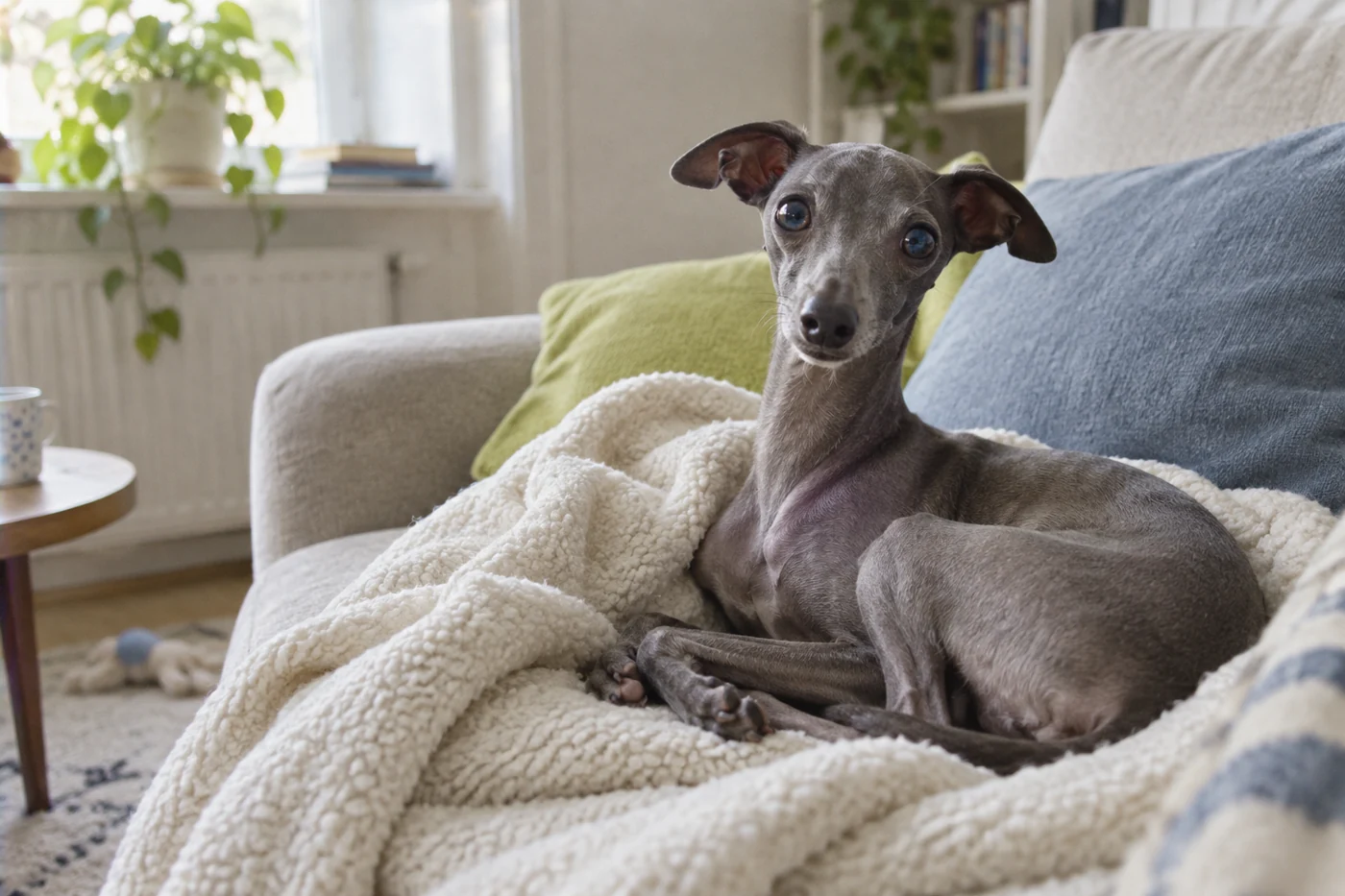
People like to say Italian Greyhounds break a leg if you sneeze. Reality is calmer. Despite their fragile look, Italian Greyhounds are sturdier and healthier than a casual observer thinks. But they have an adventurous spirit, and young dogs should be watched, especially when they play.
Among problems owners have reported, the club lists allergies, leg injuries, digestive issues, seizures and autoimmune disorders. But “not to any great extent”.
The truth sits somewhere in the middle. The bone is slender and a leg is easy to injure, especially when the dog is young. But you can reduce that danger yourself by setting up your home and walks sensibly.
Italian Greyhound leg fractures: what is known
Puppies are vulnerable because of their fine bone structure, so teach a puppy to jump safely. And until a young dog develops some “common sense”, the owner has to watch for situations that could end in a broken leg.
In veterinary orthopedics, forearm fractures, above all of the radius, are well known in miniature and toy breeds, and they are usually treated surgically. For example, one 2011 study describes 60 distal radial fractures in small-breed dogs treated surgically with external fixation. That work is not specifically about Italian Greyhounds, but it shows how such injuries are managed. The method is always chosen by the orthopedic surgeon.
It usually happens like this: a jump off the sofa or out of arms, a fall, a bad landing in play, a trapped leg. Adult dogs are at lower risk; puppies and adolescents are at higher risk.
How to protect an Italian Greyhound’s legs
- Make the sofa safe to climb: a ramp or sturdy steps instead of a jump.
- Do not let a puppy or adolescent jump from height: off the sofa, a windowsill or your arms.
- Carry a puppy low and firmly, not at arm’s length above the floor.
- Put non-slip mats where the dog speeds up: in the hall and in the kitchen.
- Watch play with large dogs: Italian Greyhounds in general do not suit large active dogs.
- Never leave a puppy unsupervised on a height, on stairs or on a balcony.
- Teach a safe way down: lift the puppy off the sofa instead of waiting for it to jump.
What to do if an Italian Greyhound breaks a leg
Signs: the dog holds up the leg and will not put weight on it, cries after a jump or fall, or the leg is swollen or looks bent.
What to do:
- Limit movement: pick the dog up or put it in a carrier.
- Do not try to straighten the leg or splint it yourself.
- Do not give human painkillers (ibuprofen, paracetamol): they are dangerous to dogs.
- Call the clinic and go at once, ideally to an orthopedic surgeon.
Italian Greyhound teeth
Teeth are one of the most common problems of the breed. Italian Greyhounds are prone to dental disease, and gum disease is common in dogs that do not get regular care. Brush daily, give hard, mildly abrasive treats and chews, and see the vet yearly for a professional cleaning.
At home:
- get a puppy used to a toothbrush and dog toothpaste from the first weeks;
- brush ideally every day;
- give hard treats your vet recommends;
- have the teeth checked by a vet once a year.
For breeders a DNA test is also recommended for familial enamel hypoplasia, which affects the quality of the teeth.
Anesthesia for an Italian Greyhound: what to watch for
A professional dental cleaning is usually done under anesthesia, so it is worth knowing about anesthesia in advance. Sighthounds are sensitive to anesthesia because of low body fat and the way they metabolise drugs. Four reasons are given:
- a nervous temperament, so stress can push the body temperature up;
- a lean build: the dog easily gets cold during a procedure;
- differences in blood composition;
- slow metabolism of drugs that are redistributed through fat.
The organisation (the material is undated, and the final decision always belongs to the vet) advises avoiding thiopental and names safer options: propofol (with slower recovery), a ketamine and diazepam combination, methohexital and the inhaled agent isoflurane.
Before any procedure ask your vet:
- which drug they prefer for sighthounds;
- whether the dog will be kept warm during and after the procedure;
- whether intubation, an IV drip and oxygen monitoring will be used.
We cover the topic in more detail in a separate article on anesthesia.
Do Italian Greyhounds feel the cold: shivering and clothing
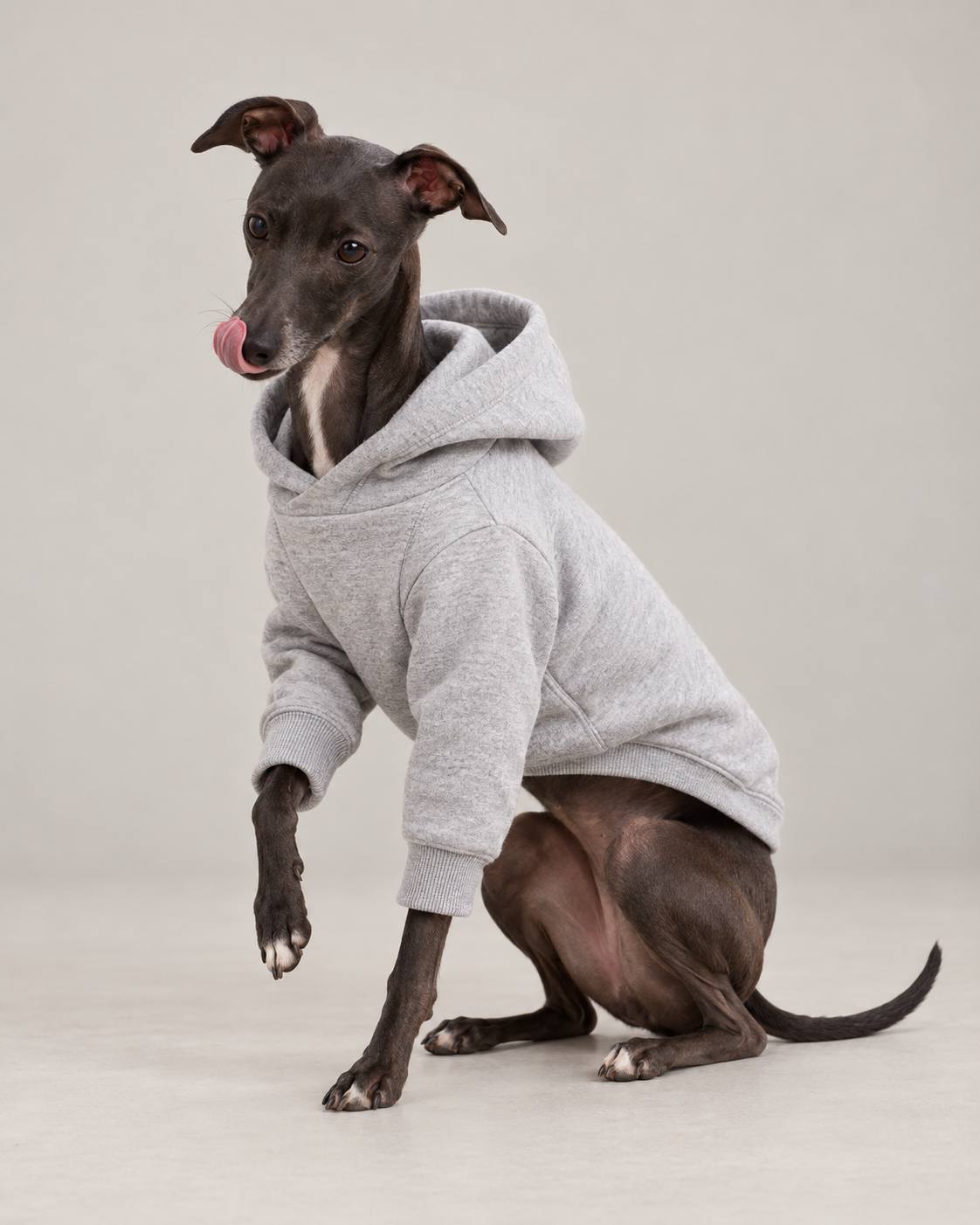
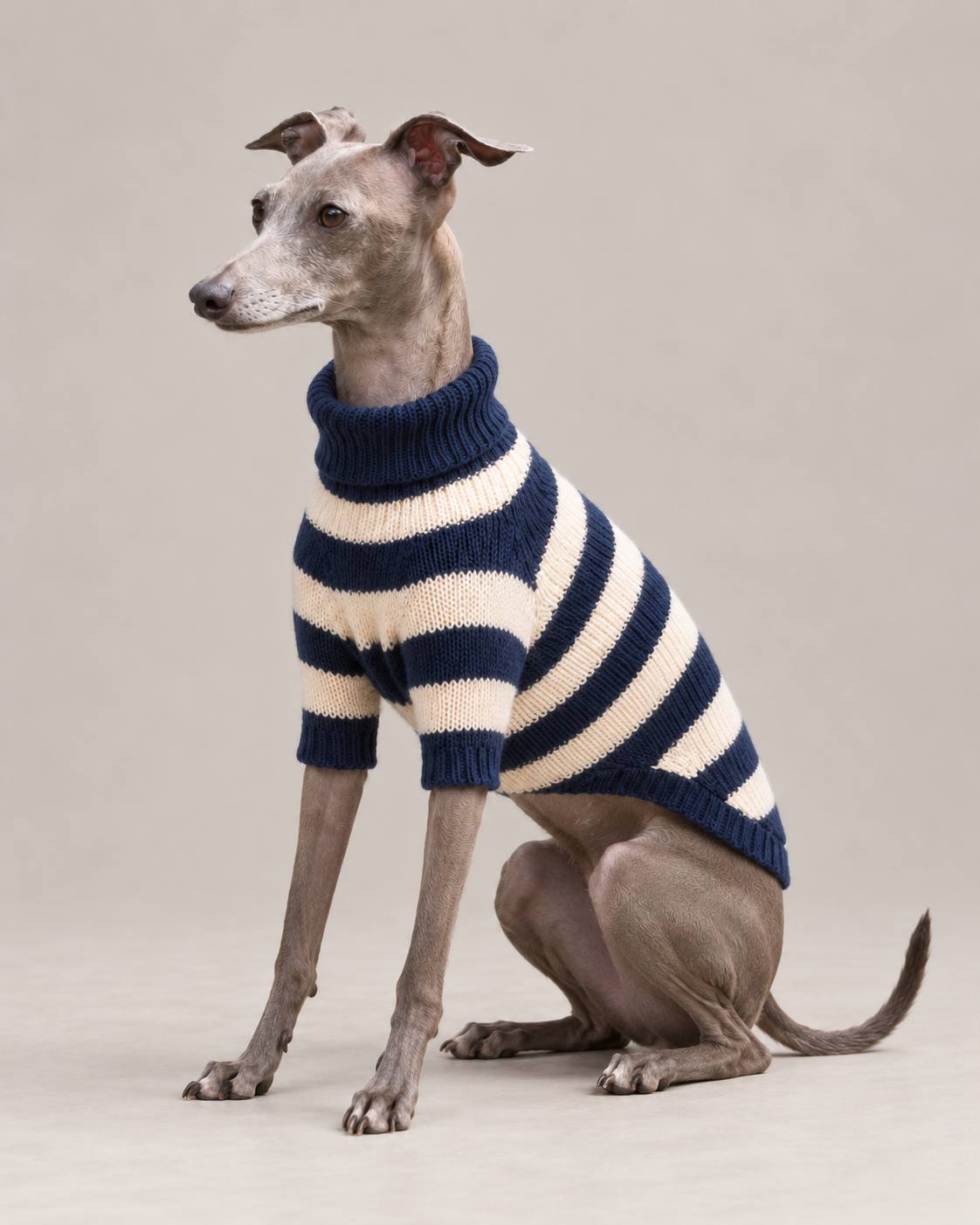
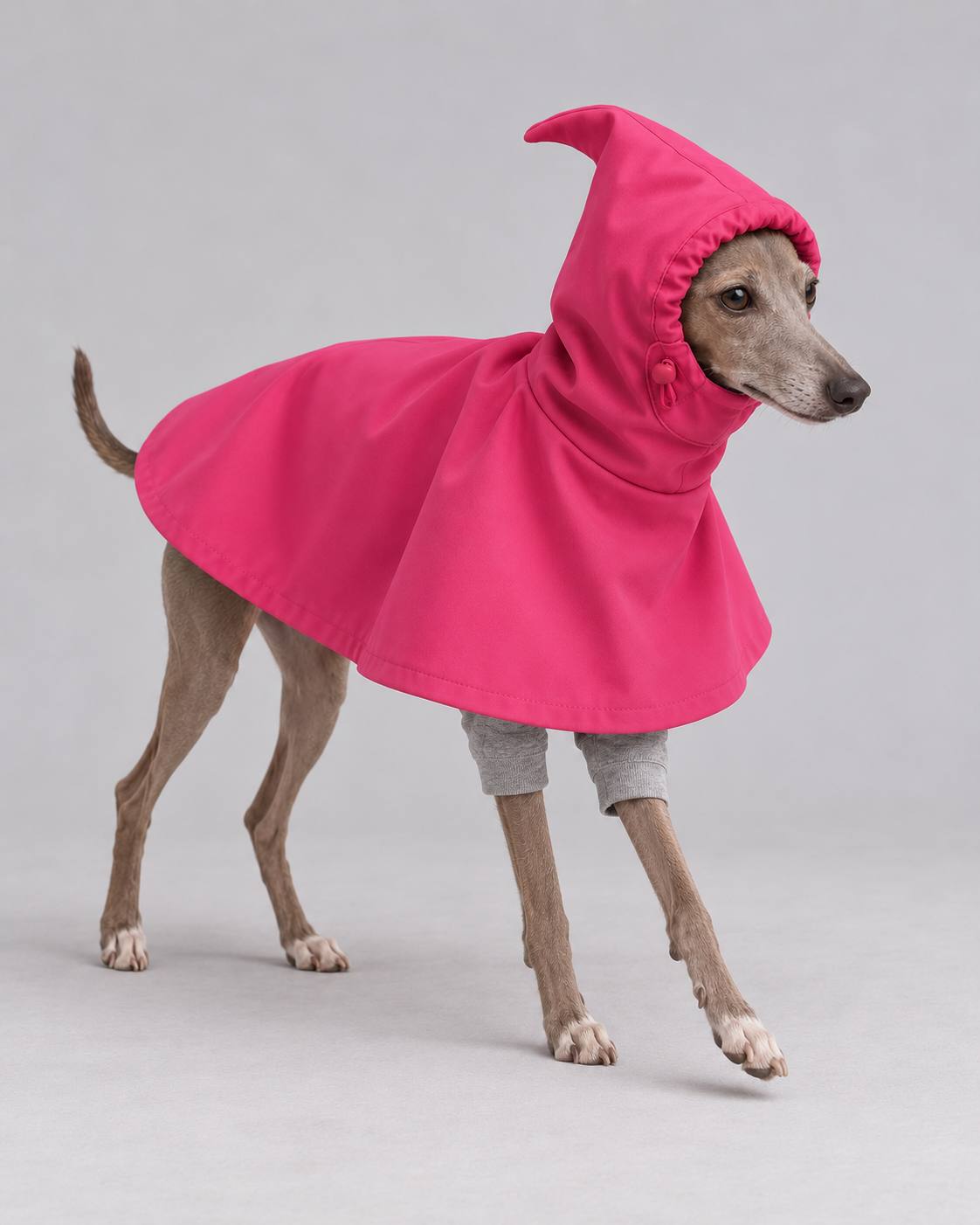
The Italian Greyhound copes poorly with cold and damp. The coat is short, body fat is low, and long spells out in the cold do not suit it, although many live happily in northern climates. Jackets and boots are recommended.
That is why, for a walk in cold, rain and wind, clothing is protection, not decoration. If your dog shivers, lifts its paws or pulls toward home, it is time to warm it up.
But shivering is not always cold. If an Italian Greyhound trembles in a warm room, is dull or seems bothered by something, show it to a vet: the cause may be pain, fear or illness. How to choose clothing is in our clothing guide.
Italian Greyhound weight
It is easy to let these dogs become overweight. Extra weight loads the joints and the heart and complicates anesthesia. A rule of thumb: you can feel the ribs under a thin layer of fat, and a waist is visible from above. Weigh your dog monthly and check the trend with your vet. More in our article on feeding.
Eyes, seizures and other things
For breeding dogs a yearly eye exam is recommended with an ophthalmologist up to age 10. And DNA tests show susceptibility to progressive retinal atrophy (PRA) and primary closed angle glaucoma (PCAG).
See a vet urgently if your dog has a red, cloudy or painful eye: glaucoma needs emergency care.
If your dog has a seizure, note the time and, if you can, film it. Then contact a vet. Seizures have occurred, but not often.
What to check in an Italian Greyhound puppy’s parents
If you are buying a puppy, ask for the results of both parents’ checks. These are recommended.
| Check | What it is | When |
|---|---|---|
| Knees (patella) | Vet exam for a slipping kneecap | once, after 12 months |
| Thyroid | Blood test | yearly from age 2 to 4, then every two years until 8 |
| Eyes | Ophthalmologist exam | yearly until age 10 |
| PRA (DNA) | Susceptibility to progressive retinal atrophy | once, at any age |
| PCAG (DNA) | Susceptibility to closed angle glaucoma | once |
| Tooth enamel (DNA) | Familial enamel hypoplasia | once |
| Genetic diversity | DNA test | once |
| Brucellosis | Test before each mating | before mating |
These are the recommendations of the American breed club. The set of checks may differ between breeders in your country, so ask which of them the parents have had and where you can see the results.
When to take an Italian Greyhound to the vet
| What happened | How soon |
|---|---|
| Will not put weight on a leg after a jump or fall, swelling, leg looks bent | immediately |
| Seizure | immediately |
| Red, cloudy or painful eye | immediately |
| Lethargy, refusing food, repeated vomiting | the same day |
| Shivering in a warm room that does not stop | within days |
| Bad breath, red gums, plaque on the teeth | within days |
| Sudden weight gain or loss | within weeks |
| Routine check-up, teeth | once a year |
How long do Italian Greyhounds live
14–15 years is not unusual for an Italian Greyhound. Other sources give 12–15. And a review puts median longevity at about 14 years against 12.5 for dogs overall. More in our article on how long Italian Greyhounds live.
Italian Greyhound health: frequently asked questions
- Is it true Italian Greyhounds often break their legs? Young dogs really are at risk, especially from jumping from height. But you can cut the risk: a ramp, non-slip floors and supervision.
- Can an Italian Greyhound have anesthesia? Yes, but tell the vet it is a sighthound and discuss drugs and warming.
- Do Italian Greyhounds often have dental trouble? Yes, dental disease is common in the breed, so care starts in the first weeks.
- Is clothing needed for health? In cold and damp, yes: it protects against chilling.
- What should I check when buying a puppy? The parents’ results: knees, eyes, thyroid and DNA tests.
What to remember
- An Italian Greyhound is sturdier than it looks, but a puppy’s slender legs need supervision: a ramp instead of a jump.
- Brush the teeth from the first weeks and have them checked yearly.
- Before anesthesia, discuss drugs and warming.
- If you suspect a fracture, or there is a seizure or an eye problem, go to the clinic at once.
Sources
References for checking facts and reading further.
- IGCA health testing recommendations, approved 16 Feb 2026
- IGCA: About the Italian Greyhound (fractures, teeth, weight, longevity)
- Italian Greyhound Rescue Foundation: anesthesia sensitivity
- Hill’s Pet: Italian Greyhound (teeth, nails, lifespan)
- AKC: Italian Greyhound facts (cold, being alone)
- Yu J., DeCamp C. E., Rooks R. Vet Comp Orthop Traumatol, 2011; 24(1): 45–49 — radial fractures in miniature and toy breeds
- Wikipedia: Italian Greyhound (lifespan)
Useful? Save it for your next walk.