
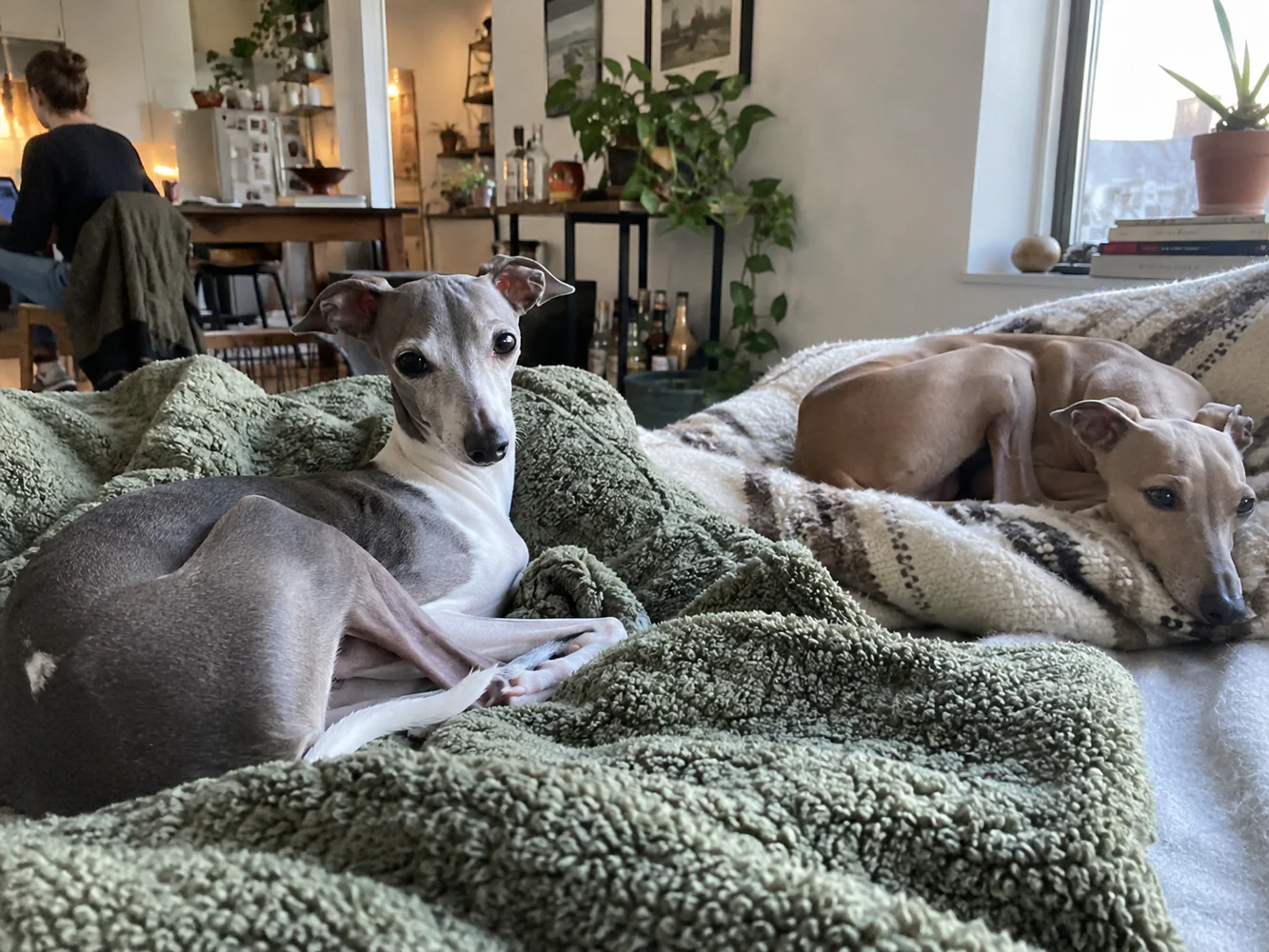
Begin with two individual dogs
Prepare separate places for sleeping, eating and unwinding. Each dog has its own pace and preferences. Do not make them share a bed for a charming video. Meetings in a neutral place and calm short walks make their interactions easier to read.
Keep the first dog’s routine
A newcomer changes noise, routine and access to people. Keep familiar walks and individual time for the first dog. If conflicts appear, do not wait for the animals to sort everything out; manage the situation and seek professional guidance.
The first week together
Do not judge success by whether two dogs sleep together on the first night. Notice smaller signs: each can eat calmly, rest in its own place and cross the room without tension. Keep shared walks short and quiet enough for both dogs to return relaxed. Offer toys and food separately at first. Good companionship begins with the freedom not to share everything immediately.
Do not make them share immediately
Prepare separate bowls, resting places and opportunities to move apart. The first dog’s favourite blanket does not become communal just because you bought two matching toys. Put away items that have already caused disputes and observe the interaction.
Two adults can make initial walks easier: each handles one dog and can increase distance. Avoid tangling leads for a photograph. At home, keep introductions short and allow breaks in separate areas.
Unequal play often has a repeating pattern: one dog pursues while the other keeps trying to hide. Pause before a noisy conflict develops. Individual time with you still matters. A new companion does not replace human attention and should not be acquired as a presumed cure for the first dog’s difficulty being alone. Consider the needs of both individuals throughout the introduction.
Useful? Save it for your next walk.