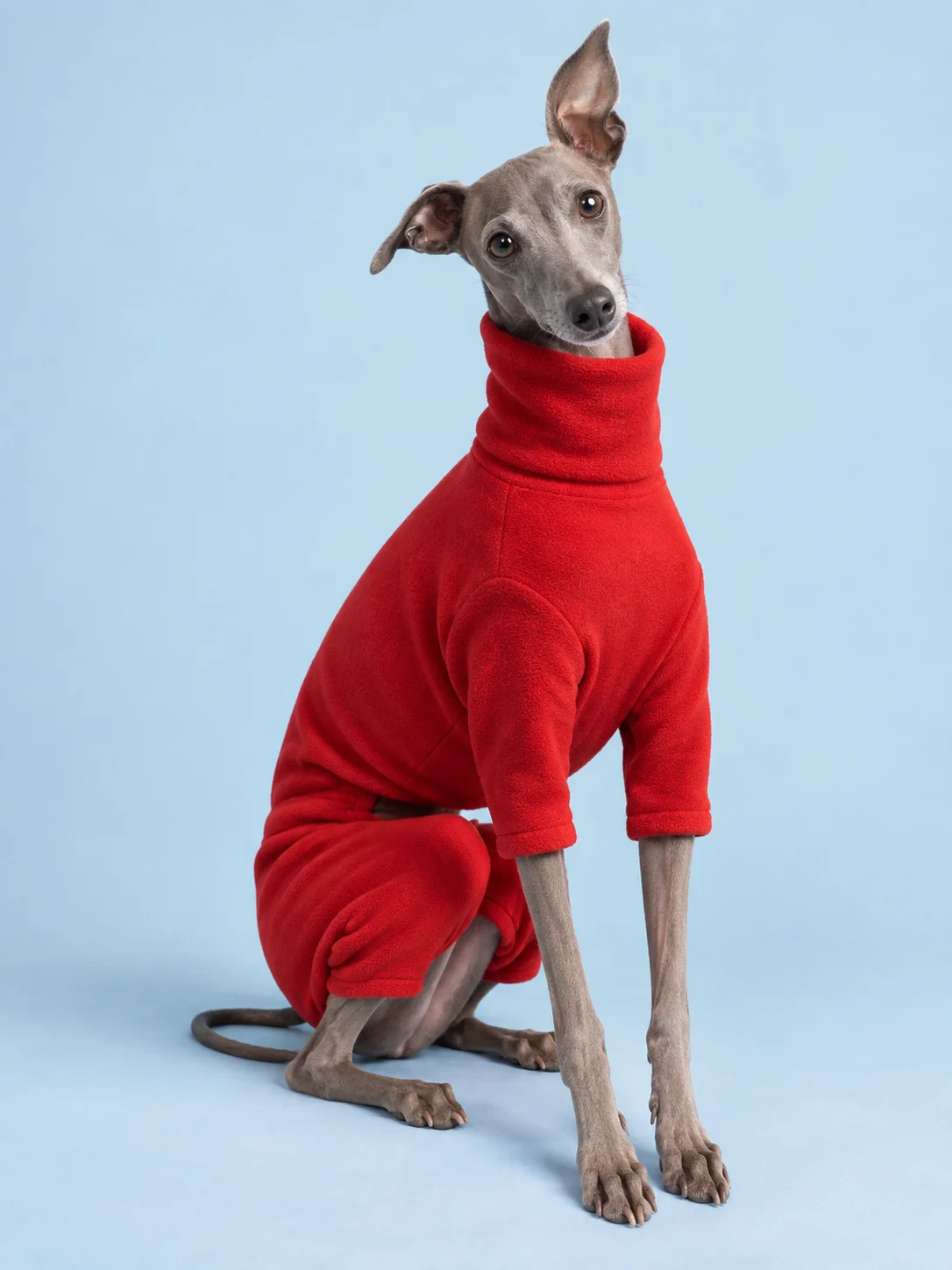
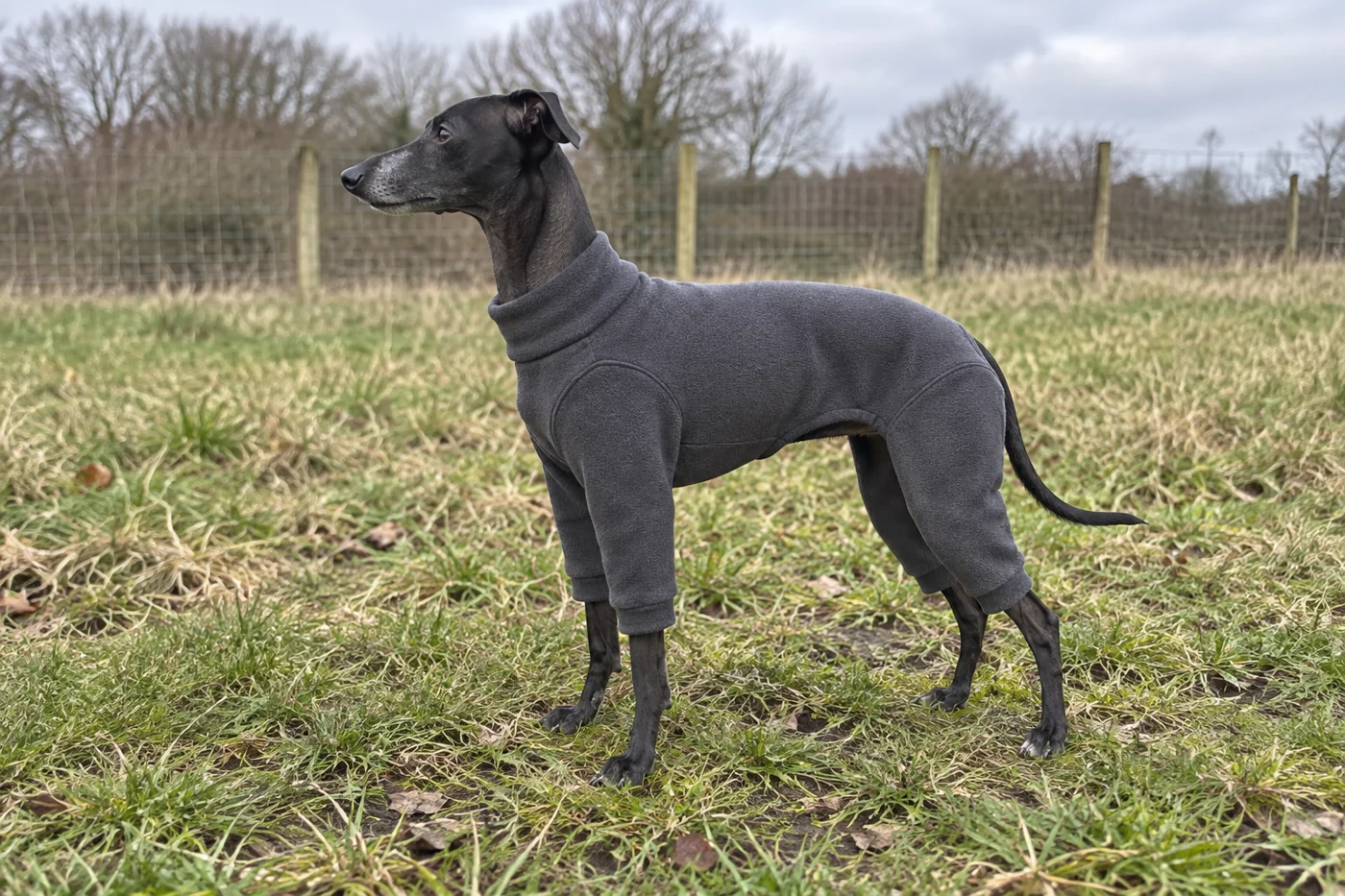
Think about the outing
A dog moves differently on an active walk than in a posed image. Check shoulders, armholes, belly and cuffs. Nothing should flap, catch the legs or require constant adjustment. Rain and dry cold can call for different layers.
Test it indoors first
Let the dog walk, turn and sit on non-slip flooring. Then try the usual walking equipment over the garment. If each piece fits separately but pulls when combined, rethink the outfit.
Check the whole outing, including pauses
A garment should suit walking, sniffing and pausing, not only a brief burst of speed. Before a long first outing, choose a short familiar route with an easy return home.
After a few minutes, inspect shoulders and belly. Have seams shifted sideways or fabric bunched beneath the harness? Sleeves should stay positioned without constant pulling. Loose straps and decoration should not catch on bushes.
Consider weather and activity together. A thicker layer is not automatically better for active movement; conditions and the individual dog matter. Do not continue an activity simply to test clothing when the dog is uncomfortable.
Back home, inspect the inside. Friction marks, grit near cuffs and damp areas reveal what to check next time. A useful garment lets you concentrate on the walk rather than manage the outfit every few steps. Record practical observations before deciding what needs changing.
Useful? Save it for your next walk.