
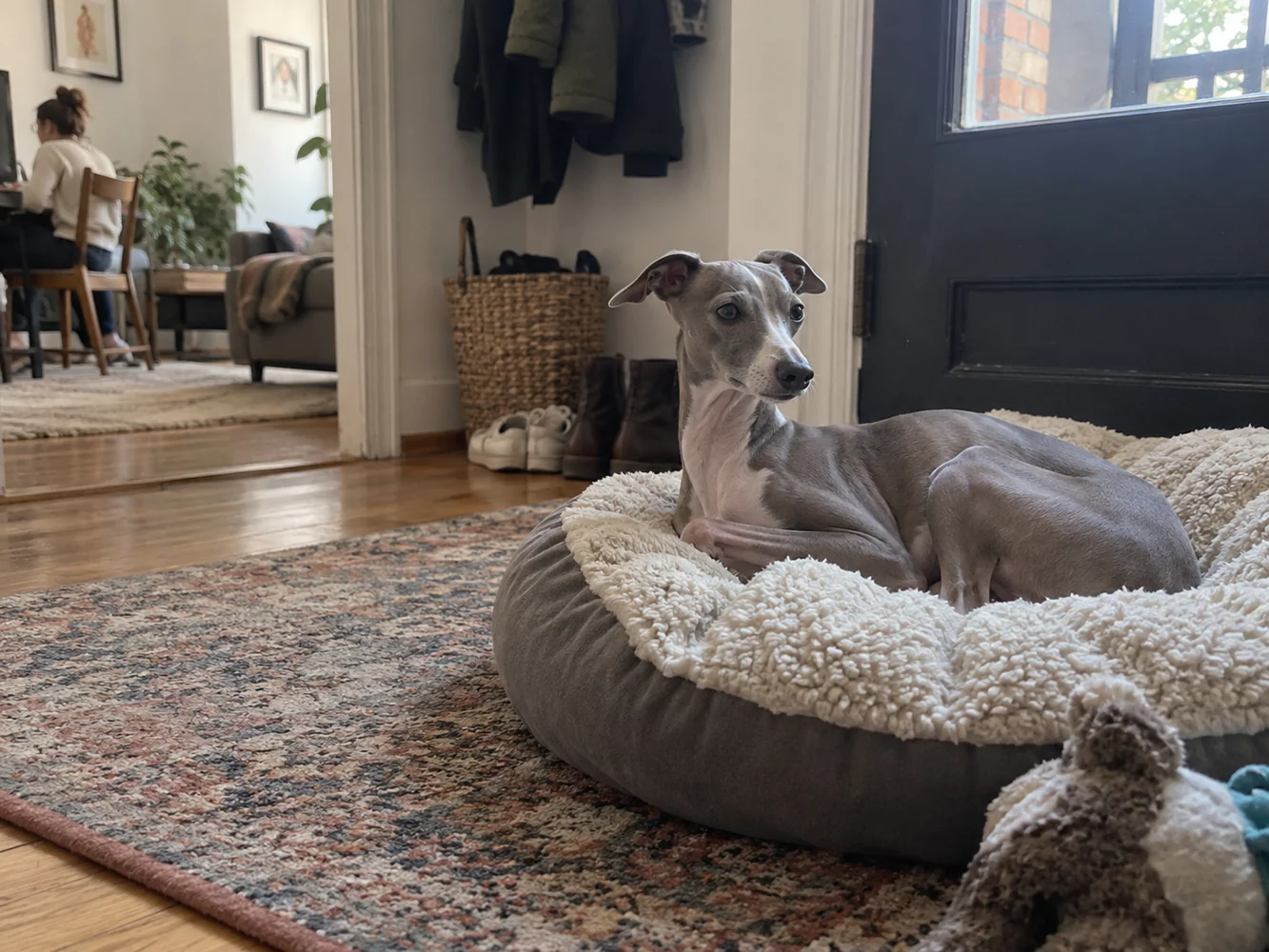
Prepare before leaving
Provide water, a safe resting spot and a familiar routine. Begin with absences short enough to avoid intense distress and observe the response. Do not leave a new toy unattended before you know how the dog uses it.
When to ask for help
If the dog struggles intensely when you leave, cannot settle or changes behaviour, do not dismiss it as stubbornness. Speak with a veterinarian and a qualified behaviour professional. The plan will depend on the individual dog and household.
Observe rather than guess
Note the time, circumstances and what the dog was doing before you left. If possible, observe the first minutes of absence without turning it into a contest of endurance. An occasional sound may be ordinary, but intense or increasing distress calls for professional assessment. Do not lengthen absence abruptly merely because one short practice went well.
What to record for a consultation
If being alone is difficult, record departure time, absence length and a brief account of behaviour. Did the dog rest, pace near the door, vocalise or try to escape? Specific observations are more useful than saying they miss you. Position any camera with its cables out of reach.
Do not increase time according to a calendar if the previous step causes clear distress. Arrange suitable company or care while working on the issue. A food toy does not automatically resolve separation-related fear, particularly if the dog stops eating once you leave.
Returning home should not become punishment for damaged objects. Remove hazards beforehand and discuss repeated distress with a vet or a qualified professional using humane methods. The aim is a comfortable emotional state, not silence at any cost. Bring your observations to the consultation so the plan can address what actually happens.
Sources
References for checking facts and reading further.
Useful? Save it for your next walk.