
Nearby, not on the keyboard
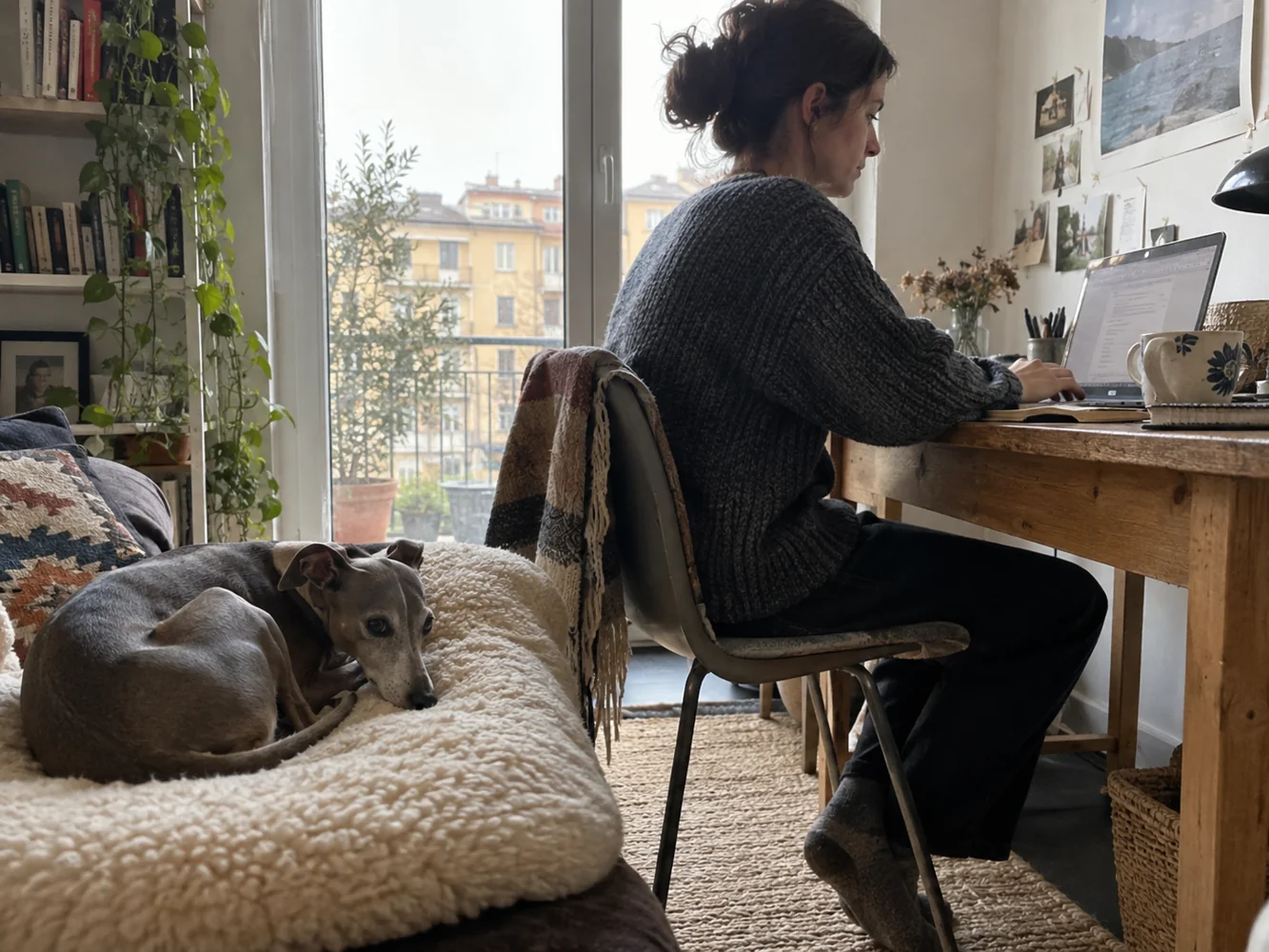
Place a bed where the dog can settle and still see you. Before a long call, allow the usual walk or offer a quiet activity the dog already knows. A brand-new puzzle is unlikely to occupy them for exactly the length of a meeting.
Breaks help both of you
A short outing, water and a change of room help more than repeatedly asking a dog not to interrupt. If you work at home every day, keep small periods when the dog rests independently. Shared life should not depend on whether your video call is open.
One work block at a time
Choose one half-hour call or task and prepare before it begins: the dog has had a walk, water is available, a bed is nearby and a familiar quiet activity is ready. Afterward, take a short break for movement and contact. If the dog regularly struggles to settle, change the schedule rather than only the toy selection. Being beside a person all day and suddenly ignored can be confusing; predictable pauses are easier to understand.
Plan for one work call
Do not begin with the goal of a dog lying quietly for eight hours. Choose one short call. Beforehand, provide a toilet opportunity, check the water and prepare a familiar resting spot nearby. An important meeting is a poor time to test the durability of a new toy.
Reward relaxed time on the bed outside working hours too. Otherwise the laptop may become associated only with attention disappearing. Schedule breaks for an ordinary walk or calm company before the day fills up.
Keep cables, headphones and hot drinks out of reach. If interruptions happen at the same time every day, inspect the schedule: perhaps one regular outing is consistently being missed. A home office has to accommodate the living dog as well as the camera angle. Start with a manageable call and build a routine that can actually be maintained.
Useful? Save it for your next walk.