Italian Greyhound pros and cons at a glance
The Italian Greyhound is a small, beautiful and very affectionate dog. But it has traits worth knowing before you buy. Here is the gist.
Pros:
- affectionate, attached to its person, loves being close;
- compact: 32–38 cm and up to 5 kg, easy to fit in a flat;
- a short coat that needs no clipping;
- clever and sensitive, loves to play;
- long-lived: usually 12–15 years;
- does well with another dog for company.
Cons:
- copes poorly with cold and damp;
- finds being alone hard;
- fine bones: a young dog needs supervision;
- a hunting instinct: off lead only in an enclosed area;
- the teeth need regular care;
- does not suit families with very young children or large active dogs.
The pros in detail
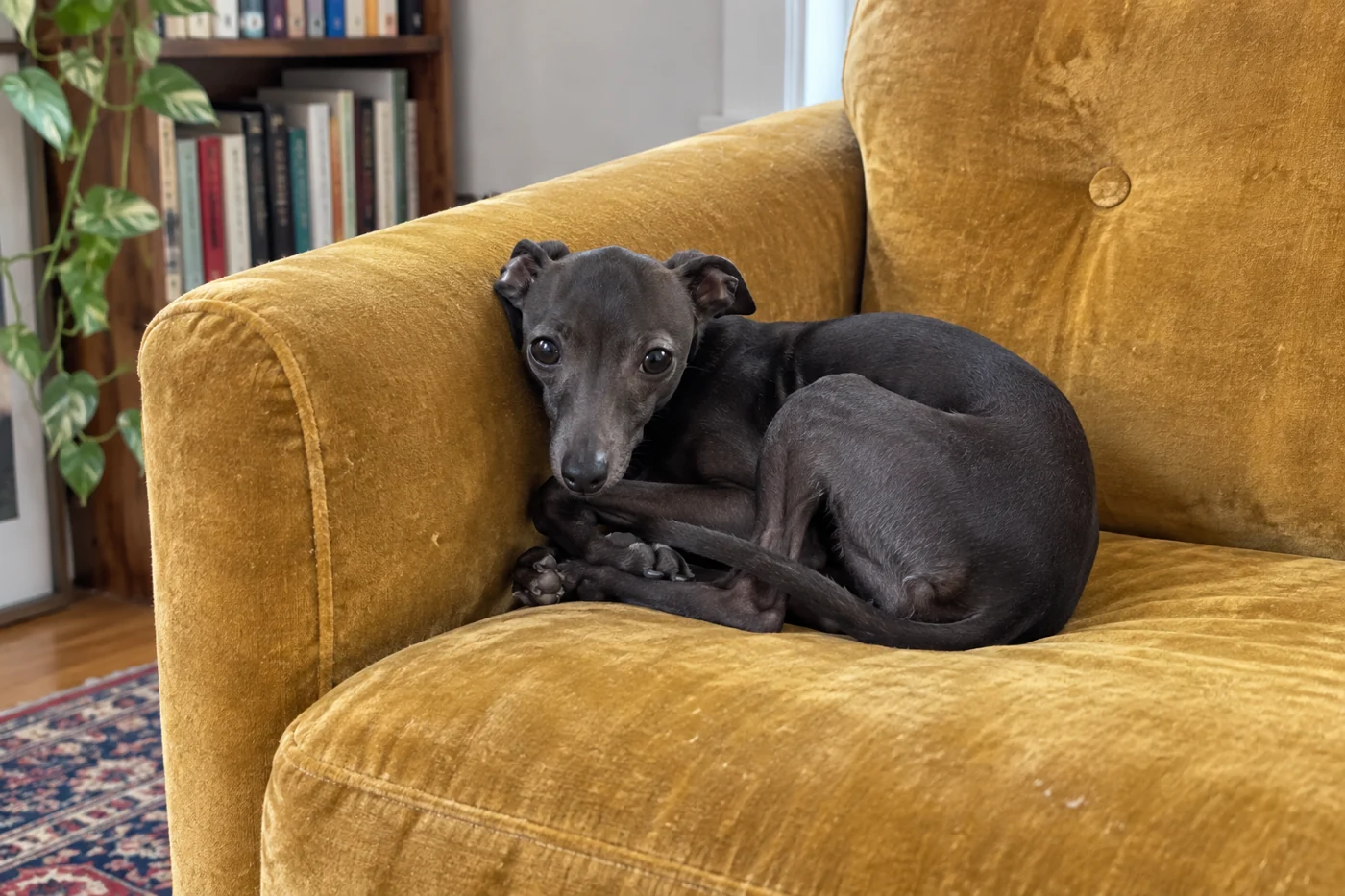
Affectionate and devoted. Attachment is the main trait: the breed is very snuggly and needs closeness to its person. For anyone who wants a dog “right there on the sofa”, that is the main plus.
Compact. It fits the 32–38 cm and up to 5 kg of the standard (in real life up to 6.4 kg). It lives calmly in a flat and adapts well to city life.
No grooming. The coat is short and fine and does not need clipping. The teeth and nails need attention, not the coat.
Clever and playful. The breed is sensitive, alert and intelligent and stays playful into adulthood. Italian Greyhounds do well in agility, Rally and Fast CAT.
Long-lived. Usually 12–15 years, often 14–15. That is longer than the average dog.
A relatively healthy breed. The breed club’s 2026 recommendations say Italian Greyhounds are sturdier and healthier than they appear.
The cons in detail
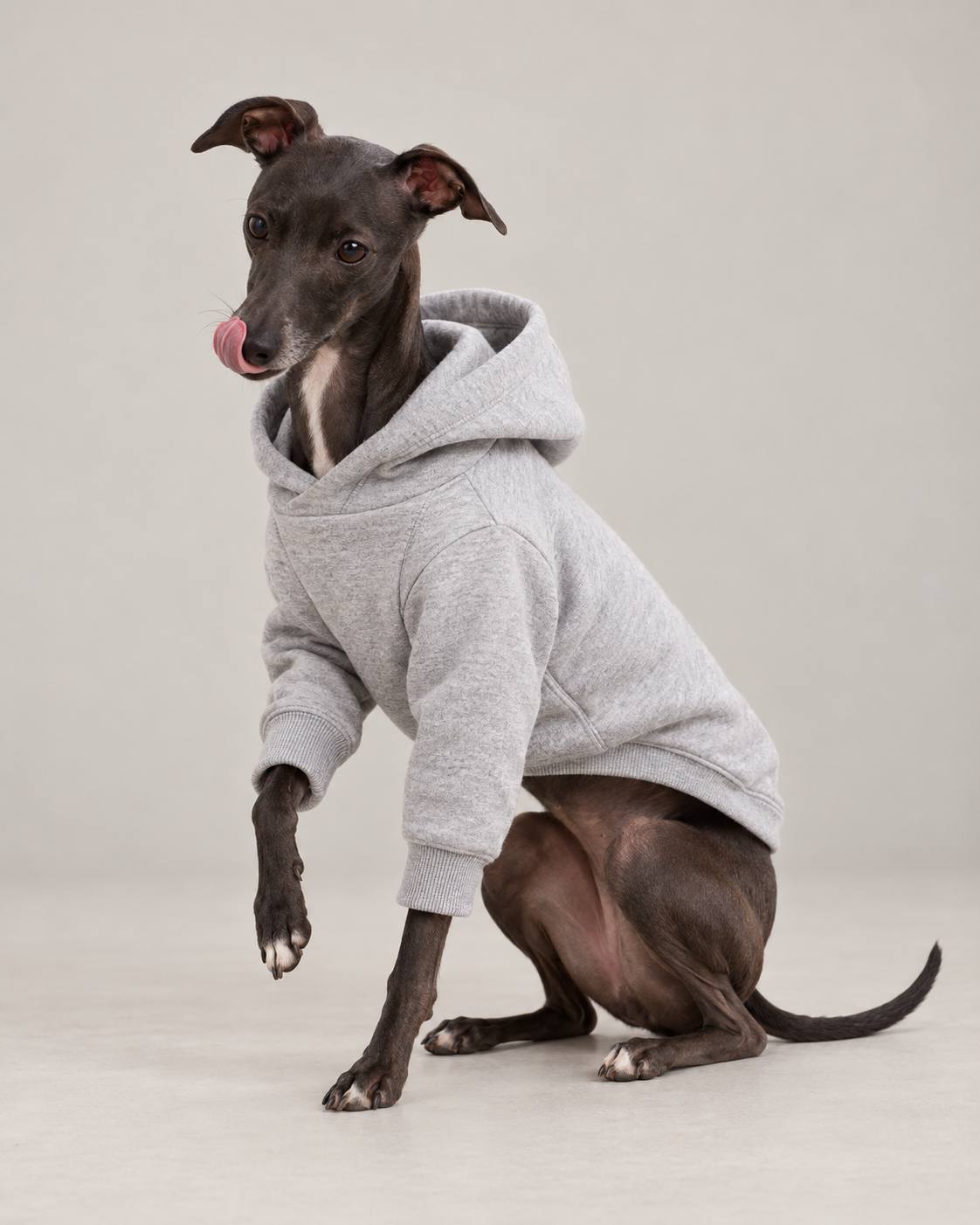
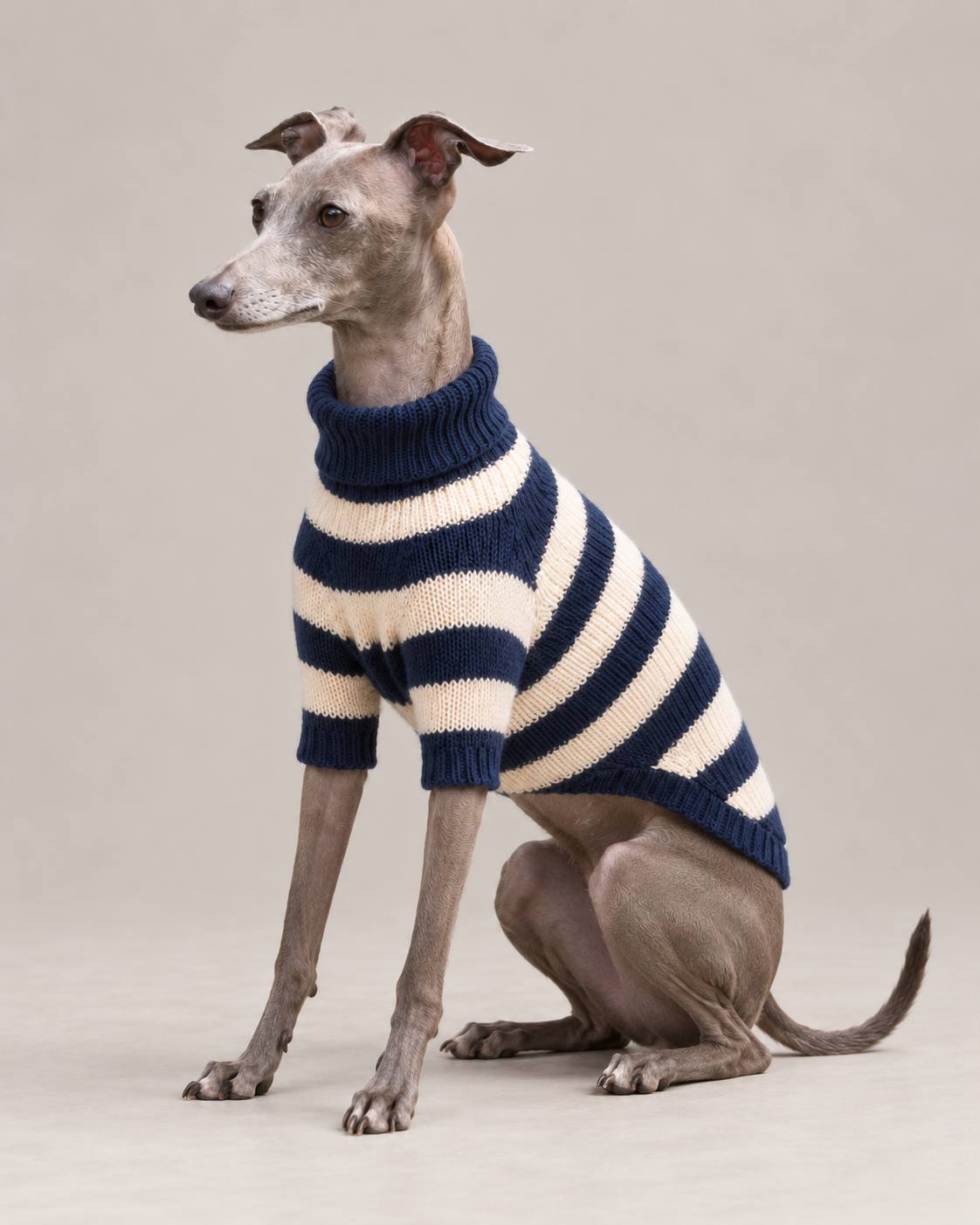
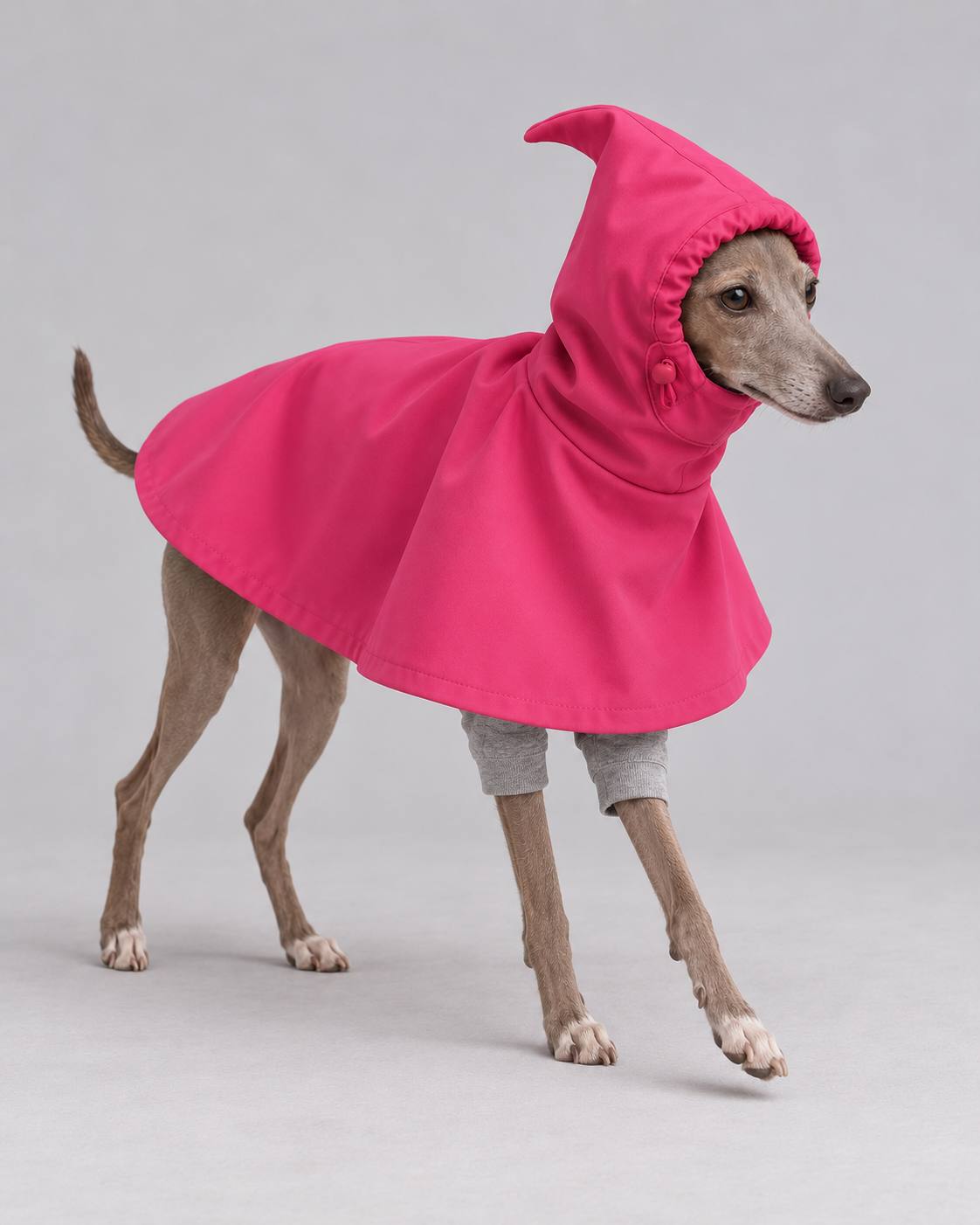
Feels the cold. A short coat and little fat. The dog copes poorly with cold and rain, and jackets and boots are recommended. So in the cold season you will have to dress your dog. More in our article on whether Italian Greyhounds feel the cold.
Finds being alone hard. Italian Greyhounds suffer when left alone or ignored. If you are at work all day you need a sitter, a helper or a second dog. More in our article on being home alone.
Fragile legs in young dogs. Puppies have fine bone structure. Jumps from height are dangerous, so you need a ramp, a non-slip floor and supervision. More in our article on leg fractures.
Hunting instinct. Even a trained Italian Greyhound should not be off lead in unfenced areas: it will chase anything that moves. Free running is only for an enclosed area.
Teeth. Dental and gum disease is a common problem. Brush daily and see the vet yearly for a professional cleaning. More in our article on teeth.
Anesthesia. Sighthounds are sensitive to anesthesia, so before any procedure you need to discuss drugs and warming with the vet.
Children and large dogs. Italian Greyhounds in general do not suit households with very young or rambunctious children or large active dogs.
Who an Italian Greyhound suits
An Italian Greyhound will suit you if:
- you want an affectionate dog “on the sofa” and are ready to walk it;
- you have a warm home and do not mind dressing the dog in the cold;
- someone is home, or you are ready to prepare the dog for being alone;
- the family is adults or school-age children who can be taught gentle handling;
- you are ready to brush the teeth and watch the weight.
Who it does not suit
An Italian Greyhound will not suit you if:
- you want a dog for a yard, a kennel or as a guard;
- you like long walks off lead in unfenced places;
- you are at work all day and have no one to leave the dog with;
- there are very small children at home and you cannot supervise constantly;
- you are looking for a “pocket toy”: an Italian Greyhound is a living sighthound, not a plush toy.
Test yourself
Ask yourself five questions:
- Who will be home on working days, and how long will the dog be alone?
- Do I have the money and time for clothing, teeth and a vet?
- Am I ready to walk on a lead in any weather?
- What happens if a small child or a large dog joins the household?
- Am I ready for an Italian Greyhound to follow me around the flat?
If you answer “yes” to most, an Italian Greyhound will probably suit you.
Frequently asked questions
- Is it worth getting an Italian Greyhound? If you are ready for its traits (cold, loneliness, slender legs), yes.
- Is it good for a flat? Yes, it adapts well.
- Is it good for a family with children? Not always for families with very young or boisterous ones.
- What is the main con? Sensitivity: to cold, to being alone, to injury.
- What is the main pro? Attachment: it becomes “a one-home dog”.
What to remember
- An Italian Greyhound is affectionate, compact and long-lived.
- It feels the cold, dislikes being alone and needs care with its legs.
- Walk off lead only in an enclosed area.
- If you are ready for clothing in the cold, tooth care and supervision, it will suit you.
Sources
References for checking facts and reading further.
Useful? Save it for your next walk.