Watch the joints
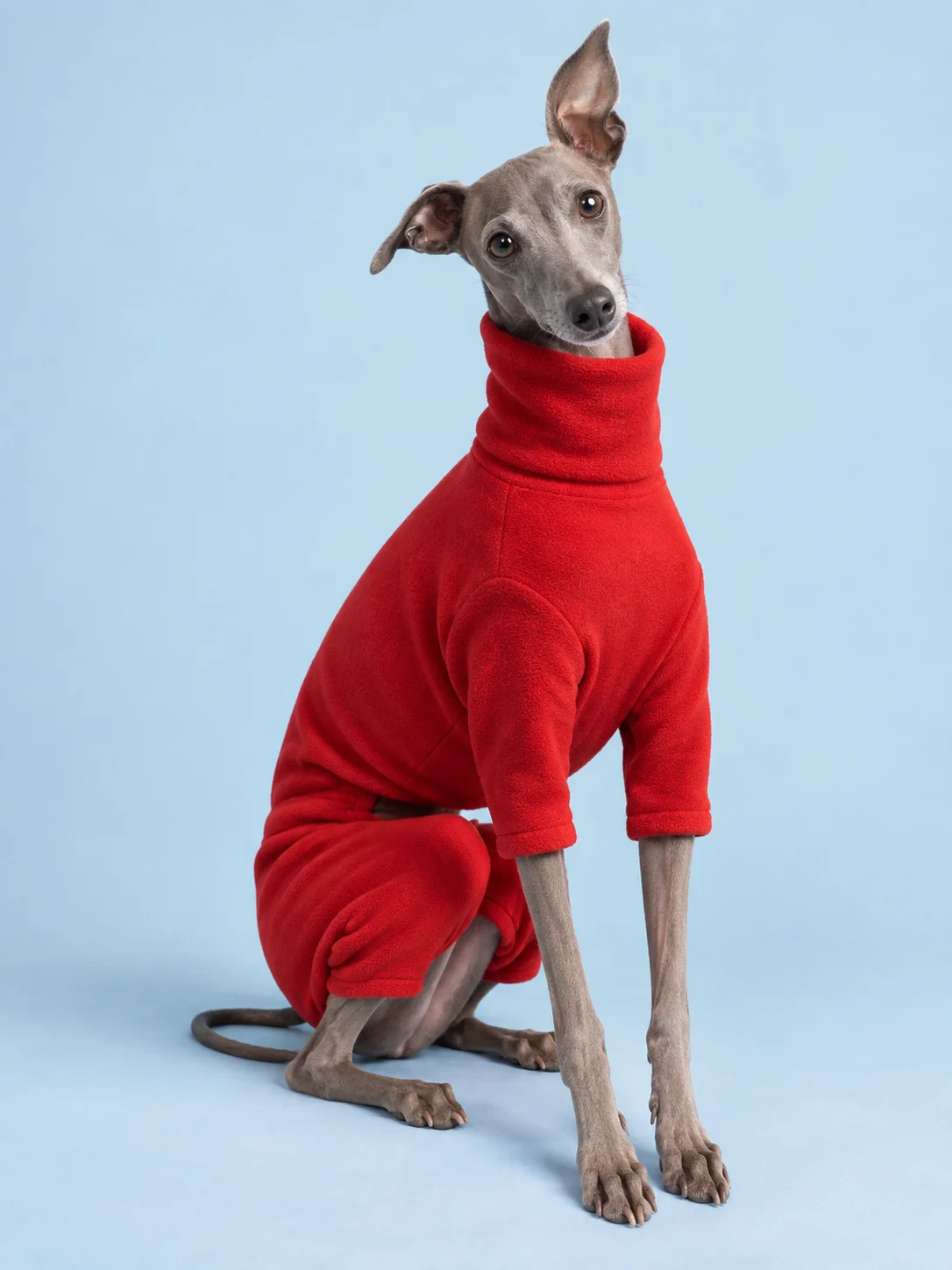
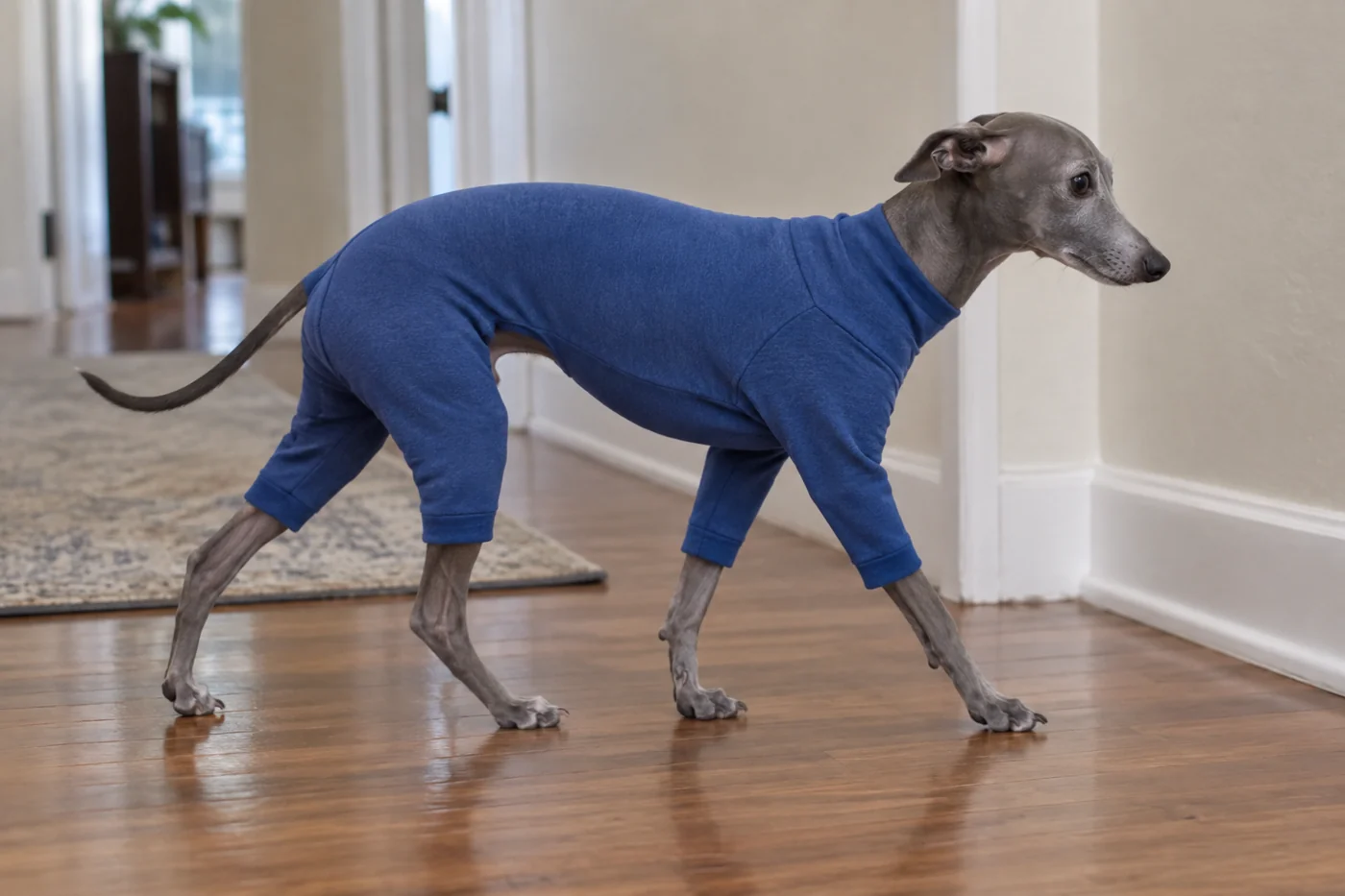
A sleeve can look perfect while the dog stands still. Then the dog walks, turns and sits, and fabric moves. Check whether the cuff slips onto the foot or the armhole pulls. Useful sleeve length depends on the cut and dog, not only leg length.
Take five steps after fitting
Let the dog walk calmly across non-slip flooring. Watch both front legs from side and front. If one sleeve slips, the issue may be the garment’s overall balance, not merely its length.
Why rolling a sleeve may not solve it
Rolling a sleeve shortens the edge but adds thickness around the leg. Several layers can make an already snug cuff tighter. A wide sleeve may simply unroll while moving. For regular use, a suitable length or careful alteration is more dependable.
Smooth both sleeves equally during the fitting. Record a short side-view walking video: the edge should not suddenly slip beneath a foot. Check again after the dog sits and stands.
Ask where the manufacturer starts the sleeve measurement. A length measured from the shoulder cannot be compared directly with one measured from the armpit. Send measurements and a natural standing photograph when ordering remotely.
Do the first check indoors on a clean non-slip surface. This gives you time to notice problems calmly while preserving the garment’s condition for a possible exchange under the seller’s terms.
Useful? Save it for your next walk.