Start with body measurements
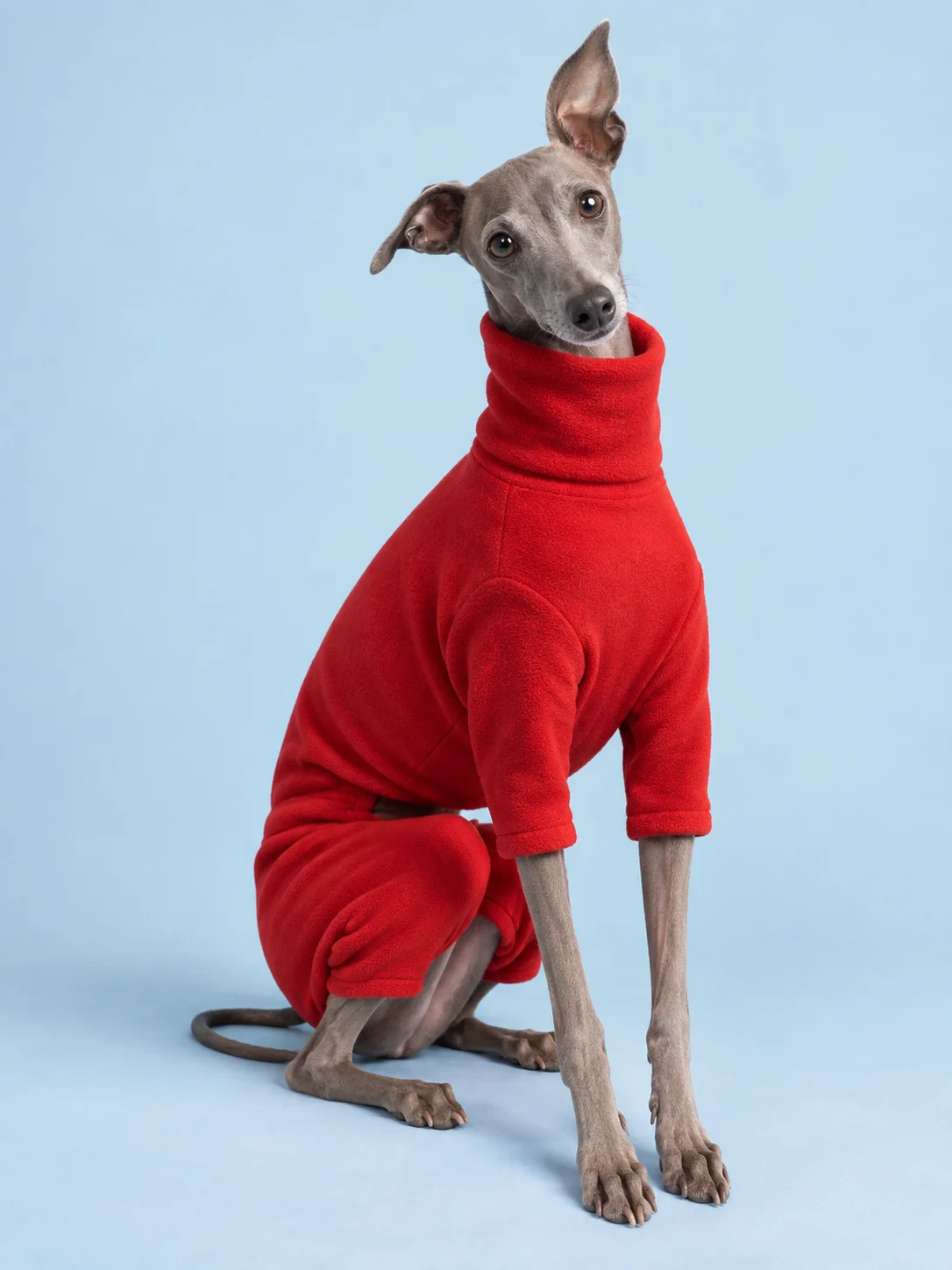
Back length, chest and neck circumference are the starting point. The Italian Greyhound’s deep chest and narrow waist make weight a poor sizing method. A good pattern addresses the transition between these areas rather than merely shrinking a general dog suit.
Neck and shoulders
The neck helps hold the garment in place but should not press when the dog turns. The shoulder line needs room for stride. If fabric pulls from the armpit toward the neck, the armhole may be the problem, not only overall size.
Sleeves and lower opening
Cuffs should not slide onto paws. The belly opening needs to suit the particular dog and allow toileting. Closures should not sit beneath harness straps or at points of constant rubbing. Check every part together after a few steps.
Fabric completes the cut
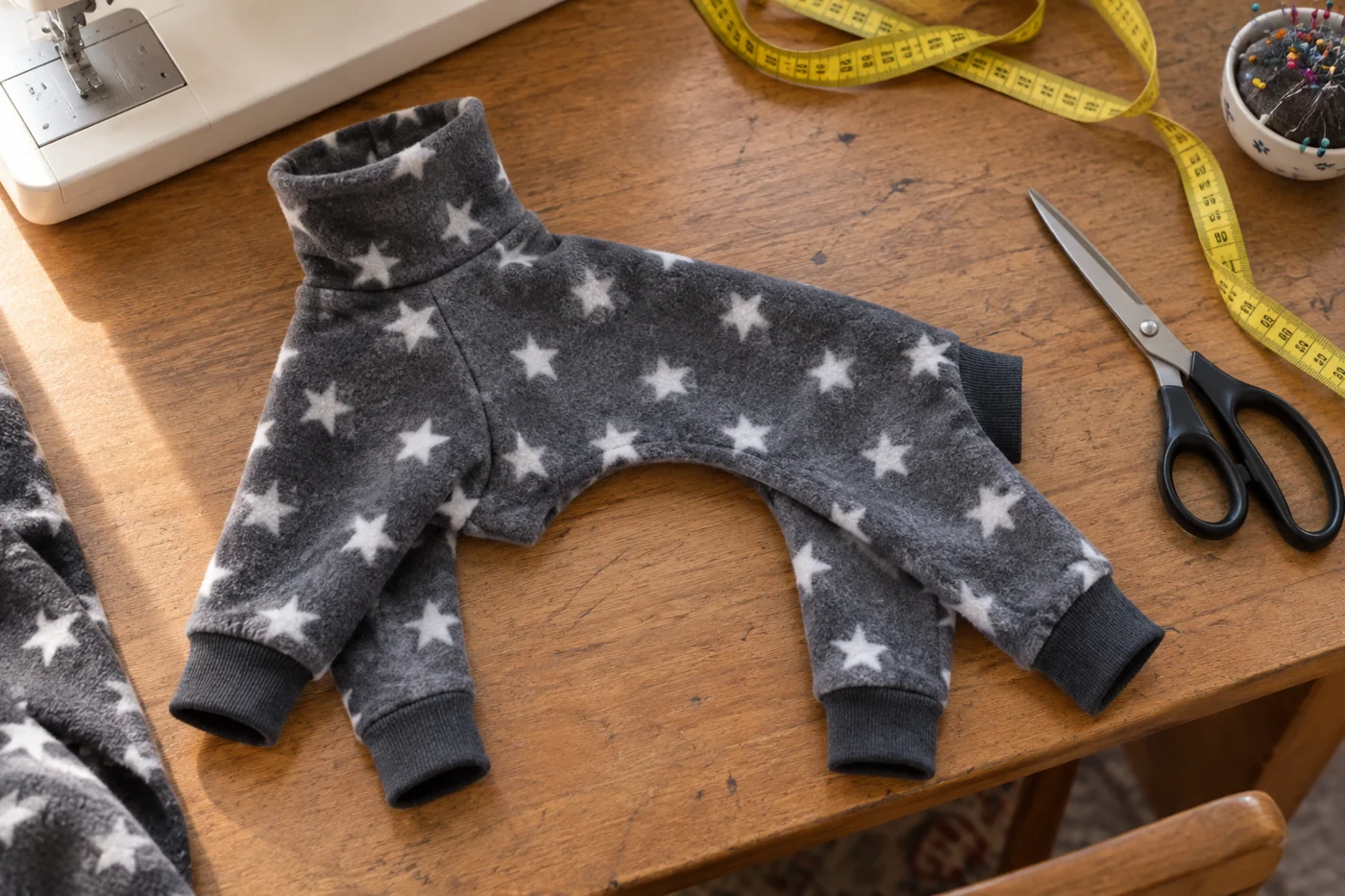
Even a careful pattern behaves differently in dense fleece, light jersey and shell fabric. Judge the finished garment in its actual material. Read the care label too: a favourite suit must keep its shape after washing.
Questions before a custom order
Ask which measurements this design needs, how to take them and whether the maker calculates ease. Natural standing photographs from the side and front are useful. Do not transfer an old garment’s size to a new fabric without discussion.
Agree its purpose: dry-weather walking, rain protection or layering. Discuss fastening, lower opening, sleeve length and harness compatibility separately. Calling an order custom does not replace a specific description.
Before production, establish the fitting and alteration process. On arrival, assess movement indoors before a short outing. Keep the agreed dimensions for repeating a successful design. The useful result is clothing that suits the dog’s body and everyday routine, rather than only reproducing a beautiful sketch. Clear preparation gives both owner and maker a better reference when adjustments are needed.
Useful? Save it for your next walk.