
From outside to inside
After a walk, dry damp paws and clothing and leave water available. An excited dog may not fall asleep instantly. A calm familiar sequence—putting equipment away, going to the bed, sitting nearby—can soften the transition.
Quiet is part of care
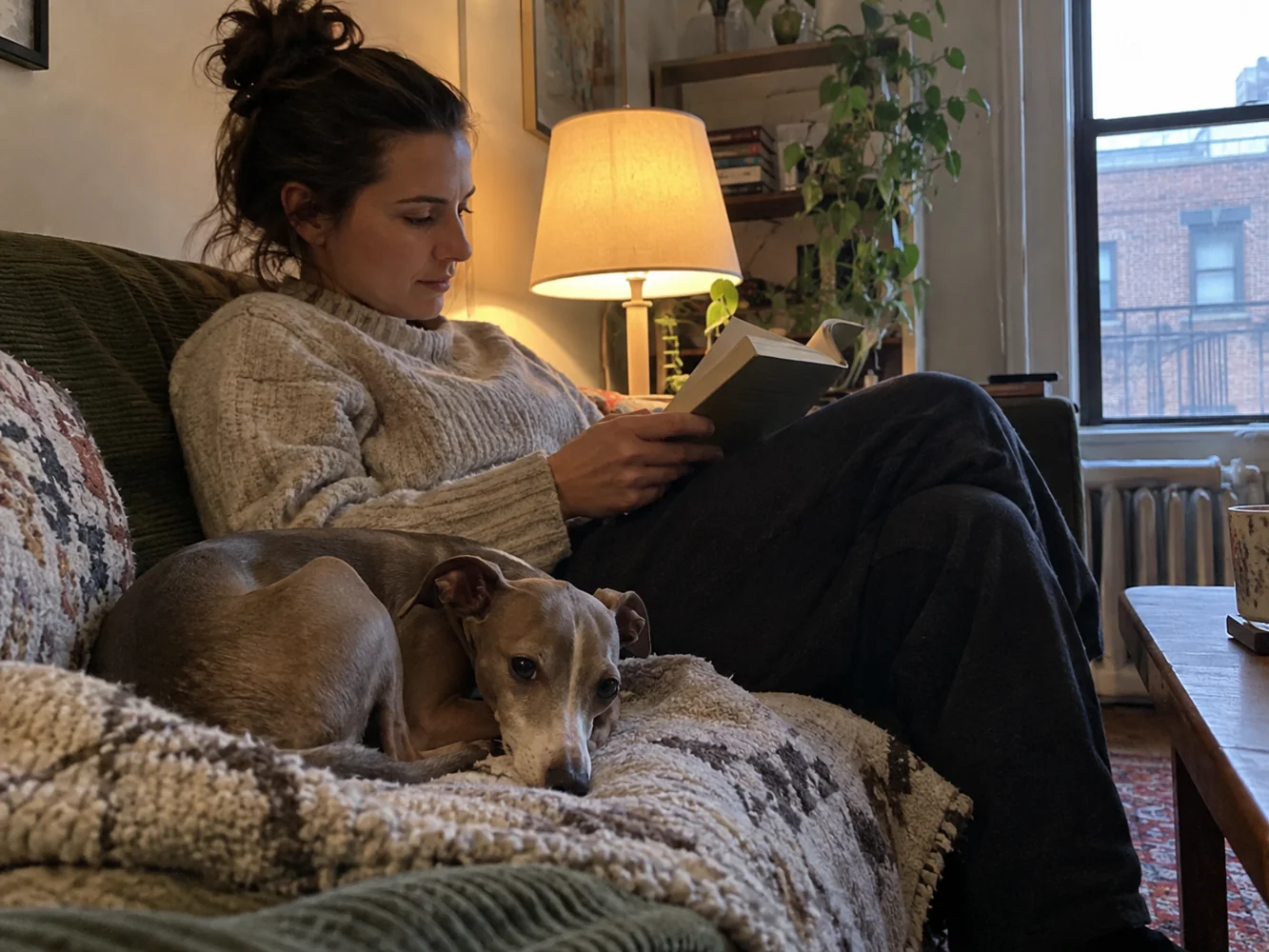
A resting spot should not sit in the busy path between kitchen and television. Let the dog withdraw from guests and noise. If evening behaviour changes abruptly, check wellbeing with a veterinarian before treating it as personality.
Make the last hour predictable
After a busy day, it is tempting to provide every missed activity at once. Lively play, visitors and a clothing fitting just before bed may add excitement instead. Notice what helps your particular dog settle: a calm outing, water, a familiar bed and quiet company.
Put away toys with loose parts and check for food left on low tables. Prepare a dry garment for the morning. These small jobs make the following day less rushed.
If the dog follows you around, avoid demanding immediate sleep or trying to exhaust them with endless tasks. First check ordinary needs and surroundings: a noisy appliance, heat beside the bed or a missed toilet opportunity.
For repeated evening difficulties, note the time, what happened beforehand and what helped. A few specific observations are more useful than calling the dog fussy. A predictable ending to the day can be simple without becoming a rigid ritual.
Useful? Save it for your next walk.