Training an Italian Greyhound: the short answer
An Italian Greyhound is clever and very sensitive. So train it calmly, in short sessions and with rewards. Shouting and harshness frighten the dog and harm your relationship.
The essentials:
- The American Veterinary Society of Animal Behavior holds that only reward-based methods should be used for all dogs.
- Avoid punishment and aversive methods: shouting, leash jerks, shock and “strict” collars and the like.
- Teach in sessions of a few minutes, with treats, play and praise.
- Recall is useful but not a guarantee: even a trained Italian Greyhound must not be off lead in unfenced areas.
- Socialisation in the first three months of life is especially important.
Why only rewards
Reward-based methods should be used for all dog training. Here is why:
- rewards bring the most benefit and the least harm to the dog’s welfare;
- aversive methods (shouting, leash jerks, shock and “strict” collars, “alpha rolls”) cause stress and harm the bond between person and dog;
- there is no evidence that punishment is more effective than rewards in any case.
For an Italian Greyhound this matters especially: it is sensitive and frightens easily. Be harsh and the dog shuts down, hides and stops trusting you.
How reward training works
A simple scheme:
- Choose a reward: a small tasty piece, a toy, a stroke.
- Show the desired action and reward it at once when the dog does it.
- Add a cue word once the action is reliable.
- Make it harder gradually: more time, more distance, a different place.
- Do not reward what you do not want.
- Keep sessions short: 3–5 minutes several times a day.
- End on a success.
Italian Greyhounds put on weight easily, so count treats in the daily allowance (our article on feeding).
Name and place
Start with the name: say it in pleasant moments and praise when the puppy looks at you (our article on names). Then teach “place”: the puppy goes to its bed and gets a treat. It is the basis of calm behaviour at home.
Lead and harness
Get the dog used to a harness gradually: first put it on for a few minutes at home, then give a treat. Then clip on the lead and walk around the room. Do not pull or jerk: an Italian Greyhound is slender, and a jerk is harmful.
Outdoors praise the dog for walking beside you and stop when it pulls: do not move until the lead goes slack. More in our article on harnesses and leads.
Recall
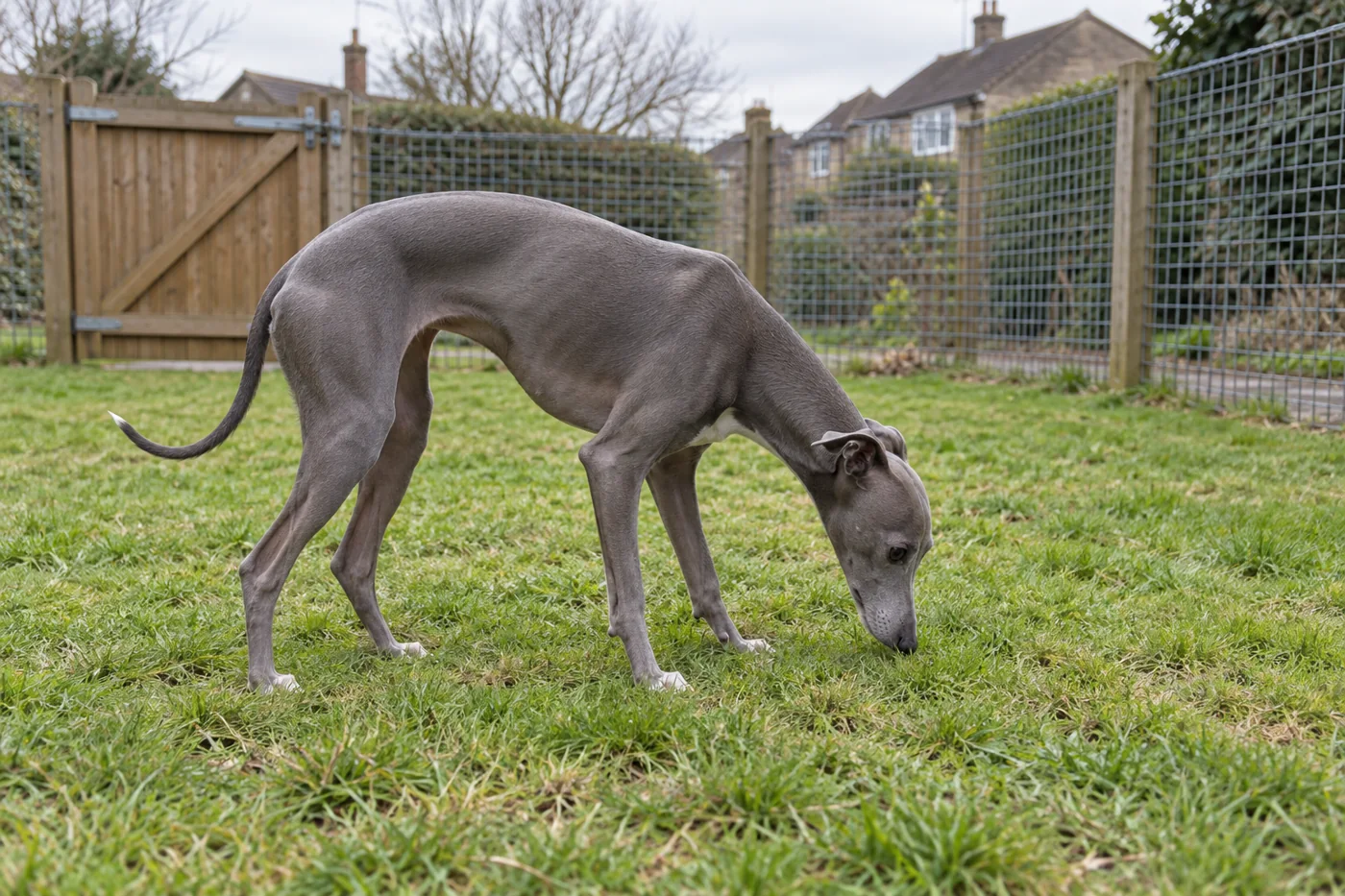
Recall is needed, with a caveat. Even a trained Italian Greyhound must not be off lead outside an enclosed area: it will chase anything that moves, including cars.
How to teach it:
- Start at home: call the dog and reward it for coming.
- Move to a yard or enclosed area on a long lead.
- Always reward generously: coming back should be the nicest thing.
- Never call it to punish or to end the walk.
- Practise in an enclosed area, not by a road.
More in our article on safe off-lead running.
Socialisation
The first three months of life are the primary window for meeting new people, animals and situations, and improper socialisation can raise the risk of behaviour problems. Introduce the puppy gradually without overloading it. More in our article on a puppy at home.
Being alone and barking
Italian Greyhounds struggle to be alone. How to teach it:
- leave for a few minutes, then longer;
- walk the dog and give it something to do before you go;
- avoid noisy goodbyes and greetings;
- leave a warm spot.
The sources we checked have no data on barking, so we make no claims. If the dog barks or howls a lot when alone or you cannot cope, contact a trainer who works with humane methods. More in our article on being home alone.
Mistakes
- Shouting and punishment.
- Sessions that are too long.
- Inconsistency: sometimes allowed, sometimes not.
- Calling the dog to end a walk.
- Letting it off lead outside an enclosed area.
- Expecting quick results.
When a specialist is needed
Contact a trainer or a veterinary behaviourist if the dog:
- is very afraid of people, sounds or the street;
- shows aggression;
- suffers greatly when alone;
- has suddenly changed behaviour (check health with a vet first).
Aversive methods are not recommended even for behaviour problems. Look for a specialist who works with rewards.
Frequently asked questions
- How should I train an Italian Greyhound? In short sessions, with rewards, without shouting.
- Can I punish it? No: use rewards only, and the breed is sensitive.
- Can I let it off lead if it knows “come”? Only in an enclosed area.
- When should I start? From the first days: the name, its place, getting used to care.
- Does it bark? The sources we checked have no data.
What to remember
- Rewards only: no shouting or jerks.
- Keep sessions short and use treats.
- Recall is no guarantee: off lead only in an enclosed area.
- Teach being alone gradually.
Sources
References for checking facts and reading further.
Useful? Save it for your next walk.